Quick Facts
- Earliest Format: The 1956 IBM RAMAC, which offered 5MB of storage on fifty 24-inch platters.
- Longest Survivor: Floppy Disks remained in use from 1971 until the early 2010s in various industrial sectors.
- The Last VHS: The final major Hollywood movie released on the format was A History of Violence in 2006.
- Final VCR Production: Funai Electronics, the world's last VCR manufacturer, ceased production in 2016.
- Core Conclusion: Obsolete media formats include Betamax, LaserDisc, floppy disks, and HD-DVD, which fell into obscurity during physical media format wars due to storage capacity, production costs, and proprietary hardware limitations.
| Format | Peak Era | Key Capacity | Primary Reason for Obsolescence |
|---|---|---|---|
| IBM RAMAC | 1950s | 5 MB | Transition to smaller magnetic storage |
| Floppy Disk | 1980s-1990s | 1.44 MB | Inadequate storage density for modern files |
| Betamax | 1970s-1980s | 1 Hour | Lost market share to longer-playing VHS |
| LaserDisc | 1980s-1990s | 60 Min / side | High cost and lack of recording capability |
| Audio Cassette | 1980s | 90 Minutes | Rise of CDs and digital portability |
| Zip Disk | 1990s | 100-250 MB | Reliability issues and cheap CD-R costs |
| HD-DVD | 2006-2008 | 15-30 GB | Defeated by Blu-ray's industry partnerships |
Obsolete media formats like Betamax and floppy disks defined decades of innovation. This guide explores the evolution of home media technology and the defunct data storage devices that lost the physical media format wars. These technologies ultimately failed because they could no longer keep pace with consumer demands for storage density and speed, leading to a shift toward high-capacity optical storage and eventually digital streaming.
1. The Dawn of Magnetic Storage: IBM 305 RAMAC (1956)
Before we had thumb drives that fit on a keychain, data storage was a room-sized affair. The IBM 305 RAMAC (Random Access Method of Accounting and Control) represents the genesis of defunct data storage devices as we know them. Launched in 1956, it was the first computer to use a moving-head hard disk drive. While the capacity was a mere 5MB, it was revolutionary for its time, moving the industry away from vacuum tubes and sequential magnetic tape toward random access storage.
The RAMAC used fifty 24-inch disks spinning at 1,200 RPM. In an era where storage density was measured in bits per square inch, the RAMAC was a behemoth that allowed businesses to access records in real-time rather than waiting for a tape to spool. It set the stage for the next half-century of magnetic tape development and retro computing history.
The Turning Point: The transition from vacuum tubes to magnetic storage proved that data could be stored and retrieved instantly. However, as the industry moved toward smaller form factors and higher storage density, the massive platters of the RAMAC became a relic of early technical history.
2. Floppy Disks: The Universal Icon of Saving (1971–2011)
For anyone who used a computer between 1980 and 2005, the floppy disk was the primary way to move files. These obsolete media formats started as 8-inch giants before shrinking to the 5.25-inch "floppy" and finally the 3.5-inch rigid plastic shell we recognize today. At the peak of their popularity in the mid-1990s, more than 5 billion floppy disks were sold annually worldwide to serve as the primary storage medium for personal computers.
Despite its convenience, the 1.44MB capacity of the standard 3.5-inch disk quickly became a bottleneck. As software grew and digital photography emerged, a single file could often exceed the entire capacity of a disk. This era is a fascinating study for those looking into the best ways to store and preserve vintage floppy disks, as the magnetic coating is highly susceptible to bit rot and media degradation.
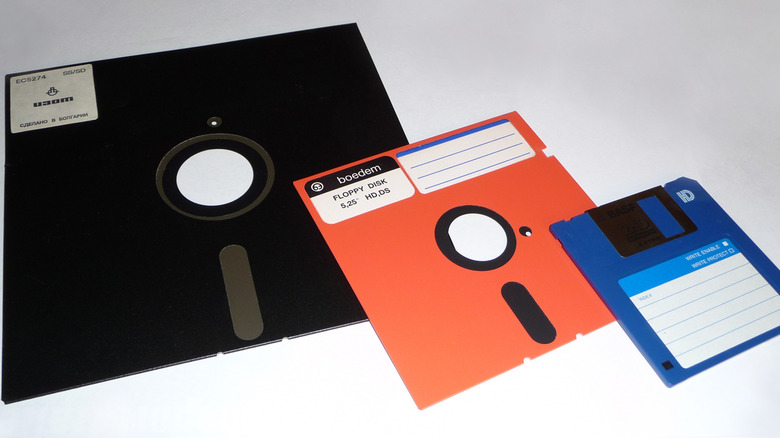
The Turning Point: The 1998 release of the Apple iMac was the "death blow" for the format. By shipping a flagship computer without a built-in floppy drive, Apple forced the industry to adopt USB drives and rewritable CDs, rendering the floppy disk a literal icon of the past.
3. Betamax vs. VHS: The Original Format War (1975–1988)
The struggle between Sony’s Betamax and JVC’s VHS is the most famous example of physical media format wars. On paper, Betamax was the superior technology, offering better resolution and a more stable image. However, JVC understood consumer psychology better: people wanted to record entire football games or movies on a single tape. VHS tapes offered two to four hours of recording time, while early Betamax tapes were limited to just one hour.
This era also saw significant legal milestones, such as the 1984 Supreme Court ruling that home recording for "time-shifting" purposes was legal, protecting the industry from copyright lawsuits. Despite Sony's attempts to catch up, by 1984, the Video Home System (VHS) format had secured a 92.5% share of the United States home video market, effectively winning the war. Today, comparing betamax vs vhs for retro film collectors is a common hobby, as both formats offer a specific analog aesthetic that digital formats cannot replicate.
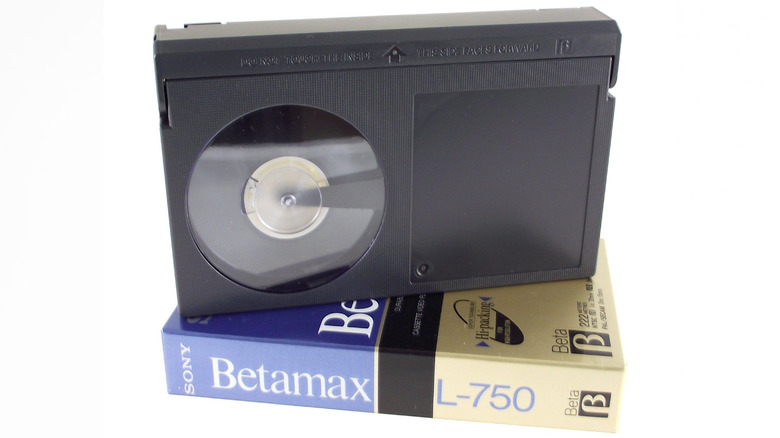
The Turning Point: JVC’s decision to license the VHS technology to other manufacturers created a flood of affordable VCRs. Sony kept Betamax mostly proprietary, leading to higher costs and lower adoption. The longer recording time was the final nail in the coffin for Betamax.
4. LaserDisc: The Audiophile’s Niche (1978–2000)
Long before the DVD, there was the LaserDisc. These massive 12-inch optical storage discs looked like giant CDs and provided the highest video quality available to consumers in the 1980s. For home cinema enthusiasts, LaserDisc was the gold standard, offering features like multiple audio tracks, chapter markers, and no "tape wear" common with analog signals.
However, the format was never destined for the mass market. The discs were expensive, fragile, and could not record television. Furthermore, because of the storage limits of the analog video signal, users often had to flip the giant disc halfway through a movie. Today, a practical guide to cleaning old laserdisc and cd-roms is essential for collectors because these discs are prone to "laser rot," a form of media degradation where the adhesive between the layers oxidizes.
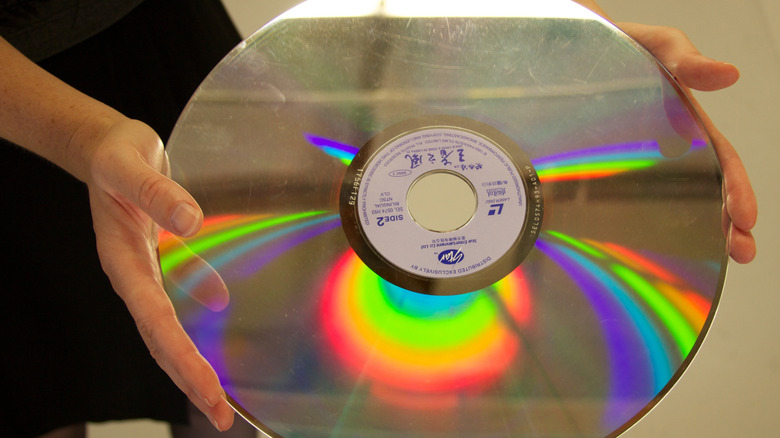
The Turning Point: The arrival of the DVD in 1997 offered similar quality in a much smaller, cheaper, and more durable format. LaserDisc’s high production costs and bulky hardware couldn't compete with the convenience of the 5-inch disc.
5. Audio Cassette: The Era of Portability (1963–2000s)
The Philips Compact Cassette fundamentally changed how we consumed music. For the first time, music was truly portable. The compact audio cassette became the most popular music format in the world in 1983, surpassing vinyl records and reaching a global sales peak of nearly 900 million units by 1990. This explosion was fueled by the 1979 launch of the Sony Walkman, which allowed people to take their soundtracks on the go.
The evolution of home media technology from vhs to streaming finds its roots here, as the cassette allowed for the "mixtape" culture—the first time consumers could easily curate and share their own playlists. While the audio quality of magnetic tape was lower than vinyl or CDs, the convenience of a pocket-sized format was an unbeatable trade-off for decades.
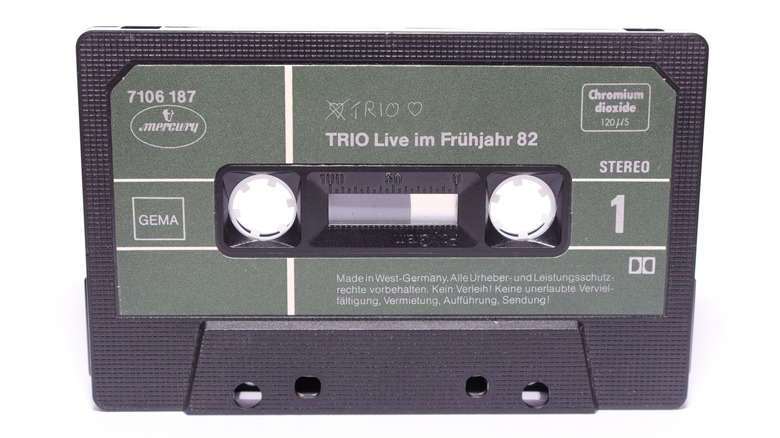
The Turning Point: The rise of the digital compact disc (CD) in the 1990s offered crystal-clear sound and instant track skipping. By the time MP3 players and the iPod arrived, the audio cassette was relegated to the glove boxes of old cars.
6. Iomega Zip Disks: The Bridging Format (1994–2003)
In the mid-90s, there was a desperate gap between the 1.44MB floppy and the massive hard drives of the future. The Iomega Zip disk stepped in as a high-capacity magnetic tape alternative, offering 100MB and later 250MB of storage. It was the darling of graphic designers and students who needed to move large files between workstations.
However, Zip disks were plagued by technical issues. The most famous was the "Click of Death," a mechanical failure in the drive that would physically damage the disk and render the data unreadable. When looking at why certain defunct storage devices failed in the market, the Zip disk is a cautionary tale of hardware reliability meeting a rapidly dropping price point for competing technologies.
The Turning Point: As the price of CD-R (Recordable CD) technology plummeted, the need for expensive, proprietary Zip drives vanished. CDs were cheaper, held more data (700MB), and could be played on almost any computer.
7. Proprietary Gaming Discs: GameCube & PSP UMD (2001–2014)
The gaming industry has a long history of creating its own obsolete media formats to combat piracy and control the ecosystem. Two notable examples are Nintendo’s 8cm mini-DVD used for the GameCube and Sony’s Universal Media Disc (UMD) for the PlayStation Portable (PSP).
Nintendo’s mini-DVD could hold 1.46GB, which was significantly less than the 4.7GB capacity of standard DVDs used by the PlayStation 2 and Xbox. This forced developers to compress assets or ship games on multiple discs. Sony’s UMD was even more ambitious—a tiny optical disc encased in a plastic shell designed for portable movies and games. Any retro gaming guide to psp umd and gamecube discs will tell you that while these formats are charming, they suffer from slow data access and physical fragility.
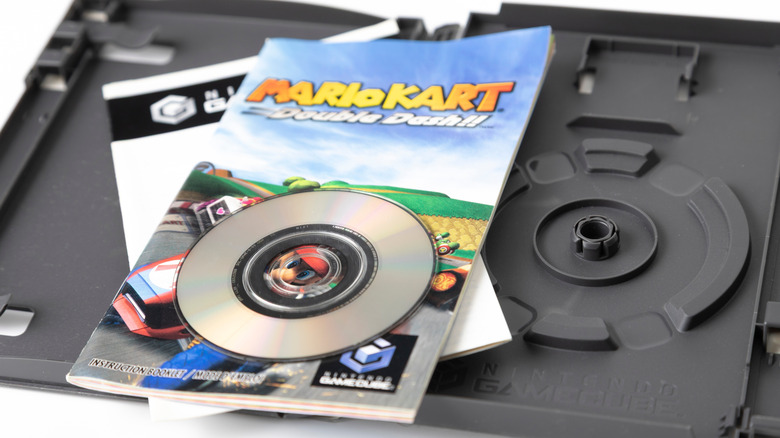
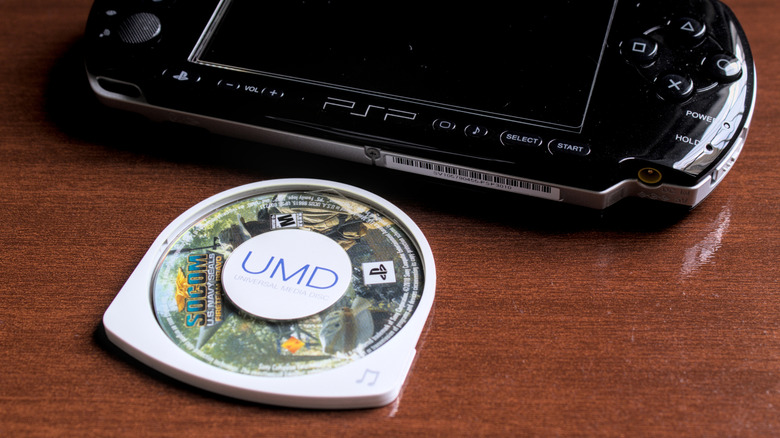
The Turning Point: The industry eventually realized that proprietary hardware was a barrier to entry. Sony moved to digital downloads and memory sticks for the Vita, while Nintendo eventually adopted high-capacity cartridges for the Switch, ending the era of the tiny disc.
8. HD-DVD: The Final Optical Battle (2006–2008)
The mid-2000s saw a high-stakes replay of the VHS vs Betamax war, this time between HD-DVD (backed by Toshiba and Microsoft) and Blu-ray (backed by Sony and major film studios). The history of physical media format wars timeline shows that this was a short but brutal conflict. HD-DVD was cheaper to manufacture and initially had more player support, including a famous add-on drive for the Xbox 360.
However, Sony made a strategic masterstroke by building a Blu-ray player into every PlayStation 3. This immediately put millions of Blu-ray players into living rooms, regardless of whether the owner cared about high-definition movies. When Warner Bros. switched its exclusivity to Blu-ray in early 2008, the war ended almost overnight.
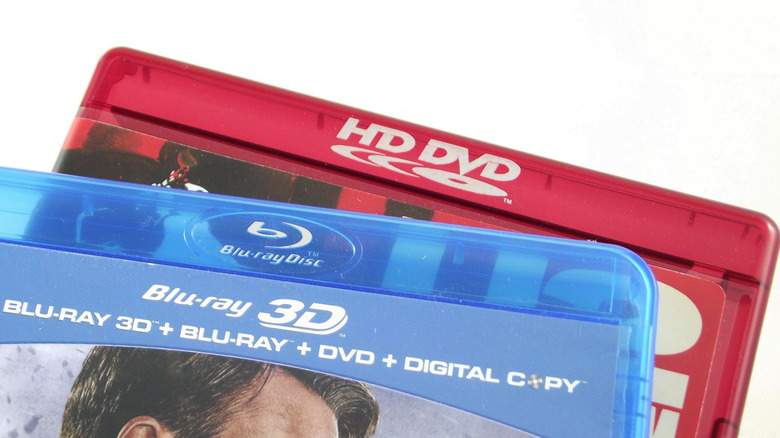
The Turning Point: The 2008 surrender by Toshiba marked the end of HD-DVD. While Blu-ray won, it was a pyrrhic victory; the rise of Netflix and high-speed internet meant that physical media was already losing its grip on the general public.
9. The Digital Transition: Why Media Goes Obsolete
Understanding why certain defunct storage devices failed in the market requires looking at three factors: storage density, speed, and durability. As our digital lives expanded to include high-resolution video and massive software suites, formats like the floppy disk simply couldn't keep up. But there is also a biological-like clock for media known as bit rot.
Magnetic tape and optical storage are not permanent. Over time, the magnetic charge on a VHS tape fades, and the reflective layer on a CD can peel away. This media degradation means that identifying defunct data storage devices in old electronics is only the first step; the second is active archival preservation. The shift from ownership to streaming access has solved the storage problem for most, but it has created new questions about digital rights and long-term access.
10. Preserving History: How to Handle Obsolete Media Today
If you find a box of old tapes or disks, don't throw them away. Many collectors and archivists are working to keep these formats alive. For the average person, learning how to digitize obsolete media formats at home is a rewarding weekend project. There are affordable USB converters for audio cassettes and VHS tapes that allow you to move those family memories into the cloud.
For more complex defunct data storage devices like Zip disks or SCSI hard drives, you may need to seek out specialized digital conversion services. Maintaining legacy hardware is also an option, though it requires knowledge of playback compatibility and the environmental impact of disposing of e-waste. By preserving these items, we keep the history of consumer electronics history alive for future generations.
FAQ
What are examples of obsolete media formats?
Common examples include Betamax and VHS tapes, floppy disks, audio cassettes, LaserDiscs, Zip disks, and HD-DVDs. These are formats that are no longer in mass production and have been replaced by superior technology.
Why do digital media formats become obsolete?
Formats usually become obsolete due to physical media format wars where one standard defeats another, or because they can no longer provide the storage density and speed required by modern software and media.
How can I digitize old video and audio formats?
You can use analog-to-digital converters that connect your VCR or cassette player to a computer via USB. For high-quality results or rare formats, professional digitization services are recommended to combat media degradation.
Are old media formats worth any money?
Some formats, like rare LaserDiscs or sealed early-release VHS tapes, can be valuable to collectors. However, most defunct data storage devices like old floppy disks are worth very little unless they contain rare, unarchived software.
What is the lifespan of physical media formats?
The lifespan varies significantly. Magnetic tapes like VHS and cassettes usually last 10 to 20 years before significant signal loss. Optical discs like CDs and DVDs can last 30 to 100 years, provided they are stored in a cool, dry environment away from sunlight.
What was your first "high-tech" media format? Whether you were a mixtape master or a Zip disk power user, these formats shaped how we interact with technology today. Share your favorite retro tech memories in the comments below!