Quick Facts
- First Concept Car: The 1938 Buick Y-Job is widely recognized as the first concept car, established by Harley Earl to test aesthetics and new technologies.
- Technological Baseline: The 1951 GM Le Sabre introduced the 12-volt electrical system, a feature that became the global industry standard.
- Aerodynamic Efficiency: Mid-century prototypes like the Alfa Romeo B.A.T. series achieved a drag coefficient as low as 0.19, outperforming many modern vehicles.
- Supercar Foundation: The Lamborghini Miura prototype pioneered the transverse mid-engine layout that defines almost every modern supercar.
- The Wedge Era: 1970s concepts shifted the industry toward aggressive, geometric silhouettes, moving away from the rounded curves of the jet age.
- Experimental Power: Iconic concept cars like the Mercedes-Benz C-111 served as mobile laboratories for rotary engines and turbo-diesel performance.
The history of the automobile is not just written on production lines but in the daring studios where iconic concept cars are born. These influential automotive prototypes serve as experimental testbeds for technology and aesthetics. By pushing the boundaries of what is possible, revolutionary car concepts act as the primary blueprints for the future of performance and daily transportation.
The Birth of the Prototype: Pre-War Innovation
Before the late 1930s, car manufacturers typically displayed production models or slightly modified versions of vehicles already for sale. That changed when Harley Earl, the legendary head of design at General Motors, decided to build a car purely for experimentation.
1938 Buick Y-Job
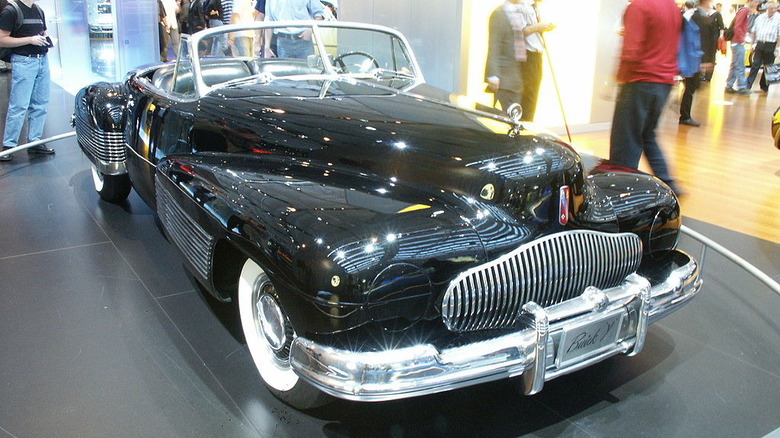
The 1938 Buick Y-Job is recognized as the automotive industry's first concept car, serving as a styling tool rather than a vehicle intended for a showroom. It was low, sleek, and dispensed with the tall, upright grilles common in the era. It wasn't just a shell; it was a fully functional vehicle that Earl drove as his personal car for years.
The Y-Job introduced several features that we take for granted today. It utilized power-operated hidden headlamps and flush door handles to maintain a clean profile. This approach to prototype development allowed GM to gauge public reaction to radical ideas before committing to the massive costs of mass production.
- Legacy Connection: The Y-Job established the "dream car" marketing strategy and introduced the vertical-bar grille that became a Buick signature for decades.
Post-War Futurism and the Jet Age
Following World War II, automotive design entered an era of unbridled optimism. Influential automotive prototypes began to mirror the burgeoning aerospace industry, incorporating fins, glass canopies, and jet-turbine themes. This period of historic vehicle design milestones saw the transition from mechanical simplicity to complex electrical and turbine systems.
1951 General Motors Le Sabre
If the Y-Job was about styling, the Le Sabre was about a high-tech future. This vehicle introduced the 12-volt electrical system, which replaced the 6-volt systems of the time and became the universal standard by the end of the 1950s. It also featured a moisture sensor that would automatically raise the convertible top if it started to rain.
- Legacy Connection: The 12-volt architecture debuted here remains the baseline for nearly every modern internal combustion vehicle on the road.
1956 GM Firebird II
The Firebird II was an experiment in alternative propulsion and highway automation. It was powered by a gas turbine engine and featured an early vision of self-driving technology. The idea was that cars could be guided by electrical wires embedded in the road, allowing the driver to relax. Its space-age aesthetic, including a bubble canopy and prominent tail fins, defined the look of 1950s futurism.
- Legacy Connection: While gas turbines never took off, the Firebird II’s focus on autonomous guidance was a precursor to modern driver-assistance systems.
Aerodynamic Mastery: The Streamline Era
As engines became more powerful, designers realized that the shape of the car was the biggest obstacle to speed and efficiency. The study of aerodynamics became a central pillar of revolutionary car concepts during the mid-20th century.
Alfa Romeo B.A.T. Series (5, 7, 9)
In the 1950s, Alfa Romeo and the design house Bertone collaborated on the Berlinetta Aerodinamica Tecnica (B.A.T.) projects. The B.A.T. 7, released in 1954, achieved a coefficient of drag of just 0.19. To put that into perspective, most modern electric vehicles struggle to reach 0.20. These cars used curved fins and tapered tails to slice through the air with minimal turbulence.
- Legacy Connection: The B.A.T. series proved that styling and physics could coexist, influencing decades of Italian sports car design.
Mercedes-Benz C-111
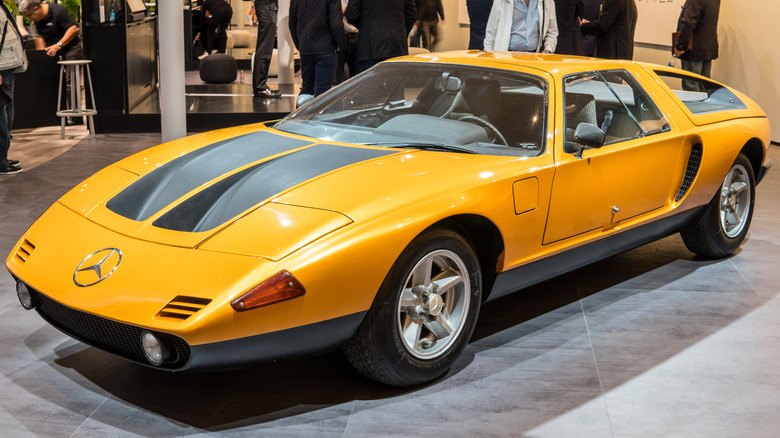
The C-111 was more than just a beautiful car with gullwing doors; it was a mobile laboratory. Between 1969 and the late 1970s, Mercedes-Benz used various iterations of the C-111 to test Wankel rotary engines, turbo-diesels, and advanced fiberglass bodywork. It set multiple speed records, proving that diesel engines could be high-performance machines.
- Legacy Connection: The aerodynamic research conducted with the C-111 helped Mercedes-Benz achieve world-leading efficiency in its production sedans during the 1980s.
The Wedge Revolution: Redefining the Supercar
In the late 1960s, a new design language emerged that would dominate the next two decades. The wedge-shaped silhouette replaced curves with sharp angles and flat planes, forever changing the trajectory of performance vehicle aesthetics.
1966 Lamborghini Miura Prototype
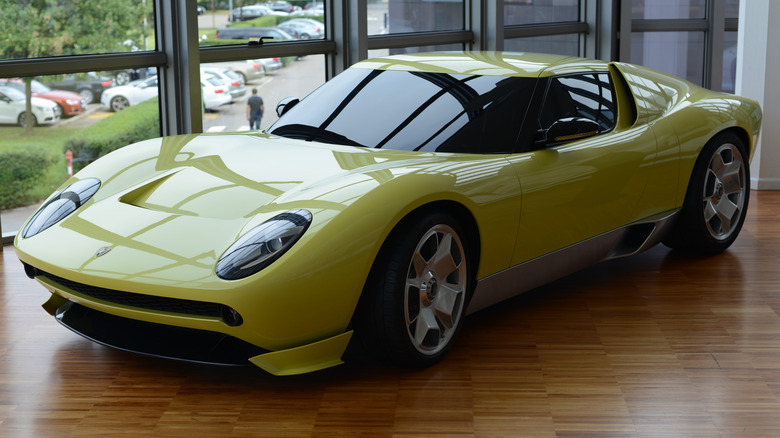
While often considered a production car, the Miura began as a radical chassis prototype shown at the 1965 Turin Auto Show. It established the transverse mid-engine layout as the standard for supercars. By placing the engine behind the driver but ahead of the rear axle, Lamborghini achieved a level of balance and speed (171 mph) that was previously unheard of for a street-legal car.
- Legacy Connection: Every mid-engine Ferrari, McLaren, and Lamborghini that followed owes its basic mechanical layout to the Miura prototype.
1970 Lancia Stratos Zero
Designed by Marcello Gandini at Bertone, the Stratos Zero is perhaps the most extreme example of the wedge revolution. Standing only 33 inches tall, the driver had to enter through the flip-up windshield because there were no traditional doors. It looked less like a car and more like a landed spacecraft.
- Legacy Connection: The design language of the Zero led directly to the Lancia Stratos rally car and the iconic Lamborghini Countach.
1970 Ferrari Modulo
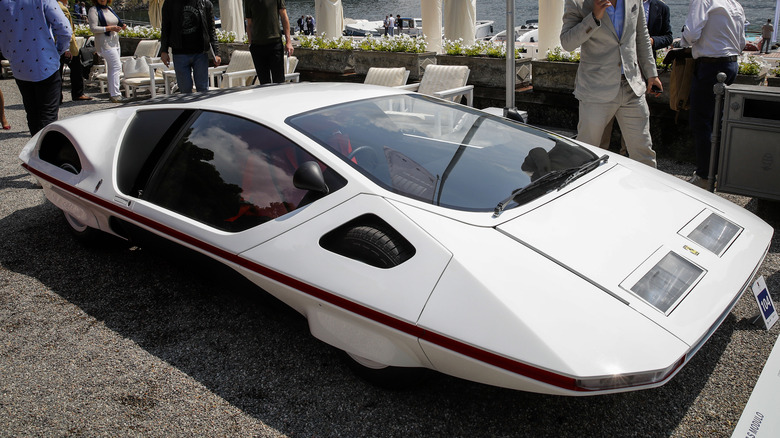
The Modulo took the wedge concept to a geometric extreme. Based on a Ferrari 512S race car chassis, this Pininfarina design featured a canopy that slid forward for entry. Its extremely low profile and covered wheels were an exercise in pure futurism, challenging the idea of what a car should even look like.
- Legacy Connection: The Modulo remains a benchmark for "pure" design, influencing modern hypercars that prioritize extreme proportions and integrated aero.
Modern Milestones: Carbon Fiber and Hybrid Futures
As we entered the 1990s and 2000s, iconic concept cars shifted focus toward exotic materials and early electrification. This guide to the most influential concept cars of all time would be incomplete without the models that bridged the gap to the modern era.
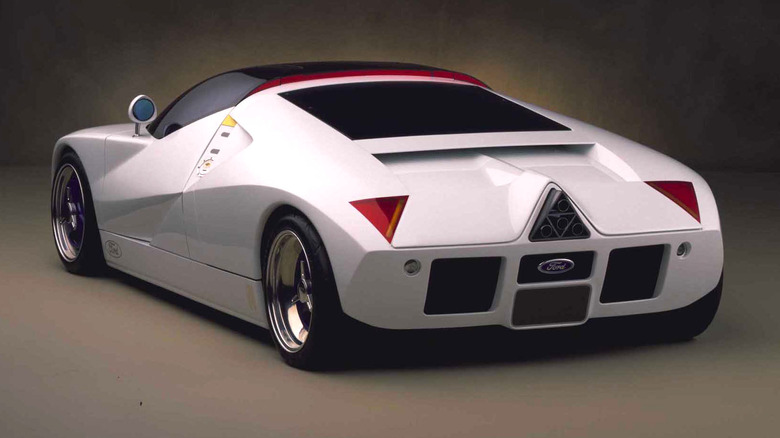
1995 Ford GT90
The GT90 was a quad-turbo V12 beast that debuted Ford’s "New Edge" design philosophy. It used a carbon fiber monocoque and ceramic tiles to protect the body from the intense heat of the exhaust, much like a space shuttle. It was a 720-horsepower statement of intent that showed Ford could compete with the best in the world.
- Legacy Connection: The GT90’s angular styling cues eventually trickled down to everyday Ford models like the Focus and the Ka, while its supercar spirit paved the way for the 2005 Ford GT.
2003 Cadillac Sixteen
The Cadillac Sixteen featured a massive 13.6-liter V16 engine producing 1,000 horsepower. While the engine was an exercise in excess, the car’s design language—known as "Art and Science"—defined Cadillac for the next twenty years. It emphasized crisp lines and vertical lighting elements.
- Legacy Connection: The Sixteen returned Cadillac to the conversation of world-class luxury, influencing everything from the CTS to the modern Lyriq.
2010 Jaguar C-X75
The C-X75 was a masterpiece of engineering that combined micro-gas turbines with electric motors. Although it never reached full production due to the global economic climate, its hybrid powertrain was years ahead of its time. It proved that hybrid technology could be used to enhance performance, not just fuel economy.
- Legacy Connection: The C-X75 influenced the design of the Jaguar F-Type and demonstrated the performance potential that eventually led to the current generation of hybrid hypercars like the Ferrari SF90.
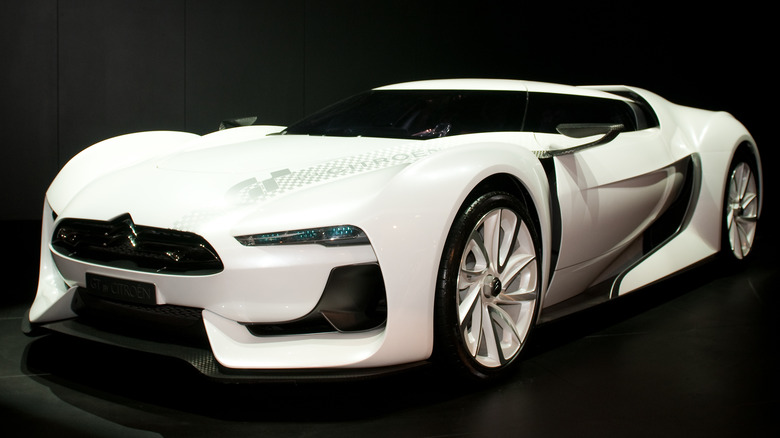
2008 GT by Citroën
This car represents a unique moment where digital design influenced physical reality. Originally created for the video game Gran Turismo 5, the response was so overwhelming that Citroën built a functional version. It featured a long, flowing rear end and hydrogen fuel cell technology.
- Legacy Connection: The GT by Citroën proved that the gaming world could serve as a legitimate incubator for revolutionary engine designs and automotive styling.
Summary of Technical Benchmarks
| Concept Car | Year | Key Innovation | Impact |
|---|---|---|---|
| Buick Y-Job | 1938 | Hidden Headlamps | First true concept car |
| GM Le Sabre | 1951 | 12V Electrical System | Industry Standard |
| Alfa Romeo B.A.T. 7 | 1954 | 0.19 Drag Coefficient | Aerodynamic Benchmark |
| Lamborghini Miura | 1966 | Mid-Engine Layout | Supercar Standard |
| Ford GT90 | 1995 | Carbon Fiber/New Edge | Design Language Shift |
FAQ
What was the first concept car ever built?
The 1938 Buick Y-Job is widely cited as the first true concept car. While other manufacturers had built experimental vehicles before, the Y-Job was the first one designed specifically to showcase styling and technology to the public without being tied to an immediate production deadline.
Why do manufacturers create concept cars if they will not be produced?
Manufacturers build these vehicles to serve as mobile laboratories for experimental technology and radical aesthetics. They allow designers to push the limits of creativity and test public interest in new features. Even if the car itself isn't produced, specific elements like the engine, interior layout, or headlight design often find their way into mass-market models.
How do concept cars differ from prototype vehicles?
While the terms are often used interchangeably, a concept car is usually a "dream car" designed for auto shows to showcase a brand's future direction. A prototype is typically a pre-production vehicle used for rigorous testing (crash tests, fuel economy, durability) to ensure a car is ready for the assembly line.
Can individuals buy concept cars?
Generally, no. Most concept cars are owned by the manufacturers and kept in their private museums or collections. Occasionally, they are sold at high-end auctions like Sotheby's or Barrett-Jackson, but they are often sold with "bill of sale" only, meaning they are not street-legal and are intended for display.
What happens to concept cars after they are displayed?
The fate of a concept car varies. Many are kept in manufacturer archives. Others are crushed or destroyed due to liability reasons, as they often lack standard safety equipment. A lucky few end up in the hands of private collectors or public museums like the Petersen Automotive Museum.
The journey from the Buick Y-Job to the hydrogen-powered hypercars of today shows that the automotive industry is in a constant state of reinvention. These 15 iconic concept cars didn't just fill space on an auto show floor; they provided the spark for the historic vehicle design milestones we see on the road every day. As we transition into the era of electric and autonomous vehicles, today’s prototypes continue this legacy, serving as the first glimpse into our high-speed future.