Quick Facts
- Network Standard: Wi-Fi 7 is based on the IEEE 802.11be standard, designed for more efficiency.
- Compatibility Status: By mid-2026, Wi-Fi 7 hardware is the standard for flagship mobile devices.
- Smartphone Leaders: Support is found in the Apple iPhone 16 and 17 Pro series and Samsung Galaxy S25 and S26 Ultra.
- Computing Power: Most 2026 high-end laptops utilize the Intel Core Ultra Series 2 or Snapdragon X Elite platforms.
- Performance Gain: Theoretical speeds peak at 46 Gbps, significantly higher than the 9.6 Gbps of Wi-Fi 6.
- Enterprise Adoption: Statistics show Wi-Fi 7 technology accounted for 44.5% of global enterprise dependent access point revenues by the first quarter of 2026.
As of July 2026, Wi-Fi 7 (IEEE 802.11be) is no longer a futuristic dream but a standard for flagship hardware. From the latest Samsung Galaxy S26 to the iPhone 17 Pro, knowing which wi-fi 7 devices are worth your investment is key to future-proofing your home network. A Wi-Fi 7 device is any hardware supporting the IEEE 802.11be standard, offering Multi-Link Operation (MLO) and 320 MHz channels. In 2026, this primarily includes flagship smartphones like the Samsung Galaxy S26 and iPhone 17 series.
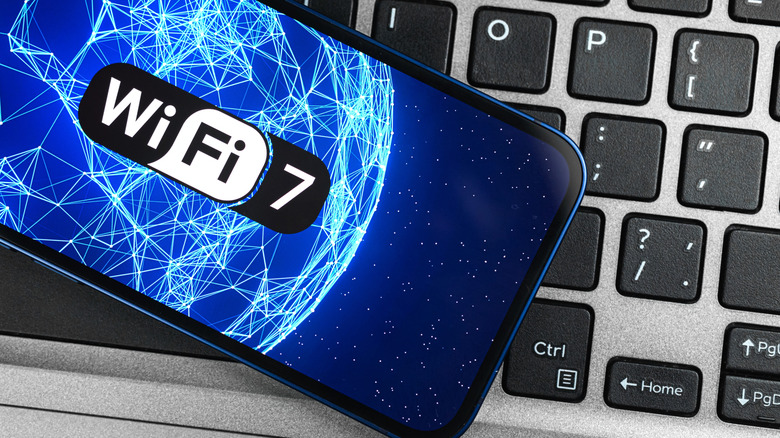
Under the Hood: The IEEE 802.11be Standard Explained
When we talk about wi-fi 7 devices, we are looking at a radical shift in how wireless signals are handled. For many years, we focused simply on raw speed, but the IEEE 802.11be standard—the official designation for Wi-Fi 7—prioritizes reliability and Extremely High Throughput (EHT) in crowded environments. If you have ever felt your phone struggle to maintain a connection in a busy airport or a packed stadium, you have experienced the limitations that Wi-Fi 7 aims to solve.
The magic happens through several technical leaps. First is the 320 MHz channel bandwidth. Think of the 5 GHz or 6 GHz frequency bands as highways; where previous generations used narrower lanes, Wi-Fi 7 doubles the width of these lanes compared to Wi-Fi 6. This allows for significantly more data to flow simultaneously. To make that data transfer even denser, the standard uses 4096-QAM modulation. While Wi-Fi 6 used 1024-QAM, this upgrade allows each signal to carry 12 bits of data instead of 10, resulting in a 20% increase in peak transmission rates.
Perhaps the most important feature for anyone looking at wi-fi 7 vs 6e benefits for smartphones is Multi-Link Operation (MLO). Previously, your device would connect to a single band—either 2.4 GHz, 5 GHz, or 6 GHz. With Multi-Link Operation (MLO), your phone can aggregate multiple bands at the same time. This means if one band becomes congested, the device seamlessly shifts or uses both simultaneously to maintain a stable, low-latency connection. It also makes incredible use of the Unlicensed 6 GHz spectrum, which remains less crowded than older frequencies. This results in superior Network congestion mitigation, ensuring that your smart home gadgets don’t fight for bandwidth with your 8K streaming or cloud gaming sessions.
2026 Smartphone Checklist: Samsung, Apple, and Beyond
Not every phone released in 2026 is ready for the new standard. To determine how to tell if my phone has wifi 7, you generally need to look at the processor and the manufacturer’s specific feature cuts. For the most part, Wi-Fi 7 has become a standard feature for major flagship smartphones including the Apple iPhone 17 and Samsung Galaxy S26 series, excluding specific budget-focused or FE models.
If you are specifically looking for samsung phones with wifi 7, the list is led by the Samsung Galaxy S26 Ultra, S26+, and the older S25 Ultra and S25+. These devices utilize the Qualcomm FastConnect system which is integrated into the latest Snapdragon chips, providing the necessary radio hardware for 320 MHz operation. However, Samsung often omits these high-end chips in their Fan Edition (FE) or A-series models to hit a lower price point. If you are buying a Galaxy S26 FE, for example, you are likely limited to Wi-Fi 6E.
When asking is apple iphone models with wi-fi 7 support available, the answer is yes, but with the typical Apple tiering. The iPhone 16 Pro and Pro Max was the starting point, and the iPhone 17 Pro and 17 Pro Max have further refined the performance. The standard iPhone 17 also includes the tech, but the rumored budget-friendly iPhone 17e is expected to stick to older wireless standards.
| Device Category | Wi-Fi 7 Compatible (2026) | Excluded / Not Compatible |
|---|---|---|
| Apple iPhone | iPhone 17 Pro, 17 Pro Max, 16 Pro | iPhone 17e, iPhone 15 series and older |
| Samsung Galaxy | Galaxy S26 Ultra, S26+, S25 Ultra | Galaxy S26 FE, S25 FE, A-series |
| Google Pixel | Pixel 10 Pro, Pixel 10 | Pixel 8a and older |
| OnePlus | OnePlus 14, 13 | OnePlus Nord series |
Beyond the big two, other manufacturers like Google and OnePlus have been aggressive. The Pixel 10 Pro features the Tensor G5 chip, which works alongside the latest modems to support the full Extremely High Throughput (EHT) suite. Many of these devices also use MediaTek Filogic chips, which have become a powerhouse in the wireless space, offering competitive performance to Qualcomm's high-end solutions. Always look for the Wi-Fi Alliance certification on the box or in the specs to be certain.
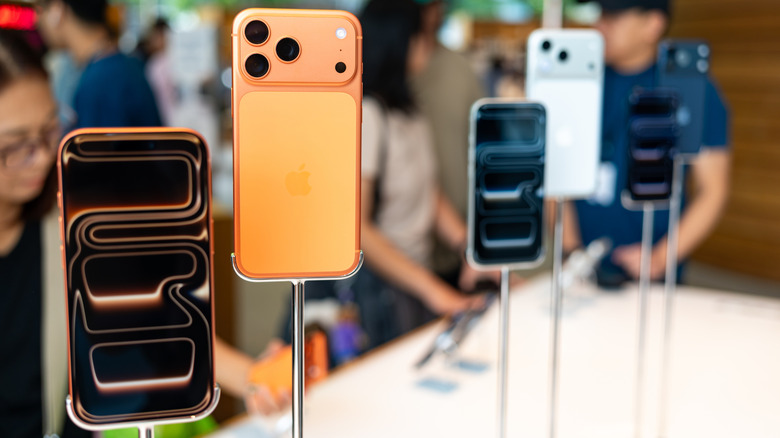
Tablets and Laptops: The Best Wi-Fi 7 Computing Hardware
While phones are often the focus, the true value of 802.11be shines on larger screens where multi-gigabit data transfer is essential for workflow. We have seen a surge in wifi 7 tablets during the first half of 2026. The Samsung Galaxy Tab S10 Ultra is the current gold standard, featuring incredible wireless speeds that make wireless file transfers between a laptop and tablet nearly instantaneous. For Apple enthusiasts, the M4 and M5-equipped iPad Pro models are the primary choices in the wifi 7 compatible tablet list 2026.
In the world of professional computing, finding wifi 7 compatible laptops has become much easier. Intel has made the standard a cornerstone of their Evo platform. The best wifi 7 laptops 2026 usually feature the Intel Core Ultra Series 2 processors or the Snapdragon X Elite for Windows on ARM. These machines are designed for creators who need to move massive video files or developers working with cloud-based environments.
Tech Tip: The MLO Advantage Multi-Link Operation (MLO) is the "killer feature" for 2026. It allows your laptop to maintain two separate data streams simultaneously. If your cat walks in front of your router and blocks the 6 GHz signal, the 5 GHz stream keeps your Zoom call or gaming session active without a single dropped frame.
Infrastructure & Reality Check: Is Wi-Fi 7 Overkill?
With all this excitement about new wi-fi 7 devices, we have to ask a difficult question: is it overkill for the average user? Even though your phone can theoretically hit 46 Gbps, the reality is dictated by your internet service provider (ISP). Most residential fiber connections in 2026 top out at 2 Gbps or 5 Gbps. While Wi-Fi 7 helps you reach those speeds wirelessly, you are still limited by the pipe coming into your house.
Furthermore, there is the question of coverage. Because Wi-Fi 7 relies heavily on the 6 GHz band to achieve its highest speeds, physical obstacles become an issue. Does WiFi 7 penetrate walls better than older standards? Not necessarily. Higher frequencies like 6 GHz naturally struggle more with solid objects than the 2.4 GHz band. However, because Wi-Fi 7 is more efficient and uses Multi-Link Operation (MLO) to bridge signals, the overall perceived reliability in a multi-room home is usually better than Wi-Fi 6.
To truly unlock these benefits, your device must be paired with a Wi-Fi 7 certified router. Buying a new iPhone or Galaxy phone won't give you Wi-Fi 7 speeds if you're still using the router your ISP gave you four years ago. The cost of entry for 10G-capable networking gear remains high, which is the primary downside for most households.
FAQ
What devices actually use WiFi 7?
As of 2026, the primary users of the standard are flagship smartphones like the iPhone 17 Pro and Galaxy S26 Ultra, high-end tablets such as the iPad Pro and Galaxy Tab S10 Ultra, and premium laptops equipped with Intel Core Ultra or Snapdragon X Elite chips. Some high-end smart TVs and VR headsets are also beginning to adopt the standard to handle high-bitrate 8K streaming.
What is a WiFi 7 device?
A Wi-Fi 7 device is any electronic hardware that includes a wireless radio and processor certified to meet the IEEE 802.11be standard. These devices are capable of using wider 320 MHz channels, 4096-QAM modulation for denser data packets, and Multi-Link Operation to connect to multiple frequency bands simultaneously for better stability and speed.
Is WiFi 7 overkill?
For the average person browsing social media, Wi-Fi 7 might seem like overkill today. However, for households with many connected devices, gamers who require low latency, or professionals moving large files, the increased efficiency and reduced interference are significant. It is more about network capacity and reliability than just reaching unreachable peak speeds.
Does WiFi 7 penetrate walls better?
Wi-Fi 7 does not inherently change the physics of radio waves, so the 6 GHz signals it uses still struggle with thick walls more than 2.4 GHz signals. However, because it can stay connected to multiple bands at once (MLO), it can often maintain a more stable connection in a room behind a wall by using the 5 GHz band while simultaneously trying to pull data from the 6 GHz band.
Is there a downside to WiFi 7?
The main downsides are cost and power consumption. Wi-Fi 7 routers are currently more expensive than their Wi-Fi 6 counterparts. Additionally, on the mobile side, using the full 320 MHz bandwidth and multiple radio links can drain a phone's battery slightly faster than using older, less demanding wireless standards if the network is under constant heavy load.
Can WiFi 7 penetrate walls?
Yes, it can penetrate walls, but it follows the same principles as previous generations. The 2.4 GHz and 5 GHz bands included in the Wi-Fi 7 standard handle wall penetration well. The high-speed 6 GHz band is more easily obstructed, but the clever software management within Wi-Fi 7 hardware ensures you don't lose your connection even when moving between rooms.
Final Thoughts: The Path to Future-Proofing
If you are planning to buy a new smartphone or laptop in late 2026, checking for wi-fi 7 devices compatibility is one of the smartest moves you can make. While you might not have a 10G router in your home today, you likely will within the next three to five years. By choosing hardware that supports the IEEE 802.11be standard now, you ensure that your device remains fast and relevant as home networks evolve to meet the demands of higher resolutions and more complex smart home ecosystems.
Before you make a purchase, always verify the specific model. Remember that "standard" models or "FE" editions in the Samsung and Apple lineups often skip these high-end wireless features. Focus on the Pro, Ultra, or flagship tiers to ensure you are getting the full suite of Multi-Link Operation (MLO) and Extremely High Throughput (EHT) benefits. The wireless landscape is changing fast, and being Wi-Fi 7 ready is the best way to stay ahead of the curve.