As we approach the 50th anniversary of the NASA Spinoff program, it is incredible to look back at how much our domestic lives have been shaped by the stars. Since 1976, the technology transfer initiatives at NASA have ensured that breakthroughs designed for the vacuum of space eventually find their way into our living rooms and kitchens. While we often think of space exploration as a distant, abstract endeavor, the reality is that the miniaturization and portability of modern electronics are direct descendants of the rigorous demands of the Apollo and Skylab missions.
Quick Facts
- Impact: NASA technology transfer has influenced everything from photography to home safety.
- Volume: CMOS sensors, a JPL invention, now see a production volume of roughly 7 billion units every year.
- Efficiency: Space-age battery optimization led to a revolution in cordless home appliances.
- Safety: Ionization technology originally meant for Skylab is now a standard in residential smoke detectors.
- Durability: Materials science advancements like diamond-like carbon coatings make our screens 10 times more scratch-resistant.
- Gaming: The digital fly-by-wire systems of spacecraft directly influenced the evolution of gaming joysticks.
Many common home electronics originated from NASA research and the Apollo missions. Everyday NASA inventions like cordless vacuums evolved from battery-powered drills developed to collect lunar samples, while the CMOS active-pixel sensors in modern smartphone cameras were created at the Jet Propulsion Laboratory to miniaturize spacecraft imaging. Additionally, adjustable ionization smoke detectors were refined for use on the Skylab space station before becoming a residential safety standard.
1. The Smartphone Revolution: CMOS Image Sensors
The camera in your pocket exists because NASA needed to shrink a spacecraft. In the early days of digital imaging, the industry relied on Charge-Coupled Devices (CCD). While effective, CCDs were power-hungry and bulky—two traits that do not fly well in deep space missions where every gram and milliwatt counts.
In the 1990s, a team at the Jet Propulsion Laboratory led by Eric Fossum sought a way to reduce the footprint of imaging hardware. They turned to complementary metal-oxide-semiconductor (CMOS) technology. By developing active-pixel sensors, they managed to integrate the imaging functions onto a single chip. This breakthrough in microelectronics allowed for a 100x reduction in power consumption compared to CCDs.
This NASA CMOS sensor technology in smartphone cameras changed everything. It allowed manufacturers to fit high-quality cameras into the slim profile of a mobile phone without draining the battery in minutes. Today, this NASA spinoff technology is the backbone of the social media age and mobile photography. According to NASA records, the CMOS image sensor technology developed by NASA's Jet Propulsion Laboratory has reached a production volume of approximately seven billion units annually, powering the vast majority of modern smartphone cameras.
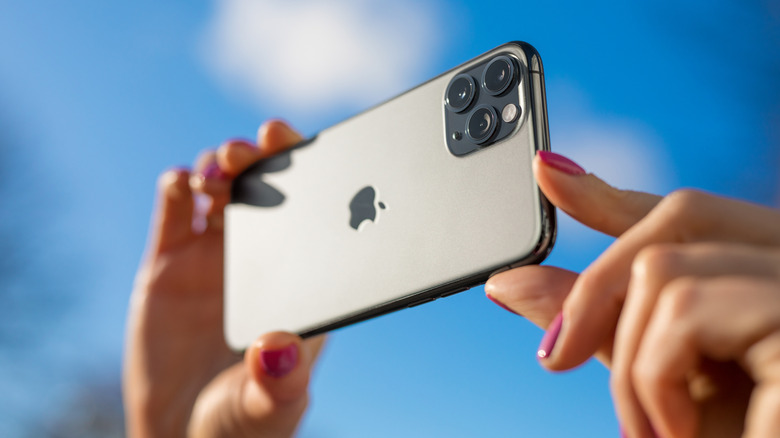
NASA Fun Fact: The original goal for CMOS sensors wasn't for selfies—it was to enable highly capable, miniaturized cameras for interplanetary spacecraft to take pictures of distant worlds with minimal power.
2. Cleaning Without Cords: Portable Battery Tech
If you have ever used a handheld vacuum to clean up a spill in the kitchen, you are using tech designed for the Moon. During the Apollo program, NASA needed a way for astronauts to extract core samples from beneath the lunar surface. To do this, they required a drill that was powerful, lightweight, and entirely cordless.
NASA partnered with Black & Decker to develop these portable power tools. The challenge was massive: creating a motor that could handle the torque required for lunar drilling while optimizing battery management to ensure it wouldn't fail in zero-gravity environments. This collaboration led to sophisticated computer programs that analyzed motor design and battery efficiency.
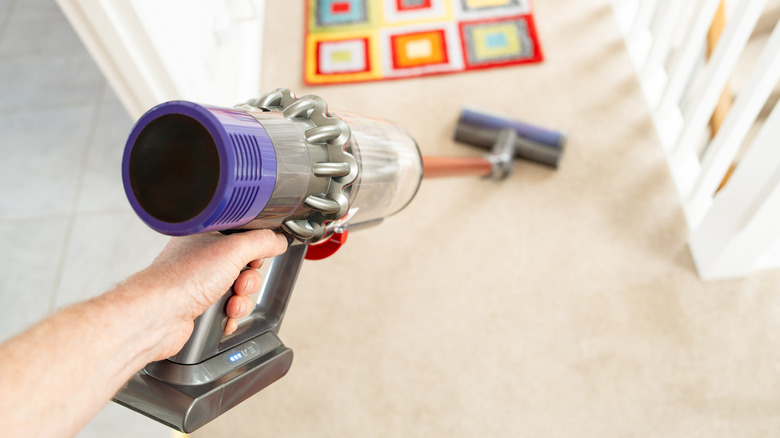
After the Apollo missions, Black & Decker applied this space age household electronics expertise to the consumer market. They utilized the same principles of battery optimization to create the first cordless handheld vacuums. Specifically, the 1979 Dustbuster was a direct result of the technology transfer from the lunar drill. This partnership between NASA and Black & Decker to develop battery-powered tools for the Apollo missions led to the creation of cordless home appliances, such as the Dustbuster, which have generated hundreds of millions of dollars in sales. Today, the best cordless vacuums with NASA origins continue to use these evolved battery management systems to provide long runtimes and high suction power in our homes.
3. Household Safety: Ionization Smoke Detectors
Safety is a primary concern in the confined quarters of a space station. During the 1970s, as NASA prepared for the Skylab mission—the first U.S. space station—they needed a way to detect toxic gases or fires long before they became a visible threat.
In collaboration with Honeywell, NASA refined ionization technology to create a sensor that could be adjusted for different sensitivity levels. This prevented "nuisance alarms" while ensuring that even the faintest trace of combustion would be caught. This was critical in space, where smoke doesn't "rise" the way it does on Earth due to the lack of gravity-driven convection.
The commercialization of this tech happened rapidly. By taking the adjustable sensitivity developed for Skylab and shrinking the hardware, Honeywell was able to produce the first affordable residential smoke alarms. This shows how NASA technology improved home smoke detectors by making them reliable enough for daily use without constant false triggers from cooking. Today, these ionization smoke detectors are a fundamental safety standard in nearly every modern home, protecting millions of families from fire hazards.
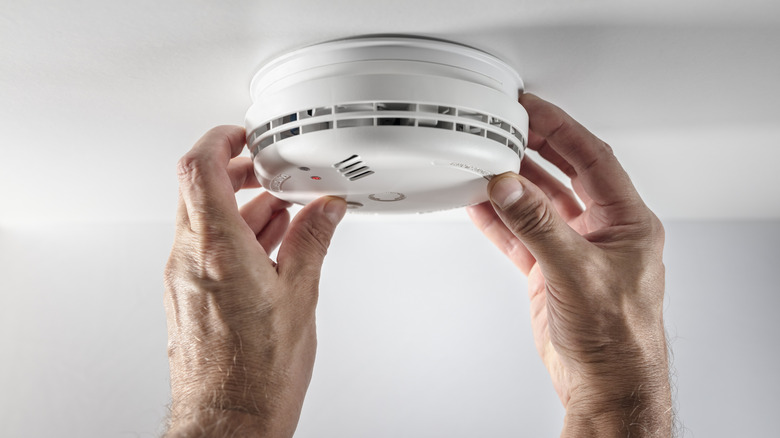
NASA Fun Fact: In the microgravity of space, smoke doesn't drift upward; it forms a sphere. This meant NASA's sensors had to be far more sensitive than traditional terrestrial ones to detect fire early.
4. Visual and Physical Comfort: Scratch-Resistant Lenses & Memory Foam
Materials science is perhaps where NASA has had the most "invisible" impact on our home electronics and comfort. Consider the screens on your tablet or the glasses on your face. In space, astronaut helmet visors are subjected to extreme radiation and abrasive space dust. To protect them, NASA developed diamond-like carbon (DLC) coatings.
This abrasion-resistant coating was eventually licensed to Foster Grant, who used it to create the first truly durable plastic lenses. A scratch-resistant coating developed by NASA to protect astronaut helmet visors made plastic lenses 10 times more resistant to surface damage and is now a standard technology used in smartphone screens and eyeglasses. This scratch resistant coating for glasses NASA history is a prime example of how extreme environment solutions become everyday necessities.
Simultaneously, NASA was working on physical comfort through the development of Temper Foam. Originally engineered as a pressure-absorbing material for aircraft seating to improve crash protection, this open-cell polyurethane-silicon plastic was designed to mold to the body under pressure and return to its original shape. Today, we know it as memory foam. The benefits of memory foam mattresses from space exploration extend beyond just sleep; the material is used in modern electronics cases, protective padding for gear, and even in high-end office chairs that millions of us use every day while working from home.

5. Next-Gen Control: Gaming Joysticks
If you have ever played a flight simulator or used a high-end gaming controller, you have handled a piece of the Apollo program. The evolution of gaming joysticks from NASA picklesticks is one of the most interesting stories of consumer products from space research.
The "picklestick" was the nickname for the controller used by Apollo astronauts to manage the trajectory of the Command Module. Unlike the mechanical linkages used in traditional aircraft at the time, NASA utilized digital fly-by-wire technology. This system translated the physical movements of the stick into electronic signals that a computer could interpret to adjust the spacecraft’s thrusters.
This shift from mechanical to electronic control was the catalyst for the modern gaming industry. As personal computers and consoles entered the home in the 1980s, engineers looked to the Jet Propulsion Laboratory and NASA's control systems to design peripherals. The precision and ergonomic design of the Apollo controllers paved the way for the joysticks and thumbsticks we use today. Whether you are navigating a virtual galaxy or a local race track, you are using the same digital fly-by-wire principles that helped Neil Armstrong land on the moon.

Comparison: NASA Need vs. Home Electronic Result
| NASA Need | Home Electronic Result |
|---|---|
| Lunar core sampling drills | Cordless hand vacuums (Dustbuster) |
| Low-power spacecraft imaging | High-res smartphone cameras |
| Skylab toxic gas detection | Modern home smoke alarms |
| Astronaut helmet protection | Scratch-resistant smartphone screens |
| Apollo trajectory control | Precision gaming joysticks |
| Aircraft crash protection | Memory foam mattresses and seating |
FAQ
What are common everyday items invented by NASA?
Many household items have roots in NASA research, including cordless power tools, smartphone camera sensors, scratch-resistant eyeglass lenses, and ionization smoke detectors. These products exist because NASA needed to solve specific problems related to weight, power, and safety in space.
Did NASA invent memory foam?
Yes, memory foam was originally called Temper Foam. It was developed in the 1960s by NASA-funded researchers to improve the safety and comfort of aircraft cushions for pilots and astronauts during high-G maneuvers and potential crashes.
What are the most famous NASA spinoff technologies?
Some of the most recognizable spinoffs include CMOS image sensors used in almost all digital cameras, the cordless vacuum technology derived from lunar drills, and the digital fly-by-wire systems that revolutionized both commercial aviation and home gaming controllers.
Did NASA create scratch-resistant lenses?
NASA developed diamond-like carbon coatings to protect the visors of astronaut helmets from the abrasive environment of space. This technology was later licensed to commercial companies to make plastic eyeglass lenses and smartphone screens much more durable.
Are cordless tools a result of NASA research?
While battery-powered tools existed in a very primitive form, the modern, efficient cordless tools we use today were catalyzed by a partnership between NASA and Black & Decker. They developed a specialized cordless drill for the Apollo missions that led to the battery-optimization technology used in home appliances.