Quick Facts
- The Gold Standard: Toyota Century remains the ultimate flagship of Japanese automotive history.
- The Modern MPV: Luxury minivans like the Lexus LM have replaced traditional sedans for many high-ranking CEOs.
- The Legal Barrier: US buyers must wait 25 years from the date of manufacture for legal registration and road use.
- Unique Materials: A distinct preference for high-quality wool over leather to ensure maximum cabin silence.
- The 2026 Opportunity: Sought-after 2001 models like the Crown S170 are finally becoming legal to import this year and next.
JDM luxury cars offer a level of opulence and technical sophistication often unseen in North American markets, yet they remain largely out of reach due to strict importation laws. While enthusiasts crave these high-end Japanese domestic market exclusives, the 25-year import rule creates a significant barrier for modern flagship executive sedans and luxury JDM minivans. Modern JDM luxury cars are primarily unavailable in the United States because they were not originally built to meet U.S. federal safety and emissions standards, meaning iconic models like the current Toyota Century or Lexus LM cannot be legally registered for road use until they reach 25 years of age.
Why These Gems are Forbidden: The 25-Year Rule
For many American enthusiasts, the phrase 25-year import rule is a source of constant frustration. This restriction stems from the Imported Vehicle Safety Compliance Act of 1988, a piece of legislation that effectively ended the "grey market" for foreign vehicles. Under this law, any vehicle not originally manufactured for the U.S. market must be at least 25 years old to be exempt from Federal Motor Vehicle Safety Standards (FMVSS).
This means that while our neighbors in Canada can enjoy high-end JDM imports after only 15 years, those in the United States are left watching from the sidelines. These Japanese domestic market exclusives are often built with a right-hand drive configuration and tailored for Japan's unique urban infrastructure, featuring technology and comfort levels that the U.S. Department of Transportation hasn't had the chance to "safety-verify." For the modern high-end Japanese domestic market exclusives, the clock is still ticking.
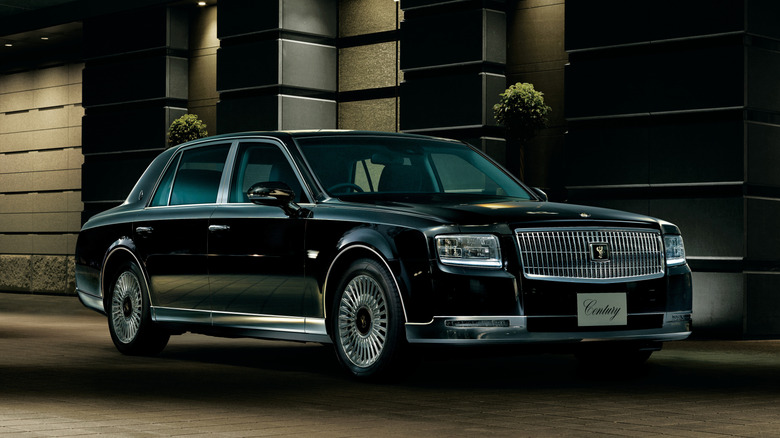
1. Toyota Century (Sedan & SUV): The Emperor’s Choice
When you discuss the pinnacle of Japanese automotive luxury, the conversation begins and ends with the Toyota Century. Historically the vehicle of choice for the Emperor of Japan and top government officials, the Century represents a conservative yet uncompromising approach to comfort. While the older GZG50 generation was famous for its silky-smooth V12 engine heritage, the modern sedan has transitioned to a sophisticated hybrid system designed to provide a vibration-free chauffeur-driven experience.
What truly sets the Century apart from a Rolls-Royce or a Bentley is the choice of materials. In Japan, leather is often viewed as "noisy"—it squeaks when you move. Therefore, the Century famously utilizes jacquard wool upholstery. This material is not only incredibly soft and durable but also contributes significantly to the vehicle's legendary NVH suppression. The interior is a sanctuary of silence, featuring power-reclining seats with integrated ottomans and even a massager for the rear passengers.
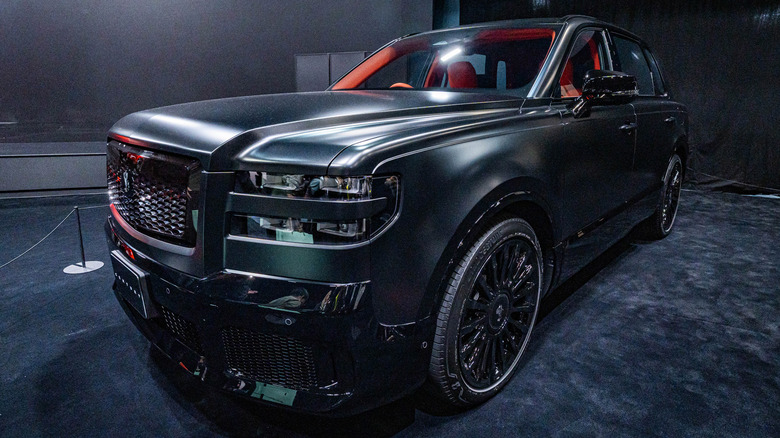
Recently, Toyota expanded this prestigious lineup to include an ultra-luxury SUV. Starting at over $170,000, this high-riding flagship executive sedans alternative offers the same level of hand-applied paint and the iconic "Phoenix" emblem, which takes a master craftsman weeks to engrave. It is a masterpiece of Japanese executive cars engineering that remains tantalizingly out of reach for U.S. collectors.
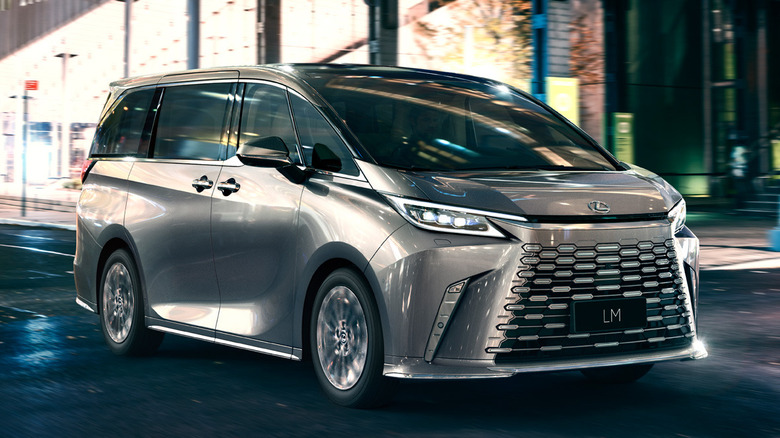
2. Lexus LM: The Ultimate Mobile Office
In the Western world, the minivan is seen as a family hauler. In Japan, the luxury JDM minivans segment is where the real money is spent. The Lexus LM, or "Luxury Mover," is the crown jewel of this executive MPV segment. It isn't designed for school runs; it is designed for CEOs who need a mobile office or a private jet for the road.
The flagship four-seat configuration of the Lexus LM features a massive privacy glass partition that separates the driver from the rear passengers. Mounted on that partition is a 48-inch theater screen, perfect for Zoom calls or high-definition movies. The comfort is further enhanced by Warmth-Sensing IR Matrix Sensors that monitor the body temperature of passengers and adjust the climate control automatically.
The level of detail in the Lexus LM is staggering. The climate-controlled captain's chairs feature ottoman leg rests and can recline nearly flat. This focuses entirely on the chauffeur-driven experience, ensuring that the occupant arrives at their destination more refreshed than when they left. While Lexus sells the LX and LS in America, the LM remains a forbidden fruit that perfectly illustrates the Toyota Century vs Lexus LM luxury features comparison in terms of modern utility versus traditional stateliness.
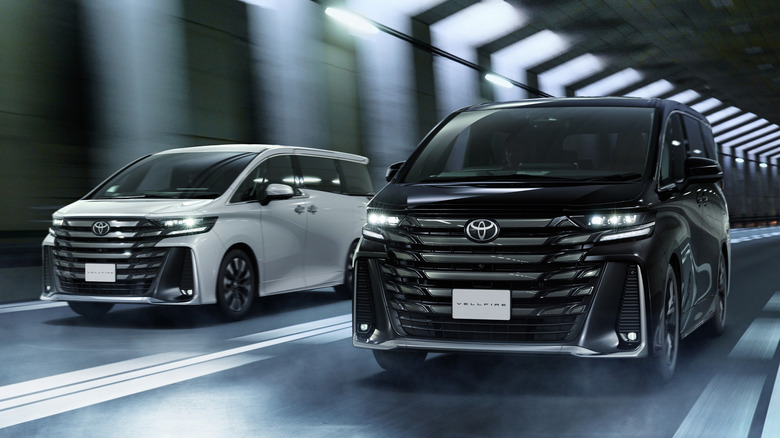
3. Toyota Alphard & Vellfire: The VIP Standard
If the Lexus LM is the pinnacle, the Toyota Alphard and Vellfire duo are the vehicles that brought the luxury MPV to the masses—well, the wealthy masses. These two models share a platform but offer different personalities. The Alphard is the more traditional luxury choice, while the Vellfire adopts a "Transformer" aesthetic with more aggressive styling that appeals to those in the Bippu car culture scene.
The Executive Lounge trim of the Alphard is legendary. It features airline-style business class seating with soft-close doors and high-quality wood grain accents. These vehicles are the backbone of executive transport in Tokyo and Hong Kong. They offer a sense of presence that even a long-wheelbase Mercedes S-Class struggles to match, thanks to their sheer interior volume.
In terms of VIP style JDM cars features and specifications, the Alphard and Vellfire provide everything from ambient lighting with 64 colors to a JBL premium sound system. They are the undisputed kings of the Tokyo VIP scene, proving that for many, a luxury minivan is far more practical and prestigious than a traditional sedan.
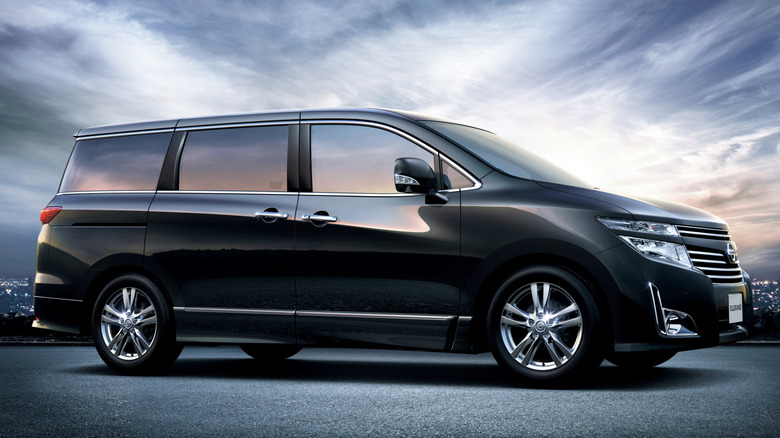
4. Nissan Elgrand (E52): The Forgotten Pioneer
While Toyota currently dominates the executive transport market, it was the Nissan Elgrand that originally pioneered the luxury MPV category. The current E52 generation remains a cult favorite among enthusiasts who prefer a slightly more driver-focused experience. Unlike its competitors, the Elgrand sits lower to the ground, offering better handling and a "low-slung" luxury feel.
The interior of the Nissan Elgrand is a masterclass in space management, featuring "Magic Storage" solutions and premium materials that rival the best high-end JDM imports. Though it has faced stiff competition, the Elgrand's air suspension systems and whisper-quiet cabin make it a formidable alternative to the more common Toyotas. It represents a different flavor of Japanese domestic market exclusives, focusing on a sporty elegance that is hard to find in the North American market.
5. Toyota Crown Athlete & Royal (GRS200/S170)
The Toyota Crown is perhaps the most famous nameplate in the history of Japanese executive cars. Before the Crown became a crossover in the United States, it was a dedicated line of flagship executive sedans. For decades, it was split into two main branches: the "Royal" for those seeking pure comfort and the "Athlete" for those who wanted a bit of performance with their luxury.
The S170 series, particularly those with the 1JZ or 2JZ engine heritage, has become a prime target for importers. As these models hit the 25-year mark, they are finally becoming legal to bring to the U.S. Meanwhile, the newer GRS200 models represent the tech-heavy future of the brand, featuring advanced safety systems and hybrid efficiency that we won't see on American roads for another decade.
Luxury Comparison Table
| Vehicle | Primary Luxury Feature | Engine Type | US Eligibility Year (Modern) |
|---|---|---|---|
| Toyota Century | Jacquard Wool & Massaging Seats | V8 Hybrid / V12 | 2043 (SUV) / 2042 (Sedan) |
| Lexus LM | 48-inch Rear Theater Screen | 2.4L Turbo Hybrid | 2048 |
| Toyota Alphard | Executive Lounge Captain's Chairs | 2.5L Hybrid / 3.5L V6 | 2040+ |
| Nissan Elgrand | Low-floor "Magic Storage" | 3.5L V6 | 2035 |
| Toyota Crown | Athlete Sport-Tuned Suspension | 3.5L V6 / 2.5L Hybrid | 2033 (GRS200) |
FAQ
What defines a JDM luxury car?
A JDM luxury car is a vehicle manufactured specifically for the Japanese Domestic Market that prioritizes passenger comfort, advanced technology, and high-end materials. Unlike global models, these cars often feature right-hand drive, unique executive amenities like jacquard wool, and a focus on the chauffeur-driven experience rather than just driver metrics.
Are JDM luxury cars worth importing?
For many collectors and enthusiasts, the answer is a resounding yes. These vehicles offer a unique blend of Japanese reliability and extreme luxury that isn't available in domestic U.S. models. The build quality, unique interior materials, and cultural prestige make them highly desirable once they clear the 25-year import rule.
What are the legal requirements for owning a JDM luxury vehicle?
To legally own and drive a JDM luxury car on U.S. roads, the vehicle must be at least 25 years old from its specific month of manufacture. This exempts it from FMVSS requirements. Owners must also ensure the car passes state-level emissions tests (which can be strict in places like California) and is properly documented through U.S. Customs and the DOT.
How do JDM luxury cars compare to their domestic equivalents?
JDM luxury cars often focus more on rear-seat comfort and "silent" luxury. While an American luxury SUV might focus on towing capacity and leather interiors, a JDM executive car or minivan will focus on NVH suppression, ottoman leg rests, and specialized features like the 48-inch screens found in the executive MPV segment.
Are parts easy to find for JDM luxury cars?
It depends on the model. Many JDM luxury cars share engines or chassis components with global models (for example, some Toyota Crown parts are interchangeable with Lexus GS parts). However, specific interior trim pieces, body panels, and unique JDM electronics can be difficult and expensive to source, often requiring direct shipping from Japan.