Our Top Picks
The best portable DACs in 2026 are led by the Chord Mojo 2 for pure sound quality and the FiiO BTR17 for wireless versatility. For budget users, the Jcally JM6 Pro offers the best USB-C headphone adapter DAC performance. For iPhone users seeking a slim profile, the Khadas Tea Pro is the standout choice, while the iFi Diablo II serves as the ultimate reference grade portable DAC for demanding high-impedance headphones.
The best portable DACs in 2026 cater to various needs, from budget-friendly dongles to reference-grade hardware. Key recommendations include the Chord Electronics Mojo 2 for high-end performance and custom FPGA processing, the Khadas Tea Pro for its convenient MagSafe design, and the Qudelix-5K for users requiring advanced DSP and EQ control. For those on a budget, the Jcally JM6 Pro offers dual-chip high-resolution audio in an ultra-compact form factor.
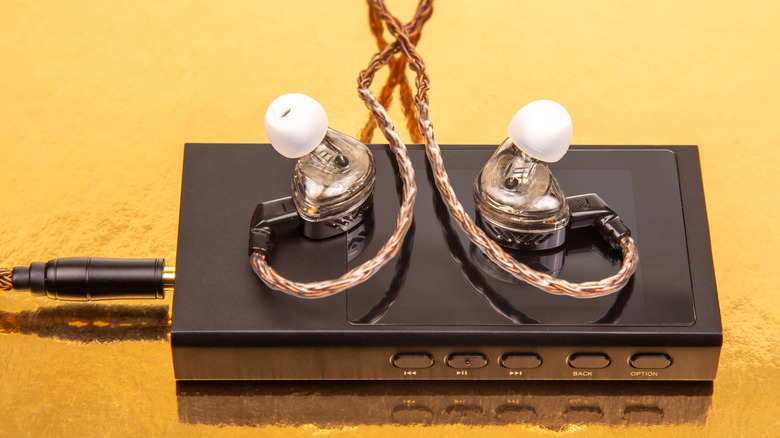
The 2026 Audiophile Landscape: xMEMS and Balanced Power
As we navigate through 2026, the audio world has seen a dramatic shift in how we consume high-fidelity music on the go. The global audiophile headphones, headphone amplifiers, and DACs market reached a valuation of USD 1,095.2 million in 2026, signaling that the average listener is no longer satisfied with standard smartphone outputs. In fact, portable DAC and headphone amplifier combos constituted approximately 20% of the total audiophile market share by early 2026.
We have moved beyond the simple dongle era. Today, the conversation is dominated by sampling rate precision and the ability to drive the latest generation of xMEMS solid-state drivers. While smartphone manufacturers continue to omit the 3.5mm jack, the third-party market has responded with sophisticated hardware that ensures bit-perfect playback and superior signal-to-noise ratio. We are also seeing a universal adoption of the 4.4mm balanced output, which provides the necessary voltage to drive power-hungry planar magnetic headphones without the bulk of a desktop stack.
Choosing the best portable balanced DAC with 4.4mm and 3.5mm outputs is no longer just about volume; it is about EMI shielding, native DSD support, and internal clocking that eliminates jitter. Whether you are using lossless streaming services or high-resolution local files, the hardware in your pocket now rivals what we used to keep on our desks just five years ago.
1. Jcally JM6 Pro: The Budget King
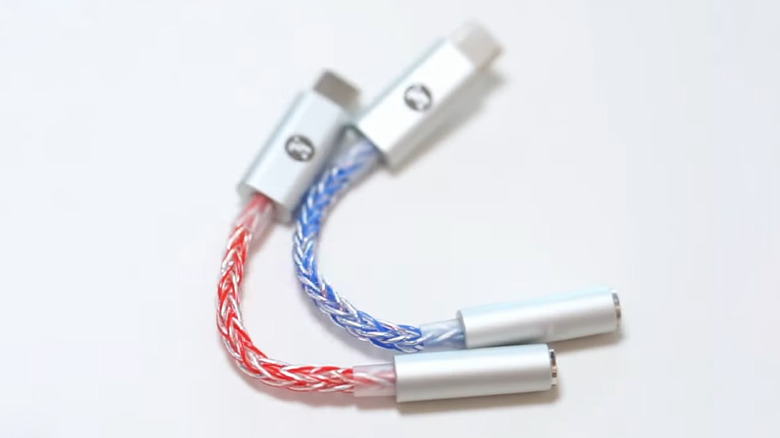
For many listeners, the journey into high-fidelity audio begins with a search for an affordable portable DAC for smartphone audio boost. The Jcally JM6 Pro has cemented its place as the definitive entry-level champion in 2026. This isn't just a simple wire; it is a sophisticated USB-C headphone adapter DAC that manages to pack a high-performance CX31993 DAC chip alongside a dedicated MAX97220 amplifier chip.
In our real-world listening tests, the JM6 Pro provided a noticeable lift in clarity over standard generic adapters. It offers a clean, relatively neutral sound signature that doesn't color the music too aggressively. While it lacks the meaty character of high-end units, its ability to provide bit-perfect playback at such a low price point is remarkable. The silver-plated cable construction helps with durability and EMI shielding, ensuring that your commute isn't interrupted by interference from your 5G radio.
If you are looking for the best USB-C headphone adapter DAC for hi-res music without spending hundreds, this is your starting point. It handles MQA hardware decoding efficiently enough for Tidal users and supports sampling rates up to 32-bit/384kHz, which is more than enough for the vast majority of lossless libraries.
Reasons to Buy
- Exceptionally small dongle form factor that fits in any pocket.
- Dual-chip architecture provides a genuine power boost for sensitive IEMs.
- No internal battery means you never have to worry about charging it.
Reasons to Avoid
- Limited power for high-impedance over-ear headphones.
- Lacks physical volume controls.
| Feature | Specification |
|---|---|
| DAC Chipset | Conexant CX31993 |
| Amplifier | MAX97220 |
| Max Resolution | 32-bit / 384kHz |
| Output | 3.5mm Single-ended |
| SNR | 124dB |
2. Khadas Tea Pro: The iPhone User's Choice
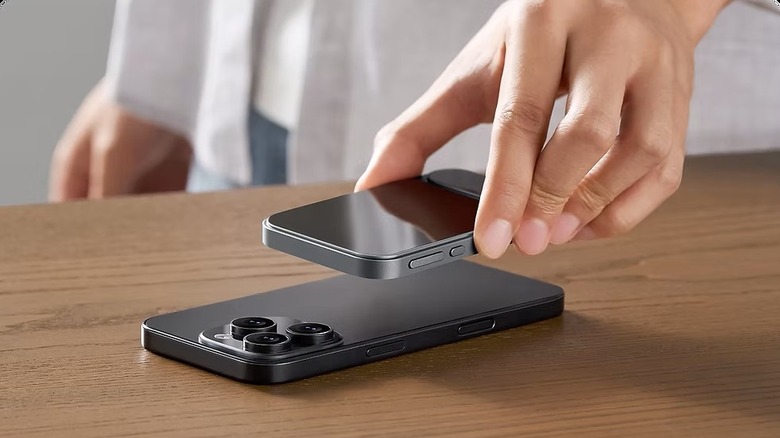
The Khadas Tea Pro has revolutionized the portable DAC amp combo category for smartphone users by solving the "dangling dongle" problem. Utilizing a compact MagSafe DAC for iPhone audiophiles design, it snaps onto the back of your device, creating a sleek, integrated unit. Under the hood, the Tea Pro utilizes the latest ESS ES9039Q2M chipset, part of the legendary ESS Sabre chipsets family known for their incredible detail and transparency.
What sets the Tea Pro apart in 2026 is its internal 2,100 mAh battery. By using its own power source, it avoids draining your phone’s battery during long listening sessions, a common complaint with smaller dongles. The sound signature here is what we describe as organic and airy. There is a sense of space in the soundstage imaging that makes live recordings feel immersive.
Connectivity is versatile, featuring high-definition Bluetooth for convenience and a bit-perfect wired mode for serious sessions. When used as a portable DAC amp combo with a wired connection, it supports full DSD256 and PCM 768kHz. The inclusion of the ESS Sabre architecture ensures that the signal-to-noise ratio remains high, even when using sensitive low-impedance in-ear monitors.
Reasons to Buy
- MagSafe integration creates a unified device feel.
- Independent battery prevents smartphone power depletion.
- Supports both LDAC Bluetooth and wired lossless playback.
Reasons to Avoid
- Adds physical thickness to the back of the phone.
- MagSafe strength can vary with certain phone cases.
| Feature | Specification |
|---|---|
| DAC Chipset | ESS ES9039Q2M |
| Battery Life | Up to 10 hours |
| Output | 3.5mm and 4.4mm Balanced |
| Bluetooth Codecs | LDAC, aptX HD, AAC |
| Max Power | 165mW @ 32 ohms |
3. FiiO BTR17: The Wireless Standard
Wireless audio has reached a tipping point in 2026, and the FiiO BTR17 is the reason why. As a dedicated Bluetooth DAC for IEMs, it utilizes the latest Qualcomm Bluetooth chips to support aptX Lossless and LDAC, ensuring that the wireless link is no longer the bottleneck in your audio chain. This is the ultimate portable Bluetooth DAC amp for wireless audiophile listening because it refuses to compromise on internal components.
The BTR17 features dual ES9069Q chips in a fully balanced configuration. When we tested this with several high-end IEMs, the sound signature was decidedly meaty. There is a weight to the low-end and a richness in the midrange that provides a very satisfying, musical experience. It handles complex orchestral passages with ease, maintaining separation without sounding clinical or dry.
One of the best features of the BTR17 is its versatility. It can act as a USB DAC for your laptop during the day and a wireless receiver for your IEMs during your evening walk. The dedicated app allows for sampling rate precision adjustments and custom EQ profiles that are saved directly to the device’s hardware, ensuring your preferred sound signature follows you regardless of which source device you connect to.
Reasons to Buy
- Leading-edge Bluetooth 6.0 support for near-lossless wireless audio.
- High-contrast display shows format, battery, and volume at a glance.
- Strong 4.4mm balanced output capable of driving most portable headphones.
Reasons to Avoid
- Glass finish is a fingerprint magnet.
- The clip can feel slightly bulky on thin clothing.
| Feature | Specification |
|---|---|
| DAC Chipset | Dual ESS ES9069Q |
| Output Power | 650mW @ 32 ohms (Balanced) |
| Inputs | USB-C, Bluetooth |
| Formats | LDAC, aptX Lossless, DSD256 |
| Weight | 68g |
4. Chord Mojo 2 (2026 Rev): Pure Performance
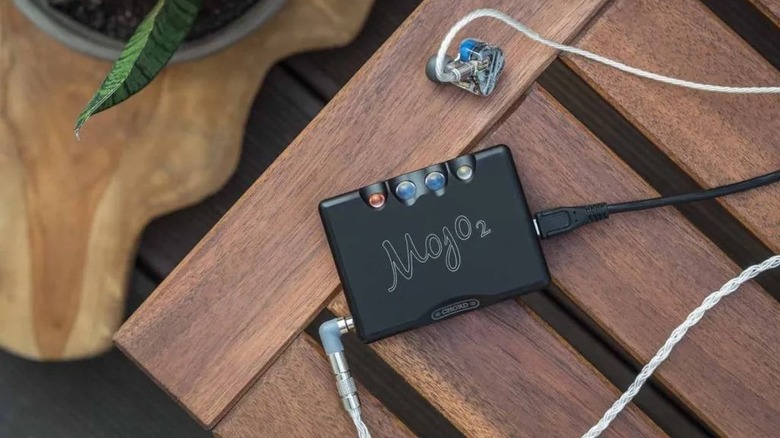
The Chord Mojo 2 remains a legend in the audiophile community, and the 2026 revision continues to dominate the high-end market. Unlike almost every other competitor that uses off-the-shelf DAC chips, Chord uses custom FPGA processing logic. This allows them to implement a 40,960-tap filter for timing accuracy that traditional chips simply cannot match. For context, the higher-tier Chord Electronics Hugo 2 utilizes a 49,152-tap filter, meaning the Mojo 2 is punching remarkably close to reference-grade desktop performance.
Listening to the Mojo 2 is an experience in transparency. The soundstage imaging is precise, allowing you to pinpoint the exact location of every instrument. It provides an organic presentation that sounds more like an analog tape reel than a digital file. The 2026 model finally brings a native 4.4mm balanced output, satisfying a long-standing request from the community.
This device is also a portable DAC with advanced DSP and custom EQ. Its unique "UHD DSP" allows for fine-tuning across the frequency spectrum without any loss in signal quality, which is vital for impedance matching with different headphones. Whether you are using easy-to-drive IEMs or more demanding planars, the Mojo 2 adapts perfectly.
Reasons to Buy
- Industry-leading timing and resolution thanks to FPGA processing.
- World-class DSP that doesn't degrade sound quality.
- Robust build quality designed for longevity.
Reasons to Avoid
- Unique "orb" interface has a learning curve.
- No Bluetooth support (requires an external module like the Poly).
| Feature | Specification |
|---|---|
| DAC Type | Custom FPGA (Xilinx Artix 7) |
| Tap Length | 40,960 |
| Battery Life | 8 hours |
| Outputs | Dual 3.5mm, 4.4mm Balanced |
| DSP | 104-bit UHD DSP |
5. iFi Audio Diablo II: The 'Transportable' Reference
When you need the absolute maximum power available in a mobile form factor, the iFi Audio Diablo II is the reference grade portable DAC for demanding high-impedance headphones. It is often described as "transportable" rather than portable due to its size, but it earns its keep by delivering a staggering 5,180mW of peak power. This is a versatile portable DAC amp combo for desktop and mobile that can truly replace a full-sized home system.
The Diablo II is one of the few devices in 2026 to offer full support for xMEMS solid-state drivers, which require a specialized high-voltage bias. The internal circuitry utilizes audiophile grade op-amps and high-quality capacitors to ensure that total harmonic distortion is kept to an absolute minimum. In our testing, the sound signature was incredibly fast and detailed, bordering on a dry presentation that reveals every flaw in a recording—perfect for critical listening.
With 22 heat dissipation rails and a striking "Devil Red" chassis, the Diablo II stays cool even when pushing high-voltage loads. It features EMI shielding that is second to none, ensuring that even when placed next to a high-powered router or smartphone, the background remains pitch black.
Reasons to Buy
- Enormous power output can drive any headphone on the market.
- Dedicated hardware support for next-gen xMEMS drivers.
- Includes a wide array of accessories and high-quality cables.
Reasons to Avoid
- Large and heavy compared to other portable options.
- Battery life is shorter when using the highest gain settings.
| Feature | Specification |
|---|---|
| DAC Chipset | Dual Burr-Brown |
| Peak Power | 5,180mW |
| Special Feature | xMEMS Direct Drive |
| Output | 4.4mm Balanced, 6.3mm SE |
| Connectivity | USB-C, S/PDIF, Bluetooth 5.4 |
Buying Guide: Matching DACs to Your IEMs and Headphones
Selecting from the best portable DACs requires an understanding of synergy. Not every expensive DAC will sound good with every pair of headphones. In 2026, the first thing to look for is the output connector. Most high-quality cables now come with a 4.4mm balanced plug, which offers better channel separation and more power. If your headphones are balanced, prioritize a portable DAC amp combo that offers a true balanced circuit.
Next, consider the sound signature. If your headphones are already very bright or analytical, a dry sounding DAC like the Diablo II might make the experience fatiguing. Instead, you might opt for the organic warmth of the Chord Mojo 2. Conversely, if your headphones are a bit dark or "veiled," the precision of the ESS Sabre chipsets found in the Khadas Tea Pro can help bring out missing detail and sparkle.
Finally, think about your use case. Do you need a Bluetooth DAC for IEMs to maintain freedom of movement, or are you sitting on a plane for ten hours where a wired USB-C headphone adapter DAC is more reliable? Always check the output impedance of the DAC; for low-impedance IEMs, you want an output impedance as close to zero as possible to avoid altering the frequency response of your earphones.
FAQ
What does a portable DAC actually do?
A portable Digital-to-Analog Converter (DAC) takes the digital data from your phone or laptop and converts it into an analog signal that your headphones can play. While every phone has a basic internal DAC, an external unit uses higher-quality components and dedicated amplification to provide better clarity, more power, and reduced background noise.
Is a portable DAC worth it for beginners?
Yes, a portable DAC is often the single most impactful upgrade a beginner can make. Even a budget-friendly option like the Jcally JM6 Pro can significantly improve the listening experience by providing a cleaner signal and more headroom than a standard phone or laptop jack.
Does a portable DAC improve sound quality significantly?
The improvement is usually very significant, especially when using high-quality headphones. You will notice better instrument separation, a wider soundstage, and more "texture" in the music. It allows you to hear details in your favorite tracks that were previously lost in the electronic noise of your mobile device.
Do portable DACs drain the battery of a smartphone?
Some do, while others do not. Small dongles that lack an internal battery will draw power directly from your smartphone's USB port. However, many mid-to-high-end models like the Khadas Tea Pro or Chord Mojo 2 have their own internal batteries, which preserves your phone's battery life during long listening sessions.
Do I need a portable DAC for streaming high-resolution audio?
While you can stream high-resolution audio without one, you won't actually be hearing the full quality. Most standard smartphone hardware caps the output at a lower resolution. To experience the full depth of 24-bit or 32-bit audio from services like Tidal or Apple Music, a dedicated DAC is required to bypass the phone's internal limitations.