Quick Facts
- Best-Seller: The Commodore 64 holds the record with 12.5 and 17 million units sold worldwide.
- Biggest Acquisition: HP purchased Compaq in 2002 for a staggering $25 billion, the largest in PC history at the time.
- Market Leader: In 1995, Packard Bell held 13% of the domestic market in the United States.
- Heritage: IBM defined the PC standard but eventually sold its personal hardware division to Lenovo in 2005.
- Direct-to-Consumer Pioneer: Gateway revolutionized PC sales with its direct-shipping model and iconic cow-spotted boxes.
Before the world settled on a few tech giants, the PC landscape was a wild frontier of innovation and beige plastic. These retro computers defined the 80s and 90s, from the record-breaking Commodore 64 to the sleek, mass-market designs of Gateway and Compaq. While these iconic brands have vanished through market consolidation or bankruptcy, their hardware legacy remains the foundation of everything we build today.
Commodore: The 8-Bit Legend
| Year Founded | Peak Product | Acquisition/Dissolution Year |
|---|---|---|
| 1954 | Commodore 64 | 1994 (Bankruptcy) |
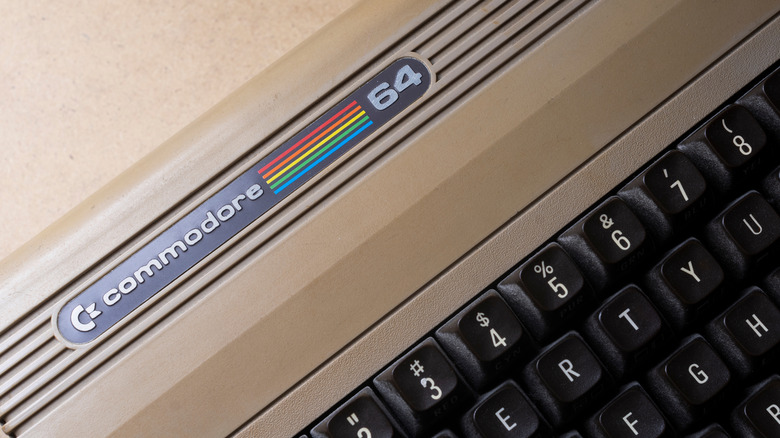
For many of us who grew up in the 1980s era, the Commodore 64 wasn't just a machine; it was the gateway to digital literacy. While Apple was positioning itself as a premium choice, Commodore took a different path by selling through department stores and toy shops. This strategy worked. By using a standard television as a display, they lowered the barrier to entry for millions of households.
The hardware was impressively capable for its time. At its heart was the MOS 6510 CPU paired with 64KB RAM, which was a massive amount of memory when competitors were still shipping machines with 16KB. What really set it apart for hobbyists was the SID 6581 sound chip, which produced a polyphonic synthesized sound that still has a cult following in the "chiptune" music scene today.
If you are just starting out with retro computers, the C64 is often cited as one of the best commodore computers for beginners because of its massive library of software and active modern community. Unlike the proprietary systems of the time, the C64 felt like a hobbyist's dream, encouraging users to peek under the hood and learn BASIC programming. However, the company struggled to transition into the 16-bit era effectively, and despite the technological superiority of the Amiga line, internal mismanagement led to their 1994 bankruptcy.
IBM: The Giant That Created the Standard
| Year Founded | Peak Product | Acquisition/Dissolution Year |
|---|---|---|
| 1911 | IBM Personal Computer (5150) | 2005 (Sold to Lenovo) |
It is impossible to discuss Silicon Valley history without giving IBM its due. When the IBM 5150 launched in 1981, it didn't just introduce a new product; it introduced the home computing revolution. IBM made a tactical decision that changed the world: they used off-the-shelf components. By choosing the Intel 8088 processor and an operating system from a tiny company called Microsoft, they inadvertently created a blueprint that others could follow.
This open approach led to the rise of PC clones. Companies like Columbia Data Products and Compaq reverse-engineered the IBM BIOS, allowing them to build machines that ran the same software but at a lower price point. While this was great for consumers, it eventually eroded IBM’s dominance. The x86 architecture they helped popularize became the industry standard, but IBM found itself competing in a race to the bottom where profit margins were razor-thin.
IBM’s exit from the personal hardware market was a slow burn, culminating in the 2005 sale of their PC division to Lenovo. Today, the legendary "ThinkPad" remains a staple of professional computing, though it no longer carries the three-letter blue logo. For those of us who appreciate hardware history, the original 5150 remains one of the most significant old computers from the 80s to keep in a collection.
Compaq: From Portable Clones to Industry Leader
| Year Founded | Peak Product | Acquisition/Dissolution Year |
|---|---|---|
| 1982 | Compaq Presario / Portable | 2002 (Acquired by HP) |
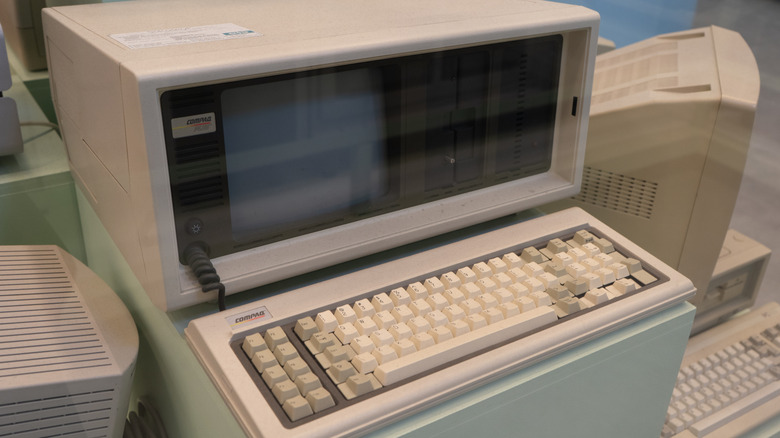
Compaq was the first company to successfully challenge IBM’s crown. Their first hit was the Compaq Portable, a "luggable" PC that proved you could have IBM compatibility in a (somewhat) mobile form factor. By the 1990s, they had moved from being a clone maker to being the largest supplier of PCs in the world.
The Compaq Presario line became the quintessential home computer for a generation. These were the machines that introduced many families to the World Wide Web and 90s gaming. If you are looking to build a compaq presario retro gaming setup today, you are likely looking for machines that can natively run MS-DOS or Windows 95. These systems were built with Pentium processors and often featured "all-in-one" designs that included built-in speakers and monitors.
Compaq’s downfall wasn't a lack of sales, but rather a series of expensive and ill-fated acquisitions, most notably their purchase of Digital Equipment Corporation (DEC). Struggling with debt and a shifting market, Compaq was eventually swallowed by Hewlett-Packard (HP) in 2002. For a few years, the brand lived on as a budget line, but it was officially retired in 2013, marking the end of an era for retro computers that once sat on nearly every desk in America.
Packard Bell & Gateway: The Retail vs. Direct Era
| Brand | Model Era | Strategy |
|---|---|---|
| Packard Bell | Mid-90s | Mass Retail (Sears, Costco) |
| Gateway | Late-90s/2000s | Direct-to-Consumer Shipping |
The mid-to-late 90s saw a fascinating tug-of-war between two very different business models. Packard Bell was the king of the "big box" store. They dominated nearly 50% of the mass-market retail channel in 1995. If you bought a PC at Sears or Price Club, it was almost certainly a Packard Bell. They were known for bundled software—often dozens of CDs worth of "edutainment"—packaged in the iconic beige box era style.
However, Packard Bell struggled with a reputation for low-quality internal components and high return rates. This opened the door for Gateway (formerly Gateway 2000), which utilized a direct-to-consumer model. Gateway skipped the middleman, allowing customers to customize their orders via catalog or phone. Their cow-spotted shipping boxes became a status symbol in suburban neighborhoods.
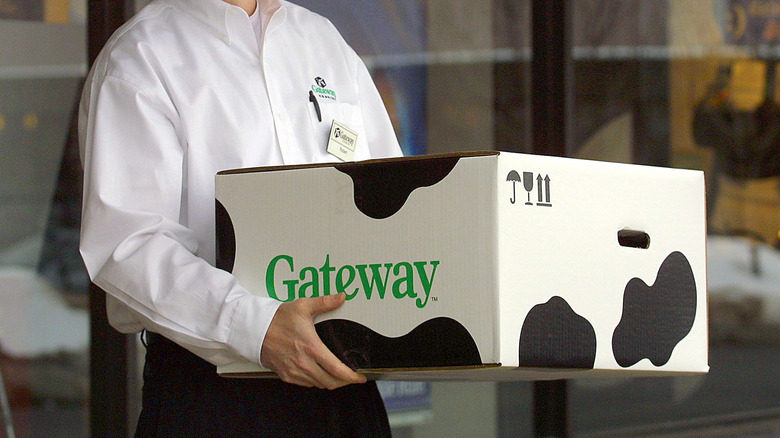
As the market matured and margins thinned further into the old computers from the 2000s era, both companies found it impossible to stay independent. Facing stiff competition from Dell and the rise of laptops, Packard Bell exited the US market first, while Gateway was eventually acquired by Acer in 2007. For enthusiasts, collecting old computers from the 90s often involves hunting down these specific brands to recreate the authentic experience of early home office setups. The value of vintage gateway computers has actually seen a small uptick recently among collectors who grew up with those cow-spotted boxes in their basements.
Maintenance: Restoring Your Vintage Hardware
If you are planning on restoring old computers from the 80s, you need to be prepared for some hands-on work. These machines weren't built with 40-year lifespans in mind. The most common failures involve leaking electrolytic capacitors and "Varta" style CMOS batteries that can leak acid and eat through a motherboard’s copper traces.
When troubleshooting vintage pc brands, the first step is always a visual inspection. Look for bulging caps or white, crusty residue near the battery. If you're lucky enough to find a working machine, you’ll also need to consider your display. While authentic CRT monitors provide the best nostalgia, they are heavy and prone to failure. Many modern collectors use specialized adapters to convert the old VGA or CGA signals to HDMI.
Cleaning floppy disk drives is another essential task. Dust and oxidized lubricant can prevent these drives from reading disks, which is a major hurdle since many retro computers rely on them for booting the OS. A bit of isopropyl alcohol on a swab and some fresh white lithium grease on the rails can go a long way in bringing a dead drive back to life.
FAQ
What is considered a retro computer?
Generally, a retro computer is any system that is at least 20 to 25 years old. In the current collector market, this typically covers machines from the late 1970s up through the early 2000s, specifically focusing on the 8-bit, 16-bit, and early x86 eras.
Are retro computers worth any money?
Yes, though the value depends heavily on rarity and condition. While a common beige box from 1998 might only fetch $50, specialty items like an original Commodore PET or an IBM 5150 in mint condition can sell for hundreds or even thousands of dollars to the right collector.
What are the most popular vintage computers to collect?
The Commodore 64, Apple II, Amiga 500, and early IBM PCs are among the most popular due to their historical significance and large software libraries. Late 90s gaming rigs featuring 3dfx Voodoo graphics cards are also becoming highly sought after for period-accurate gaming.
How do you connect a retro computer to a modern monitor?
You will typically need a specialized converter or upscaler. For older 8-bit machines, you might need a composite-to-HDMI adapter. For 90s PCs with VGA output, an OSSC (Open Source Scan Converter) or a Retrotink is recommended to ensure the signal is properly scaled for a modern LCD screen without excessive lag.
How do I clean and maintain old computer hardware?
Start with compressed air to remove dust, followed by high-percentage isopropyl alcohol (90%+) for cleaning circuit boards. Avoid using water or harsh chemicals on plastic cases, as it can lead to further yellowing. If the plastic is already yellow, many hobbyists use a process called "Retrobrighting" involving hydrogen peroxide and UV light to restore the original color.