For years, the smartphone industry seemed to have hit a physical wall. As we demanded bigger batteries, better zoom lenses, and faster processors, our devices grew thicker and heavier. However, a new design war is erupting. While rumors of a 5.64 mm iPhone Air have dominated the headlines, the Android ecosystem has been quietly—and successfully—shaving off millimeters for months. As an editor who has handled every major flagship of the last decade, I can tell you that the era of the bulky phone is officially over.
Quick Facts
- The Thinnest Foldable: Honor Magic V6 sets a record at just 4.1 mm when unfolded.
- The Slab Record: Infinix HOT 60 Pro+ measures a staggering 5.49 mm.
- Samsung’s Ultra-Slim: The Galaxy S25 Edge offers a uniform 5.8 mm profile.
- Future Tech: Concept devices like the Tecno Atom are pushing toward a 4.9 mm wireless-only future.
- The Secret Weapon: Silicon-carbon battery technology allows for higher capacity in half the space of traditional cells.
- Benchmark Comparison: All five phones in this list challenge or beat the rumored 5.64 mm iPhone Air.
Several ultra thin android phones, such as the Honor Magic V6 and Infinix HOT 60 Pro+, are significantly slimmer than the 5.64 mm iPhone Air, with some foldable models reaching a millimetric profile as thin as 3.9 mm. These devices prove that mobile industrial design has reached a point where flagship performance no longer requires a chunky chassis.
| Device | Thickness (mm) | Battery Capacity | Primary Selling Point |
|---|---|---|---|
| Honor Magic V6 | 4.1 mm (unfolded) | 7,150 mAh | World's thinnest foldable |
| Samsung Galaxy Z TriFold | 3.9 mm (sections) | Concept | Triple-fold innovation |
| Infinix HOT 60 Pro+ | 5.49 mm | 5,000 mAh | Thinnest 3D curved slab |
| iPhone Air (Rumored) | 5.64 mm | TBD | Benchmark for sleekness |
| Samsung Galaxy S25 Edge | 5.8 mm | 4,800 mAh | Durable high-performance slab |
| Tecno Atom | 4.9 mm | Concept | Portless modular design |
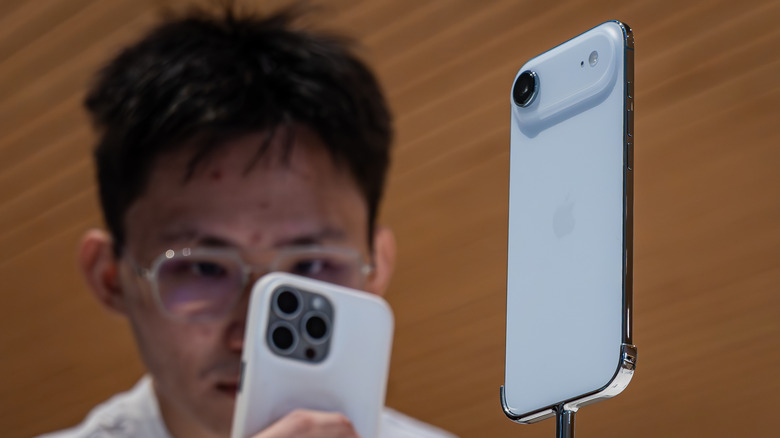
The Engineering Behind the Slim: How Android Beats the Air
Achieving an ultra-thin profile isn't just about making the screen thinner; it's a total reimagining of internal architecture. The biggest breakthrough is the transition from lithium-ion to silicon-carbon battery technology. This innovation offers significantly higher energy density, allowing manufacturers to pack 5,000 mAh or more into a footprint that would have previously only held 3,500 mAh.
Structural integrity is another hurdle. When a phone is as thin as a stack of three credit cards, it needs to be incredibly rigid to prevent bending. Manufacturers are increasingly turning to an Armor Aluminum frame and specialized hinge engineering to ensure these devices survive daily life. Furthermore, by utilizing LTPO AMOLED displays—which combine several screen layers into one—brands are shaving off precious fractions of a millimeter. The result is a millimetric profile that feels almost impossible in the hand.
1. Honor Magic V6: The Foldable Record Breaker
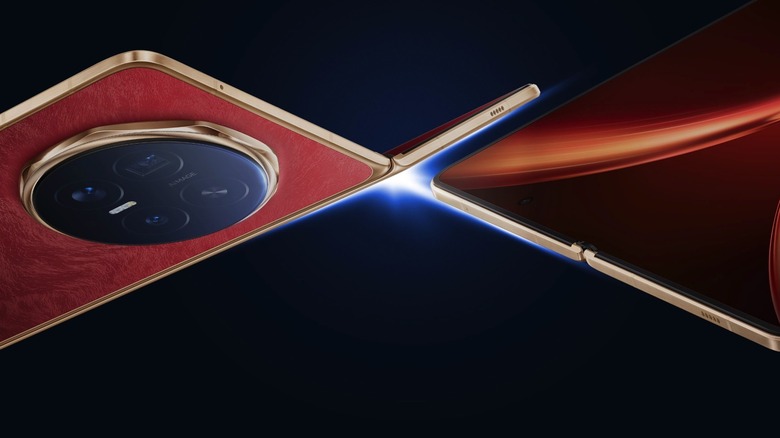
The Honor Magic V6 isn't just a phone; it is a marvel of mobile industrial design. While the tech world waited for Apple to slim down, Honor delivered a device that measures only 4.1 mm when unfolded. To put that in perspective, the USB-C charging port itself is almost too thick for the frame.
What makes this the thinnest foldable smartphones leader is its 7,150 mAh silicon-carbon battery. Despite its razor-thin chassis, it offers better endurance than most traditional flagships. Honor has achieved this by distributing the weight and components across two halves of the device, connected by a proprietary hinge that minimizes the air gap when closed. This allows it to stay under 9 mm when folded, making it feel like a standard smartphone in your pocket but a millimetric profile masterpiece when opened.
Pros & Cons
- Pros: Incredible tablet-sized screen, class-leading battery tech, world-record slimness.
- Cons: High price point, no internal storage for a stylus.
2. Samsung Galaxy Z TriFold: The Future of Triple Fold
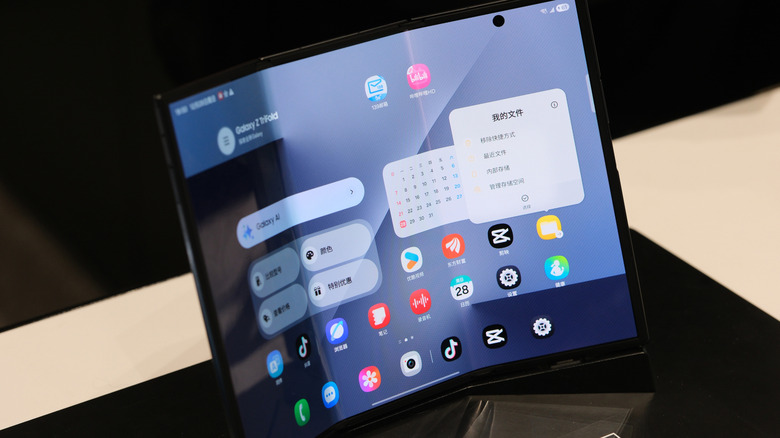
While dual-fold devices are becoming mainstream, Samsung used the MWC 2026 showcase to reveal the Galaxy Z TriFold. This device takes the concept of ultra thin android phones to the extreme. Because the screen folds twice, each of the three sections must be exceptionally thin to keep the folded device manageable.
The individual display sections are as thin as 3.9 mm. To achieve this, Samsung had to make some tough choices, including the removal of S Pen support, as the digitizer layer added too much thickness. By utilizing advanced hinge engineering and reinforced Armor Aluminum frame materials, the TriFold maintains its structural integrity even when fully extended. It is a glimpse into a future where the slimmest android phone comparison vs iphone air isn't even a fair fight—Samsung is playing a different game entirely.
Pros & Cons
- Pros: Largest screen-to-body ratio in a slim frame, advanced hinge durability.
- Cons: Limited availability, missing flagship features like periscope zoom.
3. Infinix HOT 60 Pro+: The World's Thinnest Curved Screen
You don't always have to spend two thousand dollars to get a slim device. The Infinix HOT 60 Pro+ has turned heads by claiming the title of the world's thinnest 3D curved-screen smartphone, measuring a sleek 5.49 mm.
Unlike foldables, which gain slimness by spreading out when open, the HOT 60 Pro+ is a traditional slab. This makes its 5.49 mm profile even more impressive, as the battery, motherboard, and camera modules must all fit within that tiny depth. Infinix used a specialized horizontal camera bump to prevent the lenses from adding too much bulk to the overall handset form factor. It is one of the best affordable thin android phones for budget buyers who want that premium, disappearing-in-your-pocket feel without the foldable price tag.
Pros & Cons
- Pros: Stunning 3D curved aesthetic, very light in the hand, surprisingly affordable.
- Cons: Mid-range processor, lacks wireless charging.
4. Samsung Galaxy S25 Edge: The Unified Slab Flagship
Samsung’s response to the iPhone Air isn't just about a folding screen. The Galaxy S25 Edge is designed as a direct competitor in the premium flagship market. It features a uniform thickness of 5.8 mm, which is slightly thicker than the rumored iPhone but offers a much more robust build.
This device is aimed at power users who need high performance without the bulk. It packs the latest Snapdragon 8 Elite chip and uses an innovative heat dissipation system that utilizes the Armor Aluminum frame as a giant heat sink. This prevents the thermal throttling that often plagues ultra thin android phones. By opting for a uniform thickness rather than a tapered edge, Samsung provides a more comfortable grip and better structural integrity, ensuring it won't bend under pressure.
Pros & Cons
- Pros: Flagship power, excellent durability, uniform design.
- Cons: Not as thin as some Chinese competitors, camera sensors are smaller than the Ultra model.
5. Tecno Atom: The Modular Concept
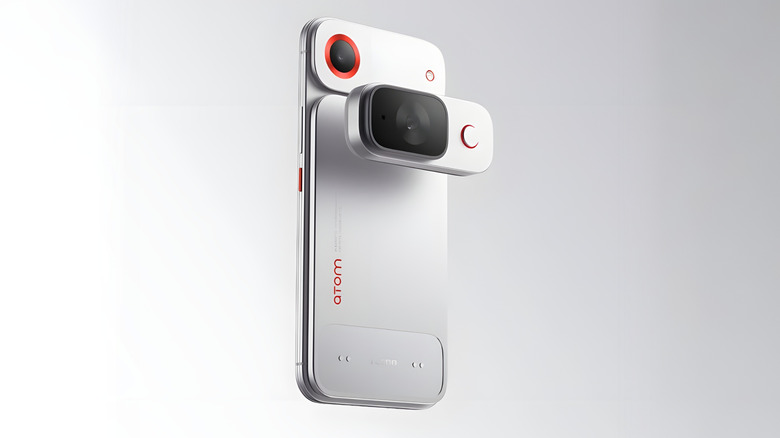
The most radical entry on our list is the Tecno Atom. This device represents the modular slim smartphone concepts and future tech we expect to see more of in 2027. At only 4.9 mm, the Atom is so thin that it completely eliminates the physical charging port.
Instead of a USB-C port, it relies entirely on a high-efficiency wireless charging coil and magnetic data transfer. This allowed Tecno to remove the internal support structures required for a physical port, reclaiming space for a larger battery. The Atom also features a modular camera system, where the main sensor can be slightly raised for photography and retracted when not in use. It is a bold look at how the thinnest foldable smartphones 2026 might evolve into even thinner slab devices.
Pros & Cons
- Pros: Futuristic portless design, incredible 4.9 mm profile.
- Cons: Wireless-only charging can be slow, experimental software.
The Trade-offs: What Do You Lose with a Slim Profile?
While the slimmest android phone comparison vs iphone air shows Android is winning the numbers game, ultra-thin designs come with inherent trade-offs. The first is heat dissipation. In a thin device, there is less air and surface area to move heat away from the processor. If you are a heavy gamer, a 5 mm phone might struggle with sustained performance compared to a thicker device with a massive vapor chamber.
Secondly, camera optics are bound by the laws of physics. High-end zoom lenses require physical depth for the glass elements to move. This is why many ultra thin android phones use a horizontal camera bump or slightly smaller sensors. Finally, there is the question of battery life. Even with silicon-carbon battery technology, a 4 mm thick phone simply cannot hold as much energy as an 8 mm thick one. You are often trading a bit of late-night battery anxiety for the best ultra thin android phones with long battery life features.
FAQ
What is the thinnest Android phone available right now?
The Honor Magic V6 currently holds the record for the thinnest foldable device at 4.1 mm when unfolded, while the Infinix HOT 60 Pro+ is one of the thinnest slab phones at 5.49 mm.
Do ultra-thin phones have shorter battery life?
Not necessarily. Thanks to new silicon-carbon battery technology, manufacturers can now fit 5,000 mAh to 7,000 mAh batteries into frames that are less than 5 mm thick, rivaling the battery life of much thicker devices.
Are thin smartphones more likely to bend or break?
While they are more susceptible to pressure, modern ultra-thin phones use materials like Armor Aluminum and high-strength tempered glass to maintain structural integrity and prevent the bending issues seen in older slim designs.
Can ultra-thin phones maintain high-end camera specs?
It is difficult. To keep the profile slim, brands often use smaller sensors or a horizontal camera bump. While they still take excellent photos, they may lack the extreme periscope zoom found on thicker flagship models.
What are the main disadvantages of very thin smartphones?
The primary drawbacks include limited space for heat dissipation, the potential removal of physical ports (like the headphone jack or even the charging port), and less room for advanced mechanical cooling systems.
The push for slimness is about more than just aesthetics; it's about making our most essential tool disappear into our lives. Whether you prefer the record-breaking Honor Magic V6 or the durable Samsung Galaxy S25 Edge, these ultra thin android phones prove that the future of mobile is millimetric.