Our Top Picks
- Top Overall: LG C5 evo (42-inch) – The perfect balance of 144Hz gaming features and a compact form factor.
- Best for Bright Rooms: Samsung S90F QD-OLED – Exceptional peak brightness levels and color volume for well-lit living spaces.
- Best for Movie Lovers: LG B5 Series – Delivers the cinematic infinite contrast ratio without the premium price of flagship models.
- Cheapest Entry: Sansui S55VOUG – A surprising 2024 disruptor bringing OLED technology to the $600 price point.
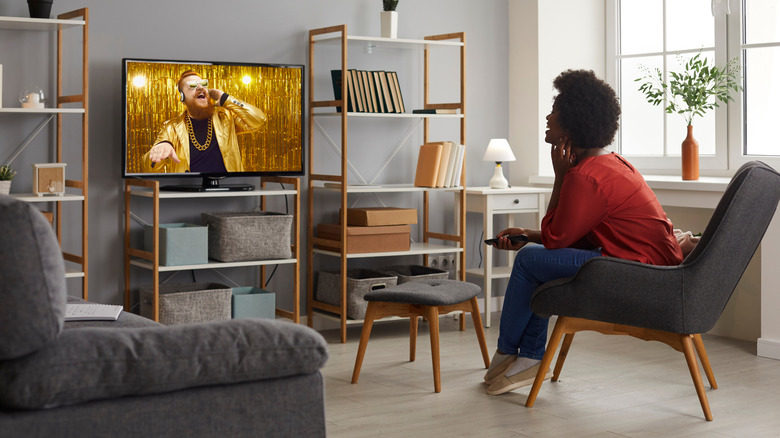
The Samsung S90F and LG C5 evo are among the top budget OLED TV options for 2024, offering premium features for under $1,500. Finding a high-quality budget OLED TV in 2024 is easier than ever, with top-tier tech finally hitting the sub-$1,500 sweet spot.
| Model | Price (Approx.) | Max Refresh Rate | Best For |
|---|---|---|---|
| LG C5 evo (42") | $896.99 | 144Hz | Competitive Gaming |
| Samsung S90F | $1,147 | 144Hz | Bright Living Rooms |
| LG B5 (55") | $999 | 120Hz | Movie Nights |
| Sansui S55VOUG | $600 | 60Hz | Ultra-Budget Entry |
| LG B4 (48") | $549 (Promo) | 120Hz | Value Seekers |
| Samsung S84F | $1,299 | 120Hz | Versatile Home Use |
| Sony A75L | $1,198 | 120Hz | Accuracy Purists |
| LG C5 (48") | $1,099 | 144Hz | Large Bedroom Setup |
The OLED Value Proposition: Why Go Budget Now?
For years, the phrase budget OLED TV felt like an oxymoron. You either paid the premium for self-emissive pixels or settled for the blooming and gray blacks of a standard LED. In 2024, the market has shifted dramatically. We have entered a "sweet spot" where last year's flagship components are filtering down into more affordable 4K OLED televisions.
When we look at the value proposition today, we aren't just talking about a cheaper screen. We are looking at panels that offer 90% of the performance of a $3,000 flagship for less than half the price. The primary difference often lies in peak brightness levels. While a high-end Sony A95L might hit 1,500 nits, our OLED TV recommendations under 1500 typically hover between 600 and 900 nits. In a controlled lighting environment, the difference is negligible because the infinite contrast ratio—the ability for a pixel to turn off completely—provides a level of depth that even the brightest Mini-LED, like the TCL QM8K, struggles to match without some light bleed.
Furthermore, the debate of budget QD-OLED TV vs standard OLED value has become more nuanced. Samsung’s QD-OLED tech has become more accessible, offering better color accuracy at higher brightness. However, standard W-OLED (White OLED) panels used by LG remain the king of black levels and are often found in the best OLED TVs under 1000 dollars.
Best Overall Budget OLED: LG C5 evo (42-inch)
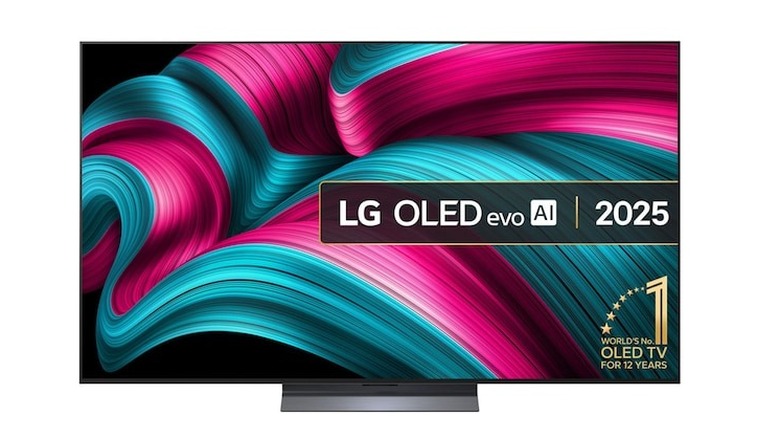
The LG C5 evo is the 2024 evolution of what many consider the most popular OLED series ever made. While the 55-inch and 65-inch models often stretch beyond the budget category, the 42-inch and 48-inch variants provide the best value OLED TVs for those with limited space or a focus on desktop gaming.
At the heart of this unit is the alpha 9 AI Processor Gen 7, which handles upscaling with impressive finesse. For gamers, this is a budget OLED TV for gaming 144Hz that rivals high-end monitors. We found that the near-instantaneous response time of 0.1ms makes a world of difference in fast-paced titles like Call of Duty or Forza.
Reasons to Buy:
- Incredible gaming performance with a 144Hz refresh rate.
- The webOS interface is smooth and supports all major streaming apps.
- Compact size makes it a versatile choice for bedrooms or home offices.
- Four full-bandwidth HDMI 2.1 ports for multiple consoles.
Reasons to Avoid:
- The 42-inch model lacks the Brightness Booster Max found in larger sizes.
- Internal speakers are thin; a soundbar is highly recommended.
Brightest Value Pick: Samsung S90F QD-OLED
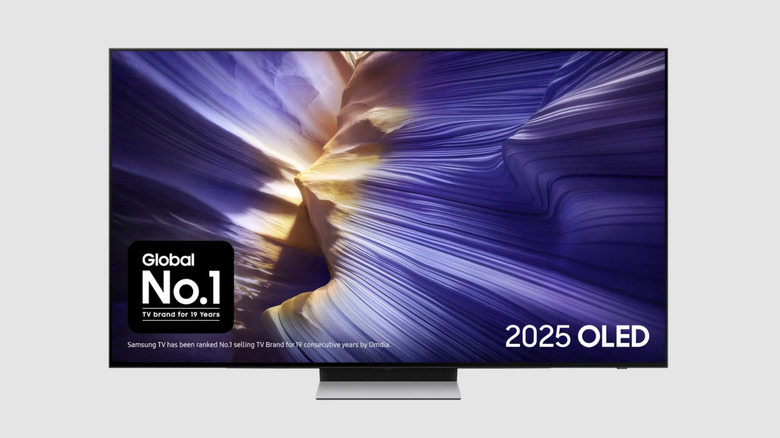
If you are worried that an affordable OLED might look washed out in a sunny room, the Samsung S90F is the answer. Using Quantum Dot technology, this panel pushes higher color volume than traditional OLEDs. It is particularly effective for those looking for the best entry level OLED TVs for movie enthusiasts who still want to use their TV during the day without closing all the curtains.
The AI-powered upscaling on the S90F is a standout feature. It takes 1080p content from older consoles or cable boxes and cleans up the edges without creating the "soap opera effect" that plagued older smart TV models. While it lacks Dolby Vision—a common omission for Samsung—the HDR10+ performance is stellar, providing vivid highlights and deep shadows.
Reasons to Buy:
- Superior peak brightness levels compared to standard budget OLEDs.
- Excellent Tizen OS Smart TV ecosystem with wide app support.
- Vibrant color accuracy out of the box.
Reasons to Avoid:
- No support for Dolby Vision.
- The interface can occasionally feel cluttered with ads.
The Entry-Level King: LG B5 & Sansui S55VOUG
For many, the goal is simply to get the largest possible OLED screen for the least amount of money. This is where the LG B5 and the surprising Sansui S55VOUG come into play. The LG B series has long been the "hidden gem" of the lineup, sacrificing some of the high-end processing and HDMI ports of the C series to hit a lower price point.
Historically, the LG B4 48-inch OLED TV reached a promotional price of $549 during the 2024 holiday season, proving that OLED is no longer a luxury-only tech. The new LG B5 continues this trend, offering a 120Hz panel that still delivers the infinite contrast ratio we love, making it one of the best OLED TVs under 1000 dollars for those who want a 55-inch screen.
Meanwhile, the Sansui 55-inch S55VOUG was recognized as the most affordable OLED TV released in 2024, with its initial market price starting at $600. While it lacks the high-frame-rate gaming features of the LG or Samsung, its motion blur reduction and color depth are lightyears ahead of any LED TV at this price. It is an affordable 65 inch OLED TVs under 1500 contender if you wait for the larger model's frequent sales.
Reasons to Buy:
- Unbeatable price-to-performance ratio.
- Perfect for dark-room movie viewing.
- The LG B5 still supports HDMI 2.1 for 4K 120Hz gaming.
Reasons to Avoid:
- Sansui's software is basic and may require an external streaming stick like Roku or Apple TV.
- Lower peak brightness compared to the S90F.
Technical Insights: Longevity and Gaming Features
One of the most common concerns for those buying a budget OLED TV is the risk of image retention. Fortunately, the 2024 models are equipped with budget OLED TVs with burn-in protection features that were once exclusive to flagships. Technologies like LG's Screen Shift, which moves the image by a few pixels imperceptibly, and the Pixel Refresher, which runs during standby, have significantly improved panel longevity.
From a gaming perspective, the inclusion of HDMI 2.1 bandwidth is non-negotiable for PS5 and Xbox Series X owners. This allows for 4K 120Hz or even 144Hz on PCs, coupled with Variable Refresh Rate (VRR) to prevent screen tearing. When you combine this with the near-instant response time of OLED, the high-frame-rate gaming experience is buttery smooth, effectively eliminating the motion blur found on cheaper LCD panels.
Technical Glossary: Terms to Know
- Infinite Contrast: Because OLED pixels can turn off entirely, the ratio between the brightest white and darkest black is technically infinite.
- HDMI 2.1: The latest cable standard required for 4K gaming at 120Hz or higher.
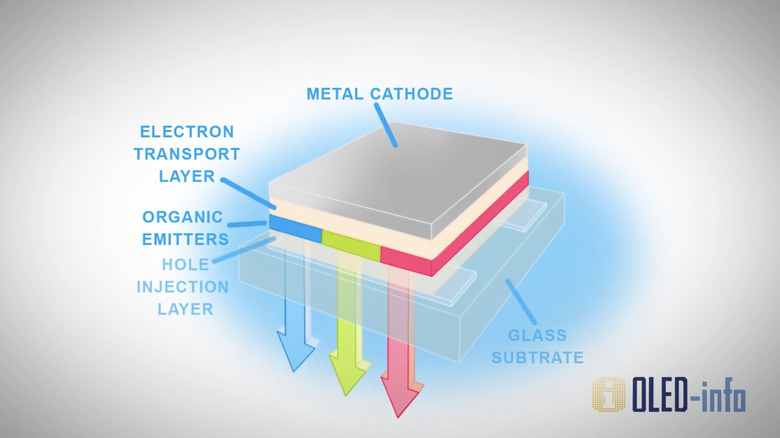
- Self-emissive: Pixels that produce their own light, removing the need for a bulky and imprecise backlight.
- Response Time: How quickly a pixel can change from one color to another, measured in milliseconds (ms).
FAQ
What is the cheapest OLED TV currently available?
As of late 2024, the Sansui 55-inch S55VOUG holds the title for the most affordable new model with an initial market price starting at $600. However, during major sales events, the LG B4 48-inch has dropped to as low as $549, making it a fierce competitor for the budget crown.
Are budget OLED TVs worth the money?
Absolutely. Even a budget-tier OLED provides a significantly better viewing experience than a high-end LED in terms of contrast and color depth. While you may lose out on some peak brightness or a few HDMI 2.1 ports, the core benefit of perfect blacks and infinite contrast remains intact.
Which budget OLED TV is best for gaming?
The LG C5 evo (42-inch or 48-inch) is widely considered the best for gamers. It offers a 144Hz refresh rate, 0.1ms response time, and full support for G-Sync and FreeSync. For those who want a larger screen, the Samsung S90F also supports 144Hz and provides a bit more brightness for daytime gaming sessions.
Do affordable OLED TVs suffer from screen burn-in?
While burn-in is a physical characteristic of the technology, modern budget models include several mitigation features. These include pixel cleaning cycles, logo luminance adjustment, and screen shifting. For typical mixed use—movies, gaming, and various TV shows—the risk is extremely low for the average consumer.
Are budget OLED TVs bright enough for living rooms?
Budget OLEDs are best suited for rooms where you can control the light. However, models like the Samsung S90F use QD-OLED technology to reach higher brightness levels than entry-level W-OLEDs, making them perfectly viable for living rooms with moderate ambient light. If your room has direct sunlight hitting the screen, a high-end Mini-LED might still be a better choice.