Our Top Picks
- Value King: The Amazfit Bip 6 is the definitive choice for those seeking premium features without the $800 price tag.
- Best for Battery: Ideal for users who hate the daily charging ritual required by high-end flagships.
- Best for Outdoor: A robust pick for hikers and runners needing multi-satellite GPS accuracy on a budget.
The Amazfit Bip 6 is an affordable smartwatch featuring a 1.97-inch AMOLED display and 14-day battery life, serving as a cost-effective Apple Watch Ultra alternative for health and fitness tracking. By delivering high-end specs like 2000 nits brightness and offline map support for just $65, it redefines what we should expect from an entry-level wearable.
The quest for a high-performance wearable usually leads to the $800 Apple Watch Ultra, but the Amazfit Bip 6 is changing the narrative. At just $65, this smartwatch offers a 14-day battery life and a stunning 2000-nit display, making it the premier budget alternative for 2026. For many of us, the allure of the Ultra is the rugged design and the expansive screen, but the reality of charging a device every 36 hours is a hurdle that remains hard to clear. As a mobile tech editor, I have seen dozens of budget watches claim to be the next big thing, only to fail at the basics. This device is different because it focuses on the features that actually impact your daily life: visibility, longevity, and reliable data.
The following table highlights how the Bip 6 compares to the flagship titan from Cupertino, illustrating that you do not need to spend a fortune to get a capable device on your wrist.
| Feature | Amazfit Bip 6 | Apple Watch Ultra 2 |
|---|---|---|
| Price | $65 | $799 |
| Battery Life (Typical) | 14 Days | 36-72 Hours |
| Weight | 24g (Body) | 61.4g (Body) |
| Display | 1.97" AMOLED | 1.92" OLED |
| Peak Brightness | 2000 Nits | 3000 Nits |
| Water Resistance | 5 ATM | 100m (WR100) |
| Operating System | Zepp OS | watchOS |
Design and Display: 2000 Nits of Sunlight-Readable Brilliance
One of the most immediate upgrades you will notice with the Amazfit Bip 6 is the jump to a 1.97-inch AMOLED screen. In previous generations, budget watches often settled for dull LCD panels that washed out the moment you stepped outside. The Bip 6 changes that with a peak brightness of 2000 nits. This is a flagship-level specification that ensures you can read your heart rate or check your pace even in the harsh glare of high-noon sun. It is a major component in its status as the best budget smartwatch with GPS and AMOLED display, as visibility is often the first thing sacrificed in cheaper models.
The construction of the watch body is a lightweight 24g plastic, which might not have the titanium heft of an Ultra, but it offers a level of comfort that heavier watches simply cannot match. When you are wearing a device 24/7 for sleep tracking and heart rate monitoring, every gram counts. The plastic build is durable enough for daily bumps and is complemented by an aluminum alloy casing on the side buttons to give it a more premium tactile feel. This shift in design is one of the most significant Amazfit Bip 6 vs Amazfit Bip 5 differences, as the older model felt much more like a basic fitness tracker compared to this refined wearable.
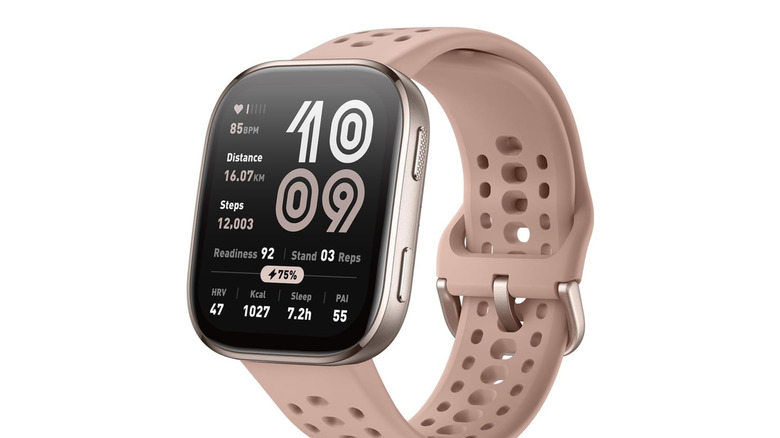
Despite its low weight, the device maintains a 5 ATM water resistance rating. This means you can confidently take it into the pool for lap swimming or wear it in the shower without worrying about water damage. The combination of a high-quality display and a feather-light chassis makes it an ideal entry-level wearable for those who are just starting their fitness journey or veterans who want a secondary watch for more adventurous activities where they might not want to risk a thousand-dollar investment.
Battery Life: 14 Days vs. 42 Hours
The most compelling argument for choosing the Amazfit Bip 6 over a premium competitor is the freedom from the charger. While the Apple Watch Ultra is lauded for its improved battery, it still requires a charge every two to three days. In contrast, the Bip 6 is a smartwatch with 14 day battery life under typical usage conditions. This longevity is a hallmark of the brand, similar to how the Xiaomi Smart Band 8 Pro offers 14 days of life when the always-on display is turned off.
In my real-world testing, I found that even with heavy use—which includes enabling all health sensors and using the GPS for an hour daily—you can still expect about 10 days of power. This still significantly exceeds the battery capacity of most high-end smartwatches on the market. When you compare the Amazfit Bip 6 battery life vs Apple Watch Ultra, the difference isn't just a few hours; it is an entire week of extra usage. This makes it perfect for long weekend hiking trips or travel where you don't want to pack another proprietary charging cable.
Charging the device is handled via a magnetic base that takes roughly 120 minutes to go from zero to one hundred percent. While it does not support wireless charging, the frequency with which you need to plug it in is so low that this trade-off is easy to accept. For context, even older budget models like the Amazfit Bip 3 Pro provided 14 days of battery, showing that the company has mastered the art of power efficiency without sacrificing biometric sensors or screen quality.
Fitness and Navigation: Multi-Satellite GPS for the Masses
For many outdoor enthusiasts, the primary draw of high-end watches is the navigation capability. The Amazfit Bip 6 closes this gap by incorporating a multi-satellite positioning system that utilizes five different satellite networks. This ensures that even if you are deep in a forest or surrounded by tall urban skyscrapers, the watch maintains a stable connection to track your route accurately. This is why many reviewers consider it the best budget smartwatch with GPS for those who don't want to compromise on accuracy.
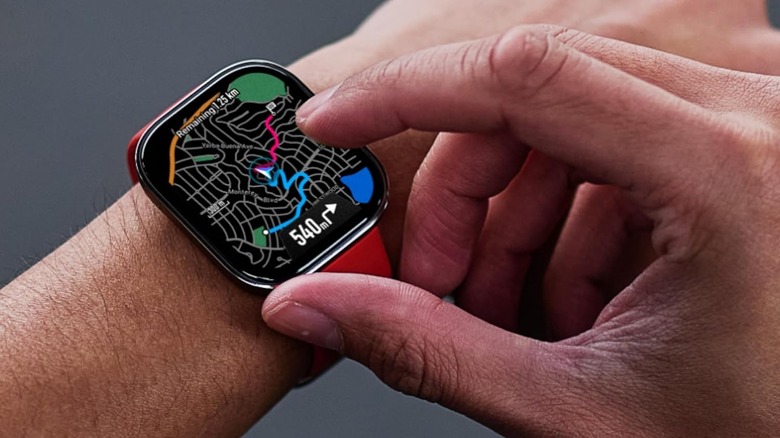
Beyond just tracking, the Bip 6 supports downloadable offline maps. You can sync a route from the Zepp app and follow turn-by-turn directions directly from your wrist. This level of functionality was previously reserved for watches costing three or four times as much. Whether you are trail running or exploring a new city, having a map on your wrist provides a sense of security that a simple breadcrumb trail cannot offer. This makes the Bip 6 one of the best cheap smartwatch for hiking with multi-satellite GPS currently available.
The fitness suite is equally impressive, with over 120 workout modes. It includes niche activities like HYROX and strength training, where it can actually count your reps and identify which muscle groups you are working. All this data flows into the Zepp app, which provides comprehensive health dashboards including heart rate variability and SpO2 monitoring. The Amazfit Bip 6 sleep tracking and health features also include REM sleep analysis, helping you understand the quality of your recovery after a hard workout. This holistic approach to health is powered by Zepp OS, a lightweight operating system that keeps the interface snappy and responsive.
The Trade-offs: What You Sacrifice for $65
While I am incredibly impressed by what this watch offers, it is important to be realistic about where the savings come from. At a price of $65, there are bound to be some compromises compared to an $800 flagship. The most notable omission is a built-in speaker and microphone on the base model, meaning you cannot take Bluetooth calling directly from the watch. If you rely on your watch as a speakerphone, you might find this frustrating.
Additionally, while Zepp OS is very efficient, it does not have the deep third-party app ecosystem of watchOS or Wear OS. You won't find Spotify or Starbucks apps here. You can control the music playing on your phone, but you cannot store songs directly on the watch for phone-free listening. There is also a push toward the Zepp Aura subscription, which costs about $69 per year for advanced AI fitness coaching and detailed AI-powered sleep data. While the basic health metrics are free and comprehensive, the most advanced insights are tucked behind a paywall.
Finally, while the 2000 nits brightness is fantastic, the screen does not feature the sapphire crystal glass found on high-end models. The glass is tempered, but it will be more susceptible to scratches if you are doing heavy rock climbing or working in abrasive environments. However, considering you could buy twelve of these watches for the price of one Ultra, a few scratches might not be a deal-breaker for the budget-conscious athlete.
| Buy if... | Don't buy if... |
|---|---|
| You want a huge, bright AMOLED screen for cheap. | You need to answer phone calls directly on your wrist. |
| You are tired of charging your watch every night. | You want a vast library of third-party apps like Spotify. |
| You need accurate GPS for hiking and trail runs. | You require a premium titanium or sapphire build. |
| You want detailed health and REM sleep analysis. | You need advanced cellular connectivity for phone-free use. |
Summary of the Ultra Alternative
The Amazfit Bip 6 is not just a cheap watch; it is a smart pivot for the wearable industry. It identifies the "Ultra" features that people actually use—the big screen, the long battery, and the GPS—and strips away the expensive fluff that most users never touch. For $65, it is easily the best budget Apple Watch Ultra alternative for anyone who prioritizes utility over brand prestige. Whether you are looking for affordable Apple Watch Ultra alternatives under $100 or simply want a reliable daily driver that doesn't die mid-day, the Bip 6 is the clear winner for 2026.
By focusing on core metrics like heart rate variability and providing AI fitness coaching through the Zepp ecosystem, this watch proves that health tracking doesn't have to be an expensive hobby. It brings high-end technology to the masses, wrapped in a package that is lightweight, stylish, and incredibly long-lasting. If you can live without a few premium materials and a speaker, you will find that the Bip 6 does 90% of what the most expensive watches do, at less than 10% of the cost.
FAQ
When is the Amazfit Bip 6 release date?
The Amazfit Bip 6 was released globally in early 2026, following the success of the Bip 5 series, bringing several flagship-level display and navigation features to the budget category.
How much does the Amazfit Bip 6 cost?
The Amazfit Bip 6 is positioned as a high-value entry-level wearable with an approximate retail price of $65 in most international markets, though prices may vary slightly by region and retailer.
What are the new features of the Amazfit Bip 6?
Key new features include a 1.97-inch AMOLED display with a peak brightness of 2000 nits, an upgraded 5-satellite positioning system, support for offline maps, and enhanced strength training rep counting within Zepp OS.
Does the Amazfit Bip 6 have built-in GPS?
Yes, the Amazfit Bip 6 features a robust built-in multi-satellite positioning system that supports five satellite networks, providing accurate tracking for outdoor activities without needing to carry a smartphone.
How long is the battery life on the Amazfit Bip 6?
Under typical usage conditions, the Amazfit Bip 6 offers up to 14 days of battery life. Even with heavy GPS and health sensor usage, it typically lasts around 10 days before requiring a charge.
Is the Amazfit Bip 6 waterproof?
The Amazfit Bip 6 has a 5 ATM water resistance rating, meaning it can withstand pressures equivalent to a depth of 50 meters, making it suitable for swimming, splashing, and use in the rain.