Quick Facts
- Top Overall: Google Pixel 10a ($499)
- Best Battery: OnePlus 13R (6,000mAh)
- Longest Support: Samsung Galaxy A17 (Updates until 2031)
- Best Under $200: TCL 50 XL 5G
- Best Camera: Pixel 9a
- Best Design: Nothing Phone (2a) Plus
The best budget Android phones in 2026 include the Google Pixel 8a for its class-leading computational photography and the Samsung Galaxy A55 for its long-term software support. For under $500, users now get flagship features like 120Hz OLED displays and long-term software support.
| Model | Primary Strength | Battery Capacity | Support Ends |
|---|---|---|---|
| Google Pixel 10a | AI & Photography | 4,800mAh | 2033 |
| Samsung Galaxy A55 | Premium Build | 5,000mAh | 2029 |
| OnePlus 13R | Charging Speed | 6,000mAh | 2030 |
| Nothing Phone (2a) Plus | Unique Aesthetics | 5,000mAh | 2029 |
| Motorola Edge 50 Fusion | 144Hz Display | 5,000mAh | 2028 |
Choosing a phone in 2026 feels fundamentally different than it did three years ago. We have moved past the era where buying cheap meant accepting a grainy screen and a camera that struggled in anything but direct sunlight. Today, the global smartphone market revenue is projected to reach approximately $646 billion in 2026, and a huge driver of that growth is the high-quality mid-range segment.
Budget smartphones priced under $300 accounted for 40% of global sales leading into 2026, remaining the largest segment by volume. This mass adoption has forced manufacturers to migrate flagship features—like optical image stabilization and silicon-carbon battery technology—down to more affordable price points. As an editor who has tested hundreds of devices, I’m seeing a shift from "lowest price" to "cost-per-year value."
The $500 Premium-Budget Tier: Flagship Killers
At the top of the budget spectrum, we find the "Flagship Killers." These devices usually retail between $450 and $500 and are designed to make you question why anyone would spend $1,000 on a pro-tier model.
Google Pixel 10a
The Google Pixel 10a is arguably the most important phone of the year for most consumers. By utilizing the Tensor G5 chip, Google has brought its most advanced AI features—previously locked behind the flagship wall—to a device that costs half as much. This includes real-time voice translation and the latest computational photography tricks that make it the best budget camera phone on the market.
What really stands out this year is the 3,000-nit Actua display. In plain English: you can read your emails in the middle of a bright July afternoon without squinting. It also supports the Pixelsnap magnetic ecosystem, making it compatible with a wide range of magnetic chargers and accessories.
Support Ends: 2033
- The Verdict: If you prioritize camera quality and smart software over raw gaming power, this is your winner.
- Honest Compromise: The charging speed is still sluggish compared to Chinese rivals, and the plastic back, while durable, doesn't feel as high-end as glass.
Google Pixel 9a
Even with the 10a on shelves, the Pixel 9a remains a formidable choice for those looking to save an extra $100. It retains the core Google experience and the advanced image processing pipeline that makes Pixel photos look so distinctive. It is a masterclass in price-to-performance ratio, offering a clean Android experience with zero bloatware.
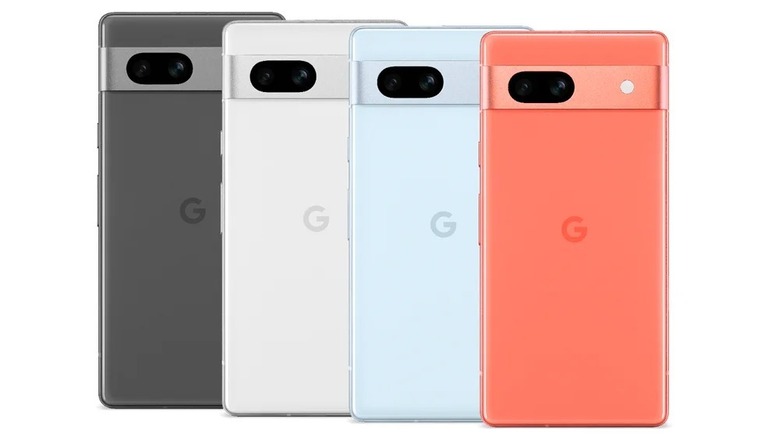
Support Ends: 2031
- The Verdict: The smart choice for the "average user" who wants a reliable camera and long-term security.
- Honest Compromise: The bezels are a bit thicker than the newer 10a, and it lacks the newest ultra-bright display tech.
Samsung Galaxy A55
Samsung’s approach to budget android phones has always been about "trickle-down luxury." The Galaxy A55 features a metal frame and Gorilla Glass Victus+, giving it a heft and premium feel that mimics the S-series. The 120Hz OLED display technology here is vibrant and punchy, making it a dream for media consumption.
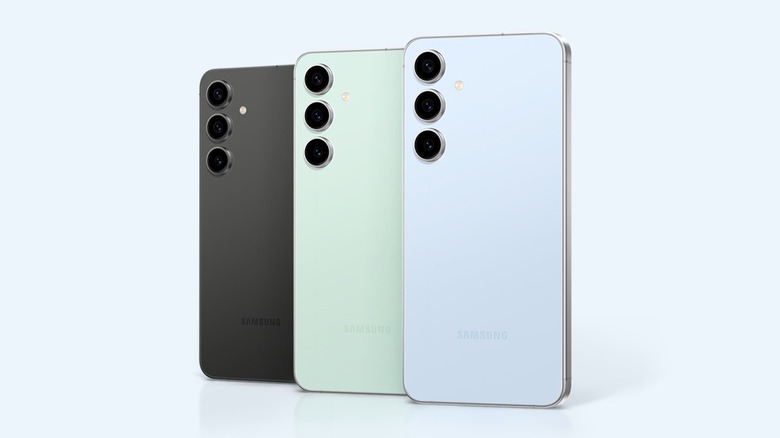
Support Ends: 2029
- The Verdict: The best choice for users who want the flagship "vibe" and a reliable ecosystem.
- Honest Compromise: Samsung’s One UI can feel heavy with pre-installed apps, and the processor isn't the fastest for heavy 3D gaming.
The $300-$400 Sweet Spot: Value Leaders
This is where the competition gets fierce. In this bracket, manufacturers often pick one "super feature" to highlight, whether it's insane charging speed or a unique aesthetic.
OnePlus 13R
The OnePlus 13R is built for the power user on a budget. In 2026, advancements in silicon-carbon battery technology are enabling budget Android manufacturers to offer capacities close to 6,500mAh as a standard feature, and OnePlus is leading the charge with a massive 6,000mAh cell. Combined with 80W fast charging standards, you can go from 1% to 100% in about 35 minutes.
Support Ends: 2030
- The Verdict: Perfect for heavy users, commuters, and mobile gamers.
- Honest Compromise: The camera system is "fine" but lacks the sophisticated color science found in the Pixel or Samsung models.
Nothing Phone (2a) Plus
Nothing has successfully carved out a niche for users who are bored with black glass slabs. The Nothing Phone (2a) Plus features their signature transparent design and Glyph interface—LED lights on the back that sync with your notifications and timers. It’s not just a gimmick; the high-refresh-rate AMOLED display and the custom Dimensity chipset make it one of the most reliable budget android phones for daily use.
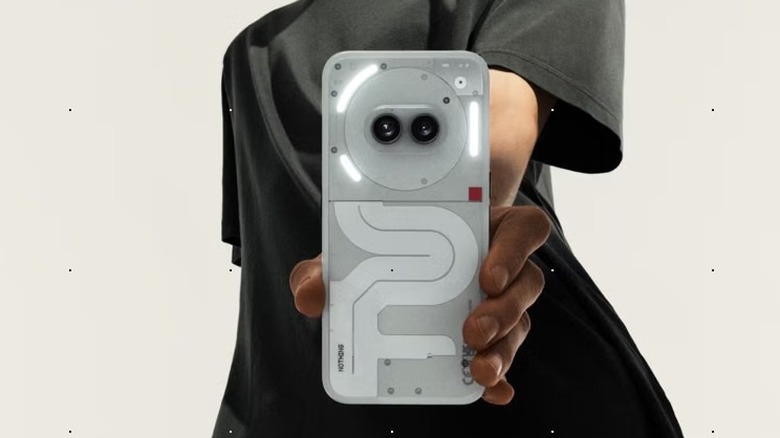
Support Ends: 2029
- The Verdict: The best budget Android phone for those who value style and a clean, unique software interface.
- Honest Compromise: Finding accessories like cases that don't hide the design can be a challenge, and it lacks IP68 water resistance.
Xiaomi Redmi Note 14 Pro
Xiaomi continues to push the limits of what $350 can buy. The Redmi Note 14 Pro features an IP68 rating, which was unheard of in this price bracket just a couple of years ago. This means it can survive a literal dunk in the pool. It also packs a high-resolution main sensor with optical image stabilization, ensuring your night shots aren't a blurry mess.
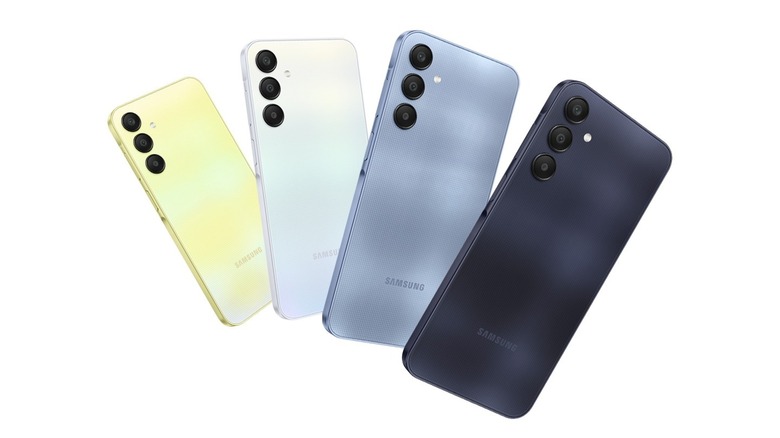
Support Ends: 2029
- The Verdict: The hardware king for the price. Unbeatable specs if you can handle the non-standard Android skin.
- Honest Compromise: The software (HyperOS) is heavily customized and might feel cluttered to those used to "stock" Android.
Best Budget Android Phones for Students and Teens (Under $250)
For students and teens, the priorities shift toward durability, social media camera performance, and enough battery to last through a school day and after-school activities.
Samsung Galaxy A17 5G
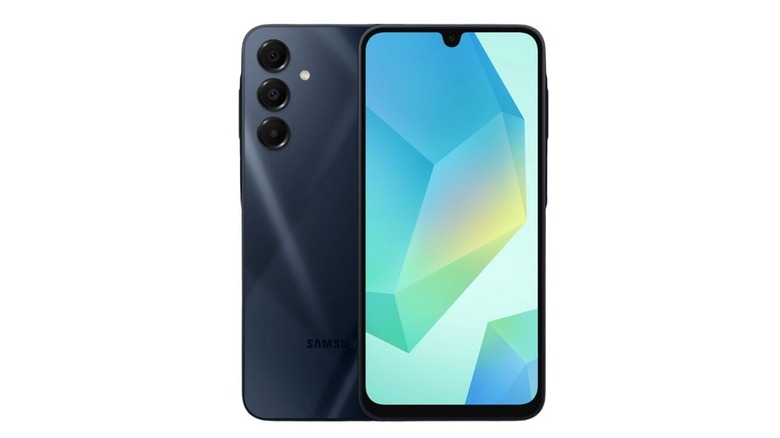
The Galaxy A17 5G is the ultimate "buy it and forget it" phone. Samsung is offering an incredible seven years of security patches on this model, meaning a student could potentially use this through high school and half of college. It has a large, bright screen and enough power for everyday tasks and casual gaming.
Support Ends: 2031
- The Verdict: Best for budget android phones with long term software support.
- Honest Compromise: The secondary cameras (macro and ultra-wide) are essentially fillers and don't take great photos.
Motorola Edge 50 Fusion
Motorola has reclaimed the budget crown for many users by focusing on the "feel" of the phone. The Edge 50 Fusion features a curved pOLED display with a 144Hz refresh rate, making scrolling through TikTok or Instagram feel butter-smooth. It’s also incredibly light and comes in vegan leather finishes that feel great in the hand.
Support Ends: 2028
- The Verdict: Best for students who care about screen quality and ergonomics.
- Honest Compromise: Motorola is historically slower than Samsung or Google at delivering major OS updates.
2026 Buying Guide: How to Spot Flagship Features
When you are hunting for affordable smartphones with flagship features, you need to know which specs actually matter and which are just marketing fluff. Here is the 2026 mid-range baseline you should look for:
- The Display: Do not settle for anything less than a 120Hz OLED display. In 2026, even sub-$300 phones should offer this. It drastically improves the perceived speed of the phone.
- RAM & Storage: 8GB of RAM is the new minimum for a smooth experience. For storage, look for 128GB, but check if it’s UFS 3.1 or higher for faster app loading.
- Camera Tech: Look for words like optical image stabilization (OIS). This is a physical mechanism that keeps the lens steady. Also, pay attention to pixel binning in 200MP sensors, which combines multiple pixels into one "super pixel" for better low-light performance.
- Software Longevity: Check the update promise. A "cheap" phone is expensive if you have to replace it in two years because it’s no longer secure. Look for at least four years of security patches.
- The Processor: You don't need a top-tier Snapdragon 8-series, but a modern Snapdragon 7-series or a Google Tensor chip will ensure your phone doesn't lag during multi-tasking.
FAQ
What is the best budget Android phone right now?
The Google Pixel 10a is widely considered the best overall budget phone due to its superior camera, long software support, and clean user experience. However, if you need extreme battery life, the OnePlus 13R is a better specific choice.
Are cheap Android phones worth buying?
Yes, absolutely. In 2026, the gap between a $500 phone and a $1,000 phone has narrowed significantly. Most users will find that affordable smartphones with flagship features like 120Hz screens and great main cameras provide everything they need for daily life.
How long do budget Android phones typically last?
Hardware-wise, most will last 3 to 4 years before the battery starts to degrade. However, from a software perspective, many models now offer 5 to 7 years of support, meaning they remain safe to use for much longer than they used to.
Which budget Android phone has the best camera?
The Google Pixel series remains the champion here. The Pixel 10a and even the older Pixel 9a use computational photography to produce images that rival phones twice their price, especially in difficult lighting or portrait mode.
What features are usually missing in cheap Android phones?
You will typically miss out on wireless charging, premium glass and titanium builds, and high-end telephoto zoom lenses. You might also see slightly slower processors that take a second longer to load heavy games.
Do budget Android phones get software updates?
Most do, but the frequency varies. Samsung and Google are the leaders, offering 6 to 7 years of updates even on cheaper models. Brands like Motorola or TCL typically offer shorter support windows, often 2 to 3 years.
Conclusion & Recommendation
The landscape of 2026 proves that you no longer have to pay a "luxury tax" just to get a phone that works well. Whether you are looking for the best android phones under $400 for 2026 or a premium-feeling "flagship killer" at $500, the options are more diverse than ever.
If I had to make a single recommendation, I would tell most people to look at the Google Pixel 10a for its longevity and camera. However, if you are buying for a student, the Samsung Galaxy A17 5G offers the best cost-per-year value. 2026 is truly the year of the smart buyer; the hardware has caught up to our needs, and the software support is finally keeping these devices in our pockets for longer.