Quick Facts
- Original Release: 1999 (BlackBerry 850)
- Peak Popularity: 2011 (85 million subscribers worldwide)
- Key Differentiator: Tactile QWERTY keyboard and secure push email technology
- Major Pivot: Adoption of the Android operating system with the Priv in 2015
- Official Sunset: Hardware manufacturing ceased in 2016; legacy services ended January 4, 2022
- Niche Record: The BlackBerry Passport sold out on Amazon within 10 hours of its launch
BlackBerry phones history began in 1999 with the release of the BlackBerry 850, a two-way pager that introduced wireless push email. Research in Motion (RIM) dominated the mobile productivity market for over a decade with features like the tactile QWERTY keyboard and secure messaging before shifting focus to software services in 2016. These devices became an essential status symbol for professionals, earning the nickname Crackberry due to their addictive notification system and unmatched efficiency for mobile communication.
1. The AA-Powered Pager: BlackBerry 850 (1999)
Every great tech dynasty has a humble beginning, and for the history of blackberry phones, it started with a device that wasn't even technically a phone. In 1999, Research in Motion (RIM), operating out of the Waterloo technology hub, introduced the blackberry 850 pager. It was a revolutionary piece of hardware at the time, functioning as a two-way email pager that lived on a single AA battery.
Unlike the pagers of the mid-90s that only showed numeric codes or short snippets of text, the 850 allowed for full wireless push email. It used a 32-bit Intel 386 processor and a monochrome display to give users a constant connection to their office inbox. This was the moment the tactile typing experience became the brand's signature. The small, round buttons were intentionally designed to resemble the drupelets of a blackberry fruit, leading to the brand name we all recognize today. This pioneer established the blackberry 850 pager as the first tool that allowed professionals to manage corporate communications on the go, a concept that was entirely foreign to the average worker in the late 20th century.
| Feature | BlackBerry 850 (1999) | Typical Modern Smartphone |
|---|---|---|
| Power Source | 1x AA Battery | Internal Lithium-Ion |
| Display Type | Monochrome LCD | OLED / AMOLED |
| Primary Input | Tactile QWERTY Keyboard | Capacitive Touchscreen |
| Main Function | Two-way Paging / Email | Multi-media / App Ecosystem |
| Processor | Intel 386 | Octa-core ARM-based chips |
2. The Clicking Touchscreen: BlackBerry Storm (2008)
By 2008, the mobile world was shifting. The iPhone had arrived, and the consumerization of IT was beginning to erode the dominance of the tactile QWERTY keyboard. Research in Motion (RIM) felt the pressure to innovate and responded with the BlackBerry Storm. This was the first device in the blackberry phones history to ditch the physical keys entirely in favor of a large touchscreen. However, RIM didn't want to lose its reputation for tactile feedback, so they developed a unique mechanical solution called SurePress haptic feedback.
The entire screen of the Storm was mounted on a set of springs and a central button. When you pressed the glass, the whole display physically clicked down like one giant button. While it sounded good on paper, it created a host of blackberry storm touchscreen problems. The screen often felt mushy, it lagged during fast typing, and the lack of a traditional keyboard alienated the core professional user base. Furthermore, the first iteration of the Storm famously lacked Wi-Fi connectivity, a bizarre omission for a high-end smartphone in 2008. This design choice prioritized the carrier’s cellular data networks but left users frustrated with slow speeds at home or in the office.
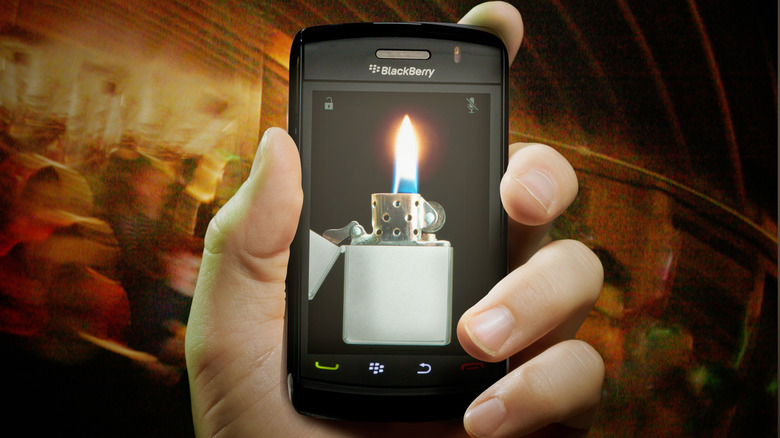
The Storm arguably marked the beginning of the brand's struggle to compete with capacitive touchscreens. While it was a bold experiment, it highlighted the difficulty of merging the old world of physical buttons with the new world of multi-touch gestures.
3. The Square Powerhouse: BlackBerry Passport (2014)
If you look at any list of blackberry phones, the Passport stands out as the most geometrically radical. Released in 2014, the device was roughly the size and shape of an actual travel passport. Its defining feature was the 1:1 aspect ratio display, a perfectly square 4.5-inch screen that looked completely different from the tall, narrow rectangles offered by Apple and Samsung.
The reasoning behind this design was productivity. RIM argued that a square screen was superior for viewing wide documents, such as Excel spreadsheets or complex medical charts, without constant horizontal scrolling. It was a clear attempt to double down on enterprise security standards and the professional market. The Passport also featured a unique three-row physical keyboard that doubled as a touch-sensitive trackpad, allowing users to scroll through web pages by lightly swiping their fingers over the keys.
Despite its eccentric shape, the device found an audience. The square-shaped BlackBerry Passport received 200,000 orders within two days of its official release on September 24, 2014. It actually sold out on Amazon and the official web storefront in just 10 hours. It remains a fan favorite for those who value the BlackBerry 10 OS and the efficiency of the wide display layout.
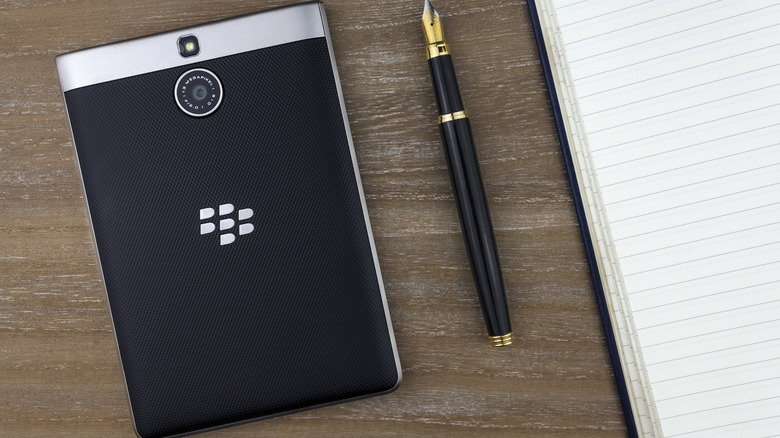
The blackberry passport design features aimed to solve the "narrow screen" problem of modern smartphones, though it eventually succumbed to the reality that most mobile content and video apps were being optimized for 16:9 vertical displays.
4. The Last Stand Slider: BlackBerry Priv (2015)
By 2015, the writing was on the wall for the proprietary BlackBerry operating system. To stay relevant in a world of apps, the company made the transition to the Android ecosystem. The result was the BlackBerry Priv, a device that attempted to offer the best of both worlds. It featured a high-spec 18-megapixel camera and a large, curved 5.4-inch touchscreen, but it hid a secret beneath that glass.
With a firm upward flick of the thumb, the screen would slide up to reveal a hidden slide-out keyboard mechanism. This allowed the Priv to compete with modern android phones while still providing that beloved tactile typing experience. It was an ambitious piece of engineering that sought to preserve the legacy of blackberry phones with physical keyboards while acknowledging that users needed access to the Google Play Store.
The Priv was technically impressive, but it faced uphill battles with pricing and a saturated mobile productivity market. It represents the final chapter in the blackberry phones history timeline for hardware developed directly by RIM (which had by then renamed itself to BlackBerry Limited). Shortly after the Priv, the company moved away from internal hardware design, licensing its brand to other manufacturers like TCL.
Luxury and Concepts: Beyond the Norm
While the four phones mentioned above were mass-produced, the history of blackberry phones is also littered with high-end luxuries and wild concepts. In 2011, the brand partnered with Porsche to create the BlackBerry Porsche Design P'9981. This device launched with an eye-watering price tag of $2,300 and featured a stainless steel frame and a leather-wrapped back. Owners were even given exclusive PIN codes starting with 2AA so they could be identified as luxury users by their peers on BBM.
On the more experimental side, there was the BlackBerry Empathy. This 2010 concept phone was a radical departure from reality, proposing a transparent OLED screen and a biometric ring. The ring was intended to interpret emotional data like heart rate and stress levels, displaying the user's "mood" to their contacts in real-time. While it never made it to production, it showed how far the brand was willing to dream about the future of mobile connectivity.
FAQ
When did BlackBerry phones come out?
The brand officially launched in 1999 with the release of the 850 pager. However, the first device that most people would recognize as a mobile phone was the BlackBerry 5810, released in 2002. It was unique because it required a wired headset to make calls, as it didn't have a built-in speaker or microphone for the ear.
Why did BlackBerry fail?
While there are many factors, the primary reason was a slow reaction to the shift toward consumer-oriented smartphones. RIM focused on enterprise security and physical keyboards while the market moved toward large capacitive touchscreens, app ecosystems, and high-quality mobile cameras. By the time they transitioned to Android with the Priv, competitors like Apple and Samsung had already captured the majority of the market share.
Does BlackBerry still exist today?
Yes, but not as a smartphone manufacturer. Today, the company is a cybersecurity and software firm based in Waterloo, Ontario. They specialize in enterprise software, IoT security, and protecting the internal systems of millions of vehicles through their QNX software. The era of the handheld Crackberry hardware officially ended when legacy services were decommissioned in early 2022.
What killed BlackBerry?
A combination of factors led to the brand's decline, including the lack of a robust app developer community and the hardware-first mindset of the executive leadership. While they dominated the 2000s, the failure of the Storm and the late arrival of the 7-inch Playbook tablet made it difficult to keep up with the rapid pace of innovation from Google and Apple.
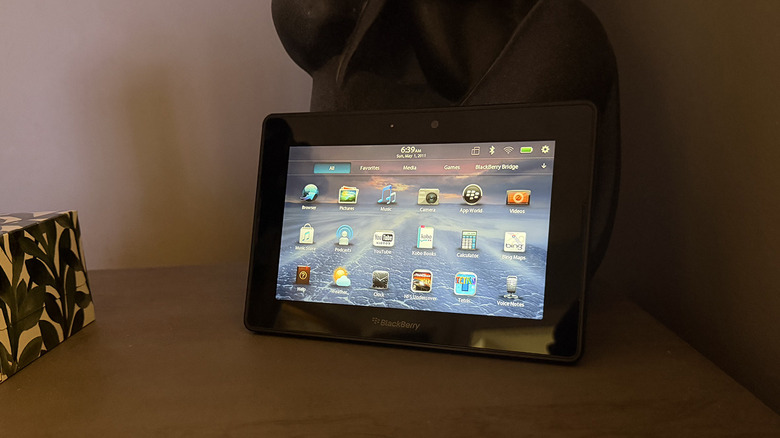
The legacy of these devices continues to influence how we think about mobile security and keyboard design. Whether you loved the square screen of the Passport or preferred the satisfying click of the 9900, the history of blackberry phones remains a fascinating case study in daring hardware design. Did you own one of these weird machines? Drop a comment below and let us know which tactile keyboard was your favorite to type on.