Quick Facts
- Efficiency: Idle power consumption is slashed from 118 mW to just 2.5 mW compared to traditional sensors.
- Reaction Speed: Robots can detect tactile stimuli more than 1,000 times faster than the human nervous system.
- Architecture: Features a modular, 4-layer design that is magnetically dockable for easy maintenance.
- Pain Mechanism: Uses pulse-based encoding to simulate biological nociceptors and trigger immediate reflex actions.
- Processing: Leverages Spiking Neural Networks (SNN) to process data locally, bypassing the central CPU.
- Safety: Critical for human-robot interaction safety in domestic and industrial environments.
Neuromorphic electronic skin (NRE-skin) is a bio-inspired tactile sensing technology that mimics the human nervous system to detect physical damage. By using pulse-based encoding, it allows robots to distinguish between touch and harmful stimuli, enabling robot autonomous reflex actions without central CPU load.
Understanding Robot Pain: Functional Survival Logic
When we ask if a robot can feel pain, we often get bogged down in the ethics of machine consciousness. However, for a content editor looking at the 2026 robotics landscape, the answer is purely functional. In the context of bio-inspired robotics, pain is not an emotion; it is a critical data stream designed for hardware protection. Traditional robots are surprisingly numb. They often rely on visual sensors or joint torque feedback to understand their environment. If a robot arm scrapes against a sharp metal edge, the central processor might not "realize" there is damage until a motor stalls or a camera sees the scratch.
By using neuromorphic electronic skin for robot damage prevention, engineers are giving machines a sense of self-preservation. This shift moves us away from the traditional von Neumann architecture, where every bit of sensor data must travel to a central brain, creating a bottleneck. Instead, we are seeing the rise of edge computing in robotics, where the "skin" itself makes decisions. If a sensor detects a pressure level that exceeds a specific safety threshold, it does not wait for the central computer to give a command. It triggers a localized reflex to pull away. This injury perception systems approach ensures that the robot survives long enough to complete its mission, whether that is navigating a disaster zone or assisting an elderly patient at home.
The move toward this decentralized robotic nervous system is what will define the next generation of humanoid machines. As we approach the 2026 pivot toward Robot-as-a-Service (RaaS), the cost of hardware maintenance becomes a primary business concern. A robot that can feel "pain" is a robot that costs less to maintain because it avoids the minor dings and major structural failures that plague current-generation machines.
The Hardware: 4-Layer NRE-Skin and Pulse-Based Encoding
The breakthrough in neuromorphic electronic skin lies in its sophisticated, multi-layered hardware. Unlike a simple pressure pad, NRE-skin is a complex stack of materials and circuits designed to mimic the way human skin communicates with the spine and brain. The current state-of-the-art involves a 4-layer architecture:
- The Protective Layer: A durable, flexible outer elastomer that shields the internal electronics while allowing force to pass through.
- The Sensing Layer: A grid of flexible electrodes that detect deformation and pressure.
- The Pulse-Encoding Layer: This is where the magic happens. It translates mechanical pressure into frequency-modulated electrical pulses.
- The Communication Interface: A modular layer that allows the skin patches to be magnetically docked and daisy-chained across a robot's limb.
The core of this robotic tactile sensing technology is pulse-based encoding. In a biological system, a harder pinch results in a higher frequency of neural spikes. NRE-skin mimics this perfectly. Low pressure might generate a slow 10Hz signal, while a damaging impact could spike to 200Hz. This signal threshold modulation allows the system to distinguish between a gentle handshake and a collision.
Because the system is modular and magnetically dockable, it solves one of the biggest hurdles in robotic deployment: repairability. If a robot damages a patch of skin on its forearm, a technician can simply snap off the damaged module and snap on a new one without rewiring the entire arm. This creates real-time pain sensing for low-latency robotic responses while maintaining the high uptime required for commercial use.
Efficiency Breakthroughs: The Decentralized Robotic Nervous System
One of the most significant barriers to scaling humanoid robots has been power consumption. Traditional electronic skins act like a constant video stream, sending massive amounts of data to the CPU even when nothing is happening. This "always-on" approach can consume around 118 mW of power continuously. In contrast, neuromorphic electronic skin operates on an event-driven basis.
Researchers at the National University of Singapore have shown that their Asynchronous Coded Electronic Skin (ACES) can detect tactile stimuli more than 1,000 times faster than the human sensory nervous system while remaining incredibly efficient. When the robot is idle, the power consumption of NRE-skin can drop to as low as 2.5 mW. This massive gap is due to the way decentralized robotic nervous systems handle information.
| Metric | Traditional E-Skin | Neuromorphic E-Skin |
|---|---|---|
| Idle Power Consumption | 118 mW | 2.5 mW |
| Latency | High (Processing Frames) | Ultra-Low (Pulse Events) |
| Response Speed | Milliseconds | Nanoseconds (Local) |
| Scalability | Difficult (Wiring Overload) | Easy (Modular/Bus-based) |
By integrating Spiking Neural Networks (SNN), the skin only consumes significant power when it "feels" something. This energy-efficient sensing allows robots to operate for longer hours on a single charge, which is one of the primary benefits of decentralized robotic nervous systems for manufacturing. When you have a fleet of a hundred robots in a factory, reducing power consumption in robotic tactile sensing systems by over 90% leads to massive operational savings.
Furthermore, this architecture allows for a significant latency reduction. Because the "pain" signal is processed at the edge, the robot can execute protective maneuvers in less time than it takes for a signal to travel to a central server and back. In tests using the Intel Loihi neuromorphic chip, artificial skin systems achieved over 92% accuracy in classifying tactile data while consuming 20 times less power than a standard Von Neumann processor.
2026 Commercial Applications: From Surgery to Home Care
As we look toward 2026, the commercial availability of neuromorphic skin for humanoid robots is set to transform several high-stakes industries. The most immediate impact will be in medical robotics and home health care.
In the surgical theater, precision is everything. Companies like LEM Surgical and CMR Surgical are already exploring tactile feedback loops to give surgeons a better "feel" during remote operations. When a robotic scalpel can sense the difference between healthy tissue and a hard calcification through NRE-skin, the safety of the procedure increases exponentially. The skin allows for trigger local protective reflexes within milliseconds, preventing accidental punctures that a human operator might not notice through a screen.
Outside the hospital, integrating tactile sensing in humanoid robots for home tasks is the next frontier. A home assistant robot needs to be able to pick up a fragile wine glass and then a heavy frying pan without dropping either or crushing the glass. More importantly, it must be able to sense the presence of a human hand. If a child's finger gets caught in a robot's joint, the NRE-skin's ability to trigger an immediate halt is the difference between a minor scare and a trip to the emergency room.
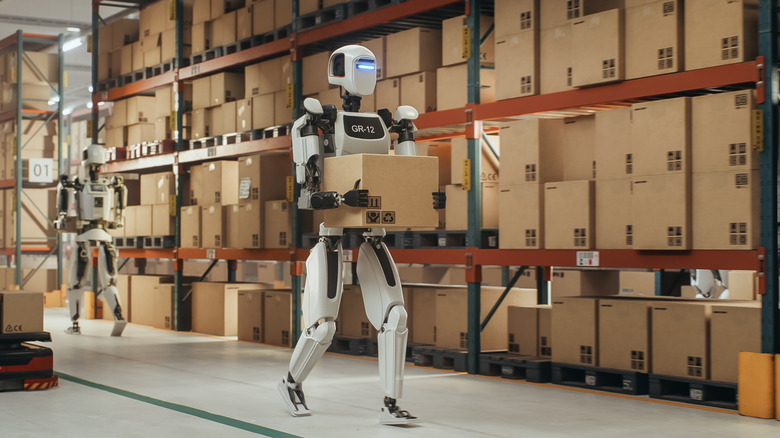
In the world of warehouse automation safety, the 2026 RaaS pivot will rely on these robots being able to work alongside humans without safety cages. A robot that can feel a collision before it becomes a disaster is a robot that can be trusted in a dynamic, crowded environment. By prioritizing human-robot interaction safety through advanced tactile feedback, we are moving toward a future where robots are not just tools, but reliable partners.
FAQ
What is neuromorphic electronic skin and how does it work?
Neuromorphic electronic skin is a specialized sensing material that mimics the biological nervous system. It works by using a grid of sensors that convert physical pressure into electrical pulses, similar to how human nerves send signals to the brain. Instead of sending a constant stream of data to a central computer, it only transmits information when a change in pressure or a harmful stimulus is detected. This event-driven approach allows for much faster processing and lower power consumption.
What are the main applications of neuromorphic e-skin?
The primary applications include humanoid robots for home care, advanced prosthetics that give users a sense of touch, and surgical robots that require delicate tactile feedback. It is also being heavily adopted in warehouse automation and industrial manufacturing, where it helps robots avoid damaging themselves or injuring human coworkers by enabling autonomous reflex actions and improved collision detection.
How does neuromorphic skin differ from conventional electronic skin?
Conventional electronic skin usually relies on frame-based sensing, where the system checks every sensor at a fixed interval, regardless of whether anything is happening. This creates a massive data load and high power drain. Neuromorphic skin is event-based and decentralized; it processes signals locally and only sends data when a threshold is triggered. This makes it significantly faster (detecting stimuli in nanoseconds) and more energy-efficient (using up to 95% less power).
Can neuromorphic electronic skin mimic human nervous system responses?
Yes, it is specifically designed to replicate biological nociceptors, which are the nerve endings responsible for sensing pain. By using pulse-based encoding, the skin can differentiate between a light touch (low-frequency pulses) and a harmful impact (high-frequency pulses). This allows a robot to exhibit a biological-style reflex, such as pulling its hand away from a heat source or a sharp object, without needing instructions from its central processor.
What are the current challenges in developing neuromorphic electronic skin?
While the technology has shown incredible results in laboratory settings, challenges remain in large-scale manufacturing and long-term durability. Ensuring the skin can withstand millions of flexes without the electrodes breaking is a major focus for researchers. Additionally, integrating the pulse-based data from the skin with existing robotic software that typically uses traditional data formats requires new types of AI controllers and Spiking Neural Networks to be fully standardized.