Quick Facts
- Full Transition: 2026 represents a historic pivot as Apple completes the phase-out of LCD technology for its entire smartphone and professional tablet lineup.
- MacBook Evolution: The first OLED display on MacBook Pro 2026 models arrives this year, featuring high-performance panels that replace the previous mini-LED technology.
- The Foldable Era: Apple enters a new category with the iPhone Fold, boasting a 7.6-inch internal display and a ultra-thin 4.5mm chassis.
- Pro-Grade Tech: Tandem Stack OLED technology is now the standard for the iPad Pro and the new MacBook Pro, offering double the lifespan and significantly higher peak brightness nits than traditional panels.
- Market Impact: Apple's transition to OLED displays for its MacBook Pro lineup in 2026 is projected to drive a 33% year-over-year growth in the global OLED notebook market.
- Wearable Leadership: The Apple Vision Pro and Apple Watch Ultra 3 continue to push the boundaries of micro-oled and LTPO backplane efficiency.
As of 2026, Apple has transitioned most of its flagship mobile and wearable devices to OLED technology. This includes the entire iPhone lineup, the M4 and M5 iPad Pro, the Apple Vision Pro headset, and the newly released MacBook Pro. The range of OLED Apple products continues to expand as manufacturing costs drop and supply chains mature.
The State of OLED Apple Products in 2026
If you have been following the display industry as closely as I have, 2026 feels like the year the future finally caught up with the marketing. For years, we tracked the Apple OLED transition timeline through rumors and supply chain leaks. Today, that transition is effectively complete for everything you carry in your pocket or bag. The total phase-out of LCD iPhones by the end of 2025 set the stage for this year's biggest move: bringing the vibrant contrast and efficiency of hybrid OLED panels to the Mac for the very first time.
The move to OLED isn't just about prettier colors. For Apple, it is a strategic shift toward a unified display architecture. By standardizing on OLED, Apple can offer a consistent visual experience across its entire ecosystem, ensuring that a photo edited on an iPhone 17 Pro looks exactly the same when viewed on an M5 iPad Pro or the flagship 2026 MacBook Pro.
The iPhone Lineup: From iPhone 17 to the Foldable Era
The 2026 iPhone lineup is the most diverse we have ever seen, yet it is technically unified by display technology. Every model now utilizes an LTPO backplane, which allows for a variable refresh rate ranging from 1Hz for the always-on display technology to 120Hz for fluid ProMotion technology.
The standout of the year is undoubtedly the iPhone Fold. This device features a 5.3-inch external cover screen and unfolds to reveal a 7.6-inch internal display. Despite the complex hinge mechanism, the device remains incredibly thin at 4.5mm when open. This foldable iPhone air display technology and screen features represent the pinnacle of Apple's partnership with Samsung Display Gen 8.6 production lines, offering a creaseless viewing experience that rivals traditional tablets.
| Model | Display Size | Display Tech | Key Feature |
|---|---|---|---|
| iPhone 17 | 6.1-inch | OLED (LTPO) | 120Hz ProMotion |
| iPhone 17 Slim | 6.6-inch | OLED (LTPO) | Ultra-thin design |
| iPhone 17 Pro | 6.3-inch | OLED (LTPO) | Under-display Face ID |
| iPhone 17 Pro Max | 6.9-inch | OLED (LTPO) | 2,000 nits Peak Brightness |
| iPhone Fold | 7.6-inch (Internal) | Flexible OLED | Foldable form factor |
iPad Pro & iPad mini: Standardizing the Tandem Experience
Last year, the M4 iPad Pro introduced us to the wonders of tandem stack OLED benefits. In 2026, Apple is doubling down. The current iPad Pro models utilize the Ultra Retina XDR display, which relies on a dual-stack architecture to achieve a massive 2,000,000:1 contrast ratio. This tech is a game-changer for professional artists because it virtually eliminates blooming reduction issues that plagued the older mini-LED models.
We are also seeing the technology trickle down. According to reports from Macworld, Apple is expected to expand its OLED product line in 2026 to include an updated iPad mini. The iPad mini 8 finally moves away from LCD, offering the deep blacks and fast response times that users have been demanding for years. While the Pro models use the high-end tandem stack OLED panels, the mini utilizes a more cost-effective single-stack panel, striking a balance between price and performance.

MacBook Pro 2026: The OLED Frontier
For many "pro" users, the question has been: should i wait for the oled macbook pro 2026 release? The answer is a resounding yes. The new K114 (14-inch) and K116 (16-inch) MacBook Pro models represent the most significant redesign since 2021. By integrating the 2nm M6 chip and a tandem stack OLED display, Apple has managed to make the chassis thinner while significantly extending battery life.
The move from mini-LED to OLED display on MacBook Pro 2026 means users get better color gamut accuracy and the ability to view HDR content with pixel-perfect precision. Furthermore, the transition allows Apple to move away from the notch, opting instead for a cleaner hole-punch camera layout that houses the improved 12MP Center Stage camera. For professional users, the benefits of tandem stack oled for professional ipad pro users have finally migrated to the laptop, providing a workspace that remains vibrant even in direct sunlight thanks to sustained high peak brightness nits.
Wearables & Vision Pro: Micro-OLED Mastery
While the larger devices focus on tandem panels, Apple's wearables are mastering micro-oled and specialized LTPO technology. The Apple Vision Pro remains the flagship for high-density displays, featuring a micro-oled silicon backplane with over 23 million pixels. This allows for a spatial computing experience where pixels are essentially invisible to the human eye.
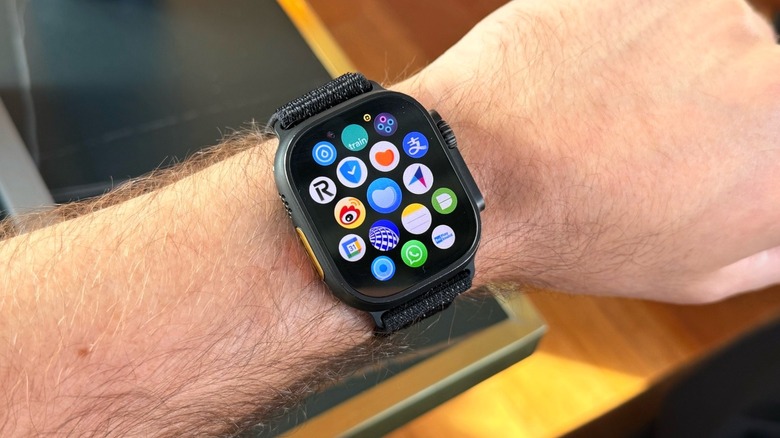
On the wrist, the Apple Watch Series 11 and Apple Watch Ultra 3 continue to benefit from the efficiency of the latest LTPO panels. These displays are crucial for maintaining an always-on display technology that doesn't drain the battery. In fact, the improved power efficiency of these 2026 panels is one of the primary reasons the Ultra 3 can now push past the 72-hour battery mark in standard use.

Why Tandem? The Technical Advantage of Apple's Display Shift
You might be wondering why Apple didn't just use standard OLED panels for the iPad and Mac. The answer lies in durability and longevity. Standard single-stack OLEDs can suffer from burn-in when used for static productivity tasks like spreadsheets or video editing timelines.
By using a dual-stack architecture—layering two RGB light-emitting layers on top of each other—Apple effectively splits the workload. This results in:
- Higher Brightness: Reaching 1,000 nits of full-screen brightness and 1,600 nits of peak HDR brightness.
- Extended Lifespan: Because each layer works less hard, the longevity of tandem oled screens on apple laptops is significantly higher than mobile-grade panels.
- Better Efficiency: Advanced thin-film encapsulation and the Samsung Display Gen 8.6 manufacturing process ensure that these panels consume less power despite their increased output.
This focus on panel power efficiency is what makes the 2026 MacBook Pro transition possible without compromising the legendary battery life the M-series chips are known for.
FAQ
Which Apple products currently feature OLED displays?
As of 2026, OLED displays are featured on the entire iPhone 17 lineup (including the iPhone 17 Slim and iPhone Fold), the iPad Pro (M4 and M5 models), the iPad mini 8, the Apple Watch Series 11 and Ultra 3, the Apple Vision Pro, and the newly released 14-inch and 16-inch MacBook Pro models.
Does the iPad Pro have an OLED screen?
Yes, the iPad Pro transitioned to OLED with the M4 model. The 2026 M5 iPad Pro continues to use the Ultra Retina XDR display, which utilizes Tandem Stack OLED technology to provide superior brightness and contrast compared to older LCD or mini-LED versions.
When will the first OLED MacBook be released?
The first OLED MacBook Pro was released in late 2026. This release includes both the 14-inch and 16-inch professional laptops, featuring a redesigned thinner chassis and the high-performance Tandem Stack OLED panels designed for professional creative workloads.
What are the benefits of OLED screens in Apple devices?
The primary benefits include a 2,000,000:1 contrast ratio for true blacks, higher peak brightness for HDR content, and better power efficiency through LTPO technology. In professional devices, the use of Tandem Stack architecture also provides greater durability and a longer display lifespan.
Do all iPhone models use OLED technology?
Yes, as of the end of 2025, Apple officially phased out LCD screens for the iPhone. In 2026, every model from the budget-friendly iPhone 16e to the high-end iPhone 17 Pro Max and the new iPhone Fold utilizes advanced OLED panels.
Staying Updated on the 2026 Release Schedule
The world of mobile technology moves fast, and Apple's 2026 roadmap is its most ambitious yet. Whether you are looking for the portability of the new iPhone Fold or the raw power of the OLED MacBook Pro, this year offers a display upgrade for every type of user. To ensure you make the right investment, always consider how these new tandem stack OLED benefits align with your specific workflow, especially if you are a creative professional.