Quick Facts
- Registration Pathway: Most custom builds require a specially constructed vehicle title, often abbreviated as SPCNS in various states.
- Legal Baseline: The federal framework for vehicle identification is governed by 49 CFR Part 565, which dictates how serial numbers are structured.
- Essential Document: Filing Form REG 5036, also known as the Statement of Construction, is the mandatory first step for titling a new build.
- Cost Benchmark: While DIY local registration fees vary by state, professional Montana LLC services for registration average around $1,600.
- EPA Exception: Federal law allows an individual to build only one kit motorcycle in their lifetime that is exempt from standard emissions requirements.
- Hardware Kit: Street-legal lighting bundles for E-moto or dirt-to-street conversions typically cost between $150 and $300.
- Safety Standard: All tires must feature a visible DOT stamp, and sequential LED indicators have become the 2026 benchmark for high-visibility signaling.
Navigating custom motorcycle registration can be complex, but obtaining a specially constructed vehicle title is achievable with the right paper trail. To register a custom-built motorcycle, owners must typically apply for a specially constructed or assembled vehicle title through their state DMV, submitting a Statement of Construction along with bills of sale for major components like the engine and frame.
Is Your Custom Build Street Legal?
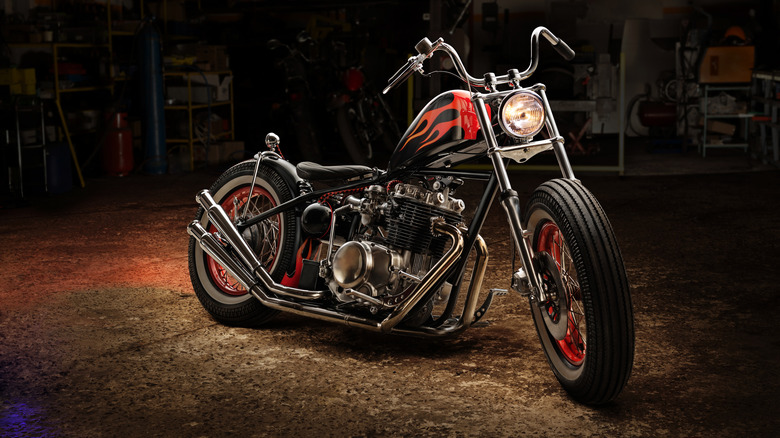
Building a motorcycle from a pile of parts is a rite of passage for many enthusiasts. Whether it is a classic bobber, a radical chopper, or a modern electric conversion, the transition from a garage project to a road-legal machine is where many builders hit a wall. As we move into 2026, the global custom motorcycles market is valued at $11.4 billion in 2025, showcasing a massive community of creators who want more than a factory-standard ride. However, there is a significant distinction between a modified factory bike and a machine that qualifies for a specially constructed vehicle title.
If you have used an aftermarket frame or a motor from a different manufacturer, you are no longer just "modifying" a vehicle; you are creating a new one in the eyes of the law. This requires a process known as Vehicle Verification to ensure that your creation meets basic roadworthiness standards. Despite the popularity of the craft, data shows that 'chopper' style motorcycles account for approximately 0.4% of the 8.8 million registered on-road motorcycles in the United States, suggesting that many builders either stick to minor modifications or struggle with the legal hurdles of full custom motorcycle registration.
Phase 1: Establishing the Paper Trail
The secret to a stress-free custom motorcycle registration experience is not found in the garage, but in a filing cabinet. Before you turn the first wrench, you must understand that the DMV cares more about the history of your parts than the quality of your chrome. You are essentially building a legal identity for your bike from scratch.
The Power of the Bill of Sale
Every major component you buy—the frame, the engine, and the transmission—must come with a Bill of Sale. If you buy a motor from a private seller on an online marketplace, you need a signed document including the seller’s name, address, price, and the component's serial number. If you are using parts from a donor bike you already own, keep the original title for that donor. Without these documents, the DMV may suspect the parts are stolen, which can lead to your project being impounded.
Solving the Missing Receipt Problem
It is common for builders to lose receipts over a multi-year project. If you are missing paperwork for your frame or engine, you might need to obtain a Title Surety Bond. This is essentially an insurance policy that protects the state if someone else later claims ownership of the parts. Once you have the bond, you can move forward with applying for an Assigned Identification Number through your state’s DMV or the NHTSA.
State-Specific Paperwork
Different states have different names for the same process. In California, you will be intimately familiar with Form REG 5036, while in Texas, you will need a Rebuilt Vehicle Statement. Regardless of the state, the goal is to provide a complete paperwork needed for specially constructed vehicle title. This package must include your Statement of Construction, which is a narrative of how the bike was built, what parts were used, and the total cost of construction.
- Paper Trail Log Template:
- Frame: Manufacturer name, serial number, and original invoice.
- Engine: Displacement, engine number, and proof of purchase.
- Transmission: Type and receipt.
- Major Accessories: Invoices for brakes, suspension, and wheels.
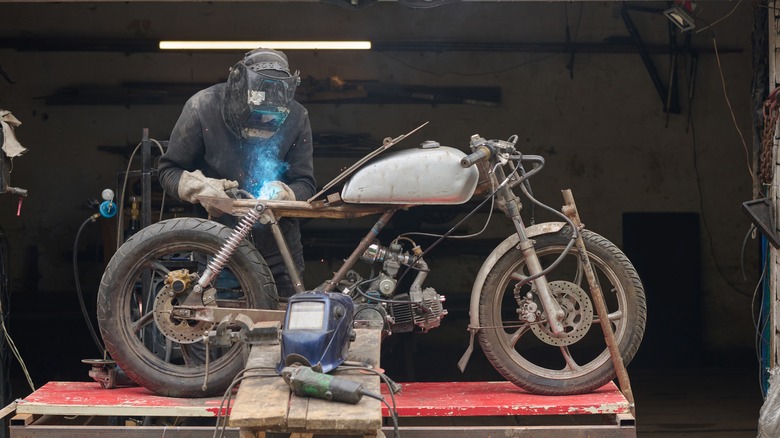
- Labor: If any part of the frame was welded by a professional shop, keep that receipt to prove structural integrity.
Phase 2: Building to Inspection Standards
Once the paperwork is in order, the physical build must meet street legal motorcycle requirements. You might love the look of a "naked" bike with no mirrors or turn signals, but the inspector will not. Building to custom motorcycle inspection standards means adhering to the Federal Motor Vehicle Safety Standards (FMVSS).
The Street-Legal Checklist
To pass your inspection, your bike must be equipped with functional safety gear. This isn't just a suggestion; it is the law. You should look for parts that are specifically labeled as DOT-approved to avoid being rejected at the finish line.
| Component | Requirement | 2026 Hardware Benchmark |
|---|---|---|
| Headlight | High and low beam capability | Integrated LED with 2000+ Lumens |
| Tail Light | Integrated brake light and license plate light | Sequential LED strips |
| Turn Signals | Front and rear (spaced correctly) | High-intensity micro-LEDs |
| Mirrors | At least one (some states require two) | Vibration-dampened convex glass |
| Tires | DOT-approved for road use | Dual-compound rubber with depth markers |
| Horn | Audibility from 200 feet | 110dB compact electric horn |
EPA and Emissions Compliance
Emissions are a major sticking point for custom motorcycle registration. For internal combustion engines, the EPA has strict rules. However, there is a "once-in-a-lifetime" exemption. Under EPA rules, an individual is permitted to build only one kit motorcycle in their lifetime that is exempt from federal emissions requirements. If you plan on building more, you will need to use certified engines or implement expensive catalytic systems.
The E-Moto Conversion Factor
For those working on electric conversions, the requirements shift slightly. Since you don't have an alternator, you must install specialized hardware like 12V converters to power your lighting and horn from the main battery pack. Street legal lighting and mirror requirements for custom bikes remain the same for electrics, but you must ensure your wiring can handle the continuous load without interfering with the drivetrain electronics.
Phase 3: The DMV Safety Inspection
The final boss of the registration process is the physical inspection. In many jurisdictions, this is referred to as the Vehicle Safety Systems Inspection (VSSI) or a Level III Inspection. This is when a state officer or authorized inspector verifies your how to get a VIN for a custom motorcycle frame request.
Scheduling and Preparation
Do not just show up at the DMV with a trailer. Most states require you to schedule an appointment specifically for a specially constructed vehicle. When you arrive, have all your paperwork organized in a binder. The inspector will check the frame for any signs of tampering and verify that the engine numbers match your bills of sale.
What the Inspector Looks For
During the how to pass a DMV custom motorcycle safety inspection, the officer will check the following:
- Brake Function: Do the front and rear brakes both trigger the brake light?
- Lighting: Are the turn signals visible from the required distance? Is there a high-beam indicator on the dash?
- Tires: Are there "Not for Highway Use" stamps? (This is an automatic fail).
- Noise Levels: Is the exhaust excessively loud? Some states use a decibel meter to ensure compliance with local noise ordinances.
If the bike passes, the officer will affix a new state-assigned VIN sticker to your frame. This is a crucial moment; that sticker is the birth certificate of your motorcycle. Do not paint over it or damage it. Once the VIN is assigned, you can proceed to the window to pay your fees and receive your license plate.
Advanced Strategy: The Montana LLC Route
If you live in a state with extremely restrictive laws—like California’s strict emissions or New York’s complex titling—you might consider registering custom motorcycles through a Montana LLC. Montana does not have a sales tax and allows for permanent registration on many vehicles.
Why Builders Use Montana
By forming a Limited Liability Company in Montana, the company "owns" the motorcycle. Since Montana has no vehicle inspections and lenient titling laws for specially constructed vehicles, it can be a shortcut for high-end custom builds. However, this route is not free. You will need to pay for the LLC formation, an agent fee, and the registration itself.
| Feature | DIY Local Registration | Montana LLC Route |
|---|---|---|
| Initial Cost | $100 - $500 (Fees) | ~$1,600 (Total Setup) |
| Inspection | Physical safety/VIN check | Usually none required |
| Sales Tax | Varies (up to 10%) | 0% |
| Complexity | High (DMV visits) | Moderate (Legal paperwork) |
| Legality | Standard | Check local "resident" laws |
Note: Some states are cracking down on residents who use out-of-state plates to avoid local taxes. Always consult with a local legal expert before choosing this advanced strategy.
FAQ
How do I register a custom-built motorcycle?
To register your build, you must collect all bills of sale for the engine and frame, fill out a Statement of Construction, and schedule a safety inspection with your DMV. Once the bike passes inspection and is assigned a VIN, you can apply for a title and registration plate.
What documents are needed for a custom bike registration?
You will need the original bills of sale for the motor and frame, a completed Statement of Construction (such as REG 5036), a weight certificate in some states, and a Title Surety Bond if any ownership documentation is missing.
Do custom motorcycles need a VIN?
Yes, every vehicle on the road must have a unique Vehicle Identification Number. If your custom frame does not have one, the DMV will provide an Assigned Identification Number after a successful inspection, which must be permanently attached to the frame.
What are the inspection requirements for custom motorcycles?
Inspectors look for essential safety equipment including high/low beam headlights, turn signals, mirrors, a horn, and DOT-approved tires. They also verify that the frame and engine serial numbers match your paperwork and ensure the build is structurally sound for road use.
How do I get a VIN for a homemade motorcycle frame?
You must apply for a VIN through your state's DMV or highway patrol. This typically involves submitting your receipts for the materials or the aftermarket frame and passing a physical inspection where the state officer will then issue and attach a new VIN plate.
Is a custom-built motorcycle street legal?
A custom bike becomes street legal only after it has been issued a specially constructed vehicle title and meets all FMVSS requirements. This includes having all necessary lighting, safety equipment, and passing an official state inspection.
Conclusion
The journey of custom motorcycle registration is often as long as the build itself. It requires patience, meticulous record-keeping, and a willingness to navigate the bureaucracy of the DMV. However, the reward of seeing a legal license plate on a machine you built with your own hands is incomparable.
Start your process by creating a Paper Trail Log today. Keep every receipt, take photos of every stage of the build, and ensure your hardware meets the current custom motorcycle inspection standards. While the technical side of the build is about performance and style, the legal side is about freedom. Once you master the paperwork, the road is yours.