Quick Facts
| Feature | Dye Sublimation | Inkjet (Traditional/Pigment) |
|---|---|---|
| Primary Mechanism | Heat-based vaporization (solid to gas) | Liquid droplet surface spray |
| Material Best For | Polyester (80%+) and polymer-coated rigid blanks | Cotton, paper, and natural fibers |
| Durability | Permanent molecular bonding; fade and crack resistant | Surface-level; may fade or crack over time |
| Equipment Cost | Higher initial investment ($10k-$20k for professional) | Lower entry cost (from $300 upwards) |
| Market Value | Valued at $14.9 billion in 2024 | Massive, established consumer and commercial market |
| Maintenance | Specialized RIP software and specific environmental controls | Prone to nozzle clogging if unused; standard maintenance |
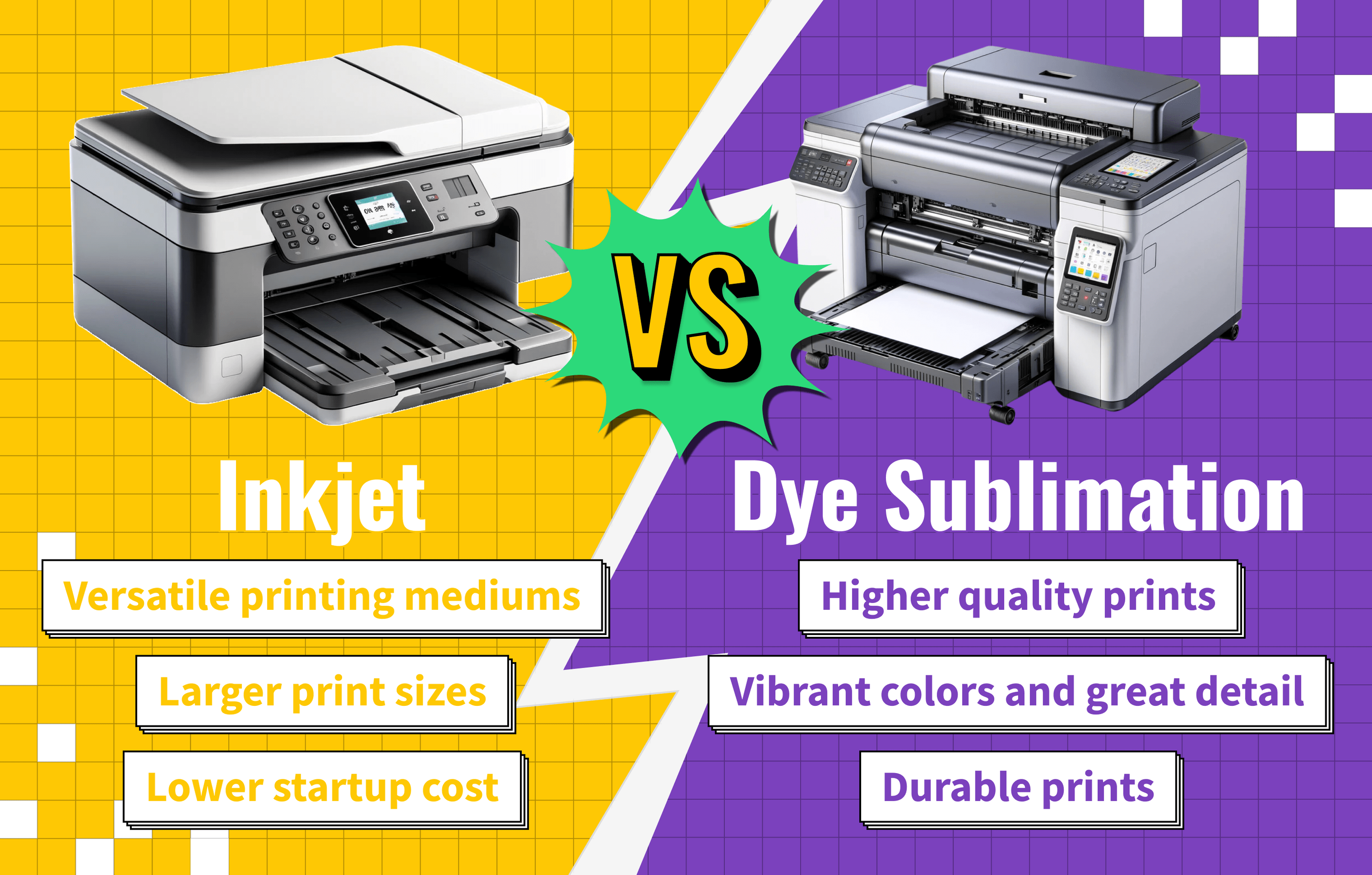
Dye sublimation utilizes a heat-based vaporization process to bond ink directly into polyester fibers at a molecular level, creating smooth, fade-resistant finishes. In contrast, traditional inkjet printing sprays liquid droplets onto the material's surface, making it more versatile for various substrates like paper and cotton but often less durable than sublimation for textiles. This fundamental difference in dye sublimation vs inkjet technology dictates not only the feel of the finished product but also its long-term viability in commercial settings.
The Core Mechanics: Vaporization vs. Surface Spray
To understand which technology fits your business, we must look at the chemistry happening inside the printer. Traditional inkjet printing operates on a simple premise: a print head moves across a substrate and fires microscopic liquid droplets onto the surface. Whether you are using pigment-based or dye-based inks, the color sits on the top layer of the paper or fabric.
The vaporization process used in dye sublimation is entirely different. Instead of staying liquid, the ink is printed onto a specialized transfer paper. When heat and pressure are applied via a heat press machine, the ink transforms from a solid directly into a gas without ever becoming liquid. At this exact moment, the polymer fibers of the substrate open up to receive the gas. As the material cools, the fibers close, trapping the color inside the material.
This creates a continuous tone result rather than a series of dots. Because the ink is now part of the substrate through molecular bonding, you avoid the common inkjet issue of gradient banding. The color gamut in sublimation is exceptionally wide, allowing for photographic quality on materials that would otherwise be difficult to print on.
Substrate Showdown: Printing on Textiles and Hard Goods
When we talk about sublimation vs inkjet print durability, the substrate is the most important factor. Sublimation is chemically tied to polyester. To achieve professional results, you typically need fabrics to have at least an 80% to 85% polyester content. If you try to sublimate on 100% cotton, the gas will have nothing to bond to, and the design will simply wash away.
However, dye sublimation offers a unique advantage for custom merchandise beyond apparel. By using polymer-coated rigid blanks, you can create permanent, high-definition designs on:
- Ceramic mugs and tiles
- Aluminum photo panels (chromaluxe)
- Phone cases and mouse pads
- Soft signage and polyester banners
For the apparel entrepreneur, sublimation vs inkjet print durability on polyester apparel is the gold standard. Because the ink lives inside the fiber, the garment maintains its breathability. The print will not crack or peel, even after dozens of high-temperature laundry cycles. Conversely, inkjet printing on textiles dye sublimation vs inkjet comparisons usually favor inkjet only when the primary material is natural cotton. While technologies like Direct-to-Garment (DTG) use inkjet heads to print on cotton, the washability and fade resistance of sublimation vs inkjet prints remain superior in the synthetic category.
Financial Reality: TCO and Equipment Bundles
If you are looking at dye sublimation vs inkjet for small business startups, the initial barrier is usually financial. A standard inkjet printer is a commodity; you can pick one up at any electronics store. However, a professional dye sublimation setup requires a more curated equipment list.
Typical equipment needed for dye sublimation vs inkjet setup includes:
- A dedicated sublimation printer (converted or purpose-built)
- High-quality transfer papers designed for specific ink release
- A heavy-duty heat press machine capable of consistent temperature and pressure
- Specialized RIP software for precise color management and ink density control
- Ventilation systems to manage the fumes during the vaporization phase
While the equipment cost is higher, the ROI is often better for those in the apparel and promotional space. Dye sublimation printing is considered more cost-effective for small production runs than traditional screen printing, which carries massive setup costs. When comparing the cost comparison of inkjet vs dye sublimation ink refills, sublimation ink is generally more expensive per milliliter. However, because it is used for high-margin custom merchandise, the total cost of ownership (TCO) is often justified by the premium price customers are willing to pay for a permanent, "retail-quality" finish.
Operational Workflow: Maintenance and Speed
The day-to-day management of these systems varies significantly. One of the primary maintenance requirements for sublimation vs inkjet printers is the management of the print heads. Sublimation inks are more viscous and prone to nozzle clogging if the machine sits idle. High-end industrial systems, like the Mimaki Tiger600 which can reach speeds of 5,920 ft²/hr, use automated cleaning cycles to mitigate this.
The workflow for sublimation is also more labor-intensive than the "click and print" nature of standard inkjet. A professional 14-step production timeline usually looks like this:
- Digital file preparation and color correction.
- Mirroring the image in the RIP software.
- Printing onto specialized transfer paper.
- Monitoring ink drying time to avoid smudging.
- Pre-pressing the substrate to remove moisture and wrinkles.
- Aligning the transfer paper with the substrate.
- Securing the layout with thermal tape.
- Setting the heat press machine to the specific temperature (usually 400°F).
- Applying pressure for the specific dwell time (30–60 seconds).
- Managing the vaporization process within the press.
- Careful removal of the hot transfer paper to prevent "ghosting."
- Cooling the substrate to lock in the molecular bonding.
- Quality control inspection for color accuracy.
- Final post-processing or packaging.
Traditional inkjet printing skips most of these steps, especially when printing directly to paper. However, for those producing soft signage or sportswear, the extra steps in the sublimation process ensure a level of archival longevity that surface-level inkjet simply cannot match.
FAQ
What is the main difference between dye sublimation and inkjet?
The primary difference lies in how the ink interacts with the material. Inkjet printing applies liquid ink to the surface of a substrate where it dries. Dye sublimation uses heat to turn solid ink into a gas that penetrates and bonds with synthetic fibers at a molecular level.
Can a regular inkjet printer be used for sublimation?
Technically, some inkjet printers with Piezo print heads can be converted for sublimation by using sublimation-specific inks and transfer paper. However, this usually voids the warranty and requires significant troubleshooting. Purpose-built sublimation printers are recommended for consistent commercial results.
Which is more cost-effective: dye sublimation or inkjet?
Inkjet is more cost-effective for general document printing and low-cost photo prints on paper. Dye sublimation is more cost-effective for producing high-margin custom merchandise, sportswear, and durable outdoor signage where longevity and color vibrancy are required.
Do dye sublimation prints last longer than inkjet prints?
On compatible synthetic materials, dye sublimation prints last much longer because the color is embedded within the material. It will not crack, peel, or wash out. Inkjet prints on fabric or paper are more susceptible to UV fading, mechanical wear, and water damage over time.
Which printing method is best for fabric and apparel?
It depends on the fabric. If you are printing on 100% cotton, inkjet-based technologies like Direct-to-Garment (DTG) are best. If you are printing on polyester, performance wear, or blends with at least 80% synthetic content, dye sublimation is the superior choice for both quality and durability.
Conclusion: Which Technology Wins for You?
The choice between dye sublimation vs inkjet is rarely about which is "better" in a vacuum; it is about which is better for your specific business model. If you are a studio photographer looking to produce high-end prints on archival paper, a professional inkjet system offers the color depth and substrate flexibility you need.
However, if you are building a brand around custom merchandise, soft signage, or high-performance sportswear, dye sublimation is the clear winner. Despite the higher initial investment in a heat press machine and specialized hardware, the ability to create permanent, molecularly bonded designs provides a competitive edge in durability and feel.
As the dye sublimation printing market continues to grow at a compound annual growth rate of 11.3%, the technology is becoming more accessible and efficient. By understanding the chemical and financial differences between these two giants of the printing world, you can make an informed decision that secures your production quality for years to come.