Our Top Picks
- Best for Power: Dyson HushJet (55 mph reach)
- Best for Features: Shark ChillPill (Cooling plates)
- The Verdict: Dyson wins on value and portability for daily travel. The Dyson HushJet is worth the $99 investment for those facing urban heat waves who prioritize high air velocity over misting features.
The Dyson HushJet Mini Cool is a $99 wearable fan weighing 7 ounces that delivers 55 mph airflow. It is the best choice for commuters seeking powerful, lightweight personal climate control.
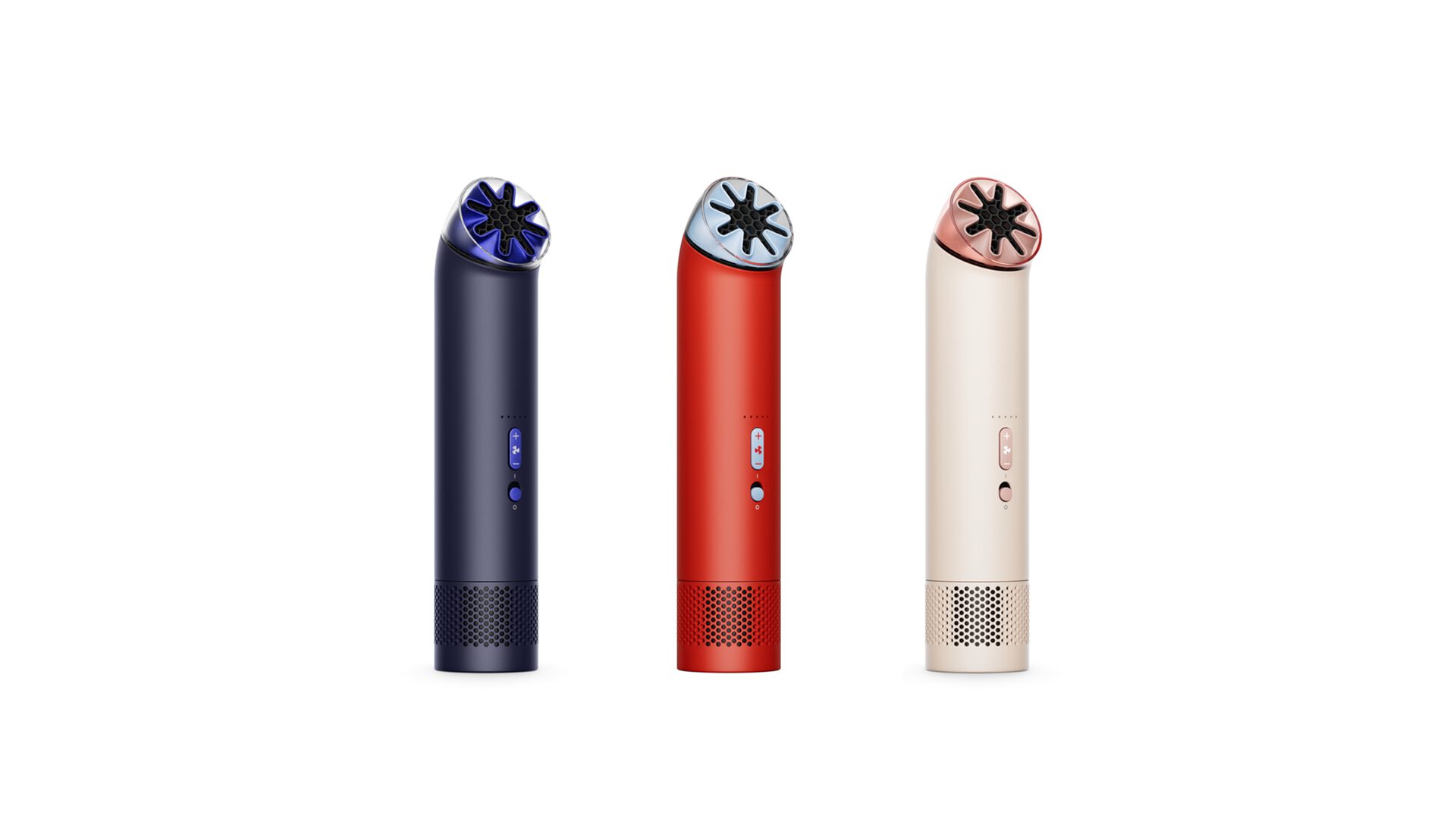
Urban commuting has long been a battle against the elements, particularly when subway cars transform into mobile saunas during the peak of summer. As someone who spends a significant portion of my life testing how mobile devices fit into the frantic pace of city living, I have seen dozens of wearable fans come and go. Most are little more than plastic toys that move lukewarm air around your face. However, the release of the Dyson HushJet Mini Cool suggests we might finally be seeing a shift toward actual personal climate control that works.
This device is not just another handheld fan; it is a scaled-down piece of aerodynamic engineering designed for the mobile professional. At a price point of $99, it represents a surprising departure for a brand usually associated with premium luxury prices. It is lightweight, weighing in at just 212 grams, and utilizes a motor technology that sounds more like something found in a hangar than a backpack.
Aerodynamic Power: How the 65,000 RPM Motor Performs
When you hold the device, the first thing you notice is the lack of visible blades. Dyson has spent decades perfecting bladeless technology, and that expertise is fully on display here. At the heart of this portable unit is a brushless DC motor that spins at up to 65,000 revolutions per minute. For context, most high-end hair dryers do not even reach those speeds.
This high-velocity rotation allows the device to generate airflow speeds of approximately 55 miles per hour. In practical testing, this translates to a focused jet of air that can be felt from up to 12 feet away. While most handheld fans provide a broad, weak breeze that dissipates the moment you move, the Dyson HushJet delivers a concentrated stream that cuts through stagnant humidity.
The engineering behind the airflow velocity is inspired by jet engines, using a focused nozzle to accelerate air through a narrow aperture. This creates a high-pressure zone that pulls in surrounding air, a process known as inducement and entrainment. For the user, this means that even on lower settings, the device provides a more significant cooling effect than larger, traditional blade-based portable fans. It is the kind of performance that makes a Dyson HushJet review feel less like a gadget check and more like a study in micro-scale thermodynamics.
Design and Ergonomics: The Neck Dock Advantage
Portability is the make-or-break factor for any wearable fan for commuters. If a device is too heavy, it ends up at the bottom of a bag; if it is too clunky, it stays at home. Dyson seems to have found the sweet spot with a chassis that weighs only 212 grams. This is roughly the weight of a premium smartphone, making it comfortable enough to wear for an entire cross-town journey.
The standout feature in the ergonomic package is the neck dock. Unlike cheap lanyards that let a fan bounce against your chest, the Dyson neck dock is a structured mount that keeps the airflow directed precisely at your jawline or neck. This hands-free operation is essential for mobile professionals who need their hands for a laptop, a coffee, or holding onto a subway strap.
In comparing the Dyson HushJet neck dock vs universal mount setup, the versatility becomes clear. The universal mount allows you to clip the fan onto a backpack strap or even a stroller, but the neck dock remains the most refined way to create a personal microclimate while walking. The magnetic connection to the charging stand is another high-end touch, ensuring that the device is always upright and ready to be grabbed as you head out the door. The build quality feels intentional, with a matte finish that resists fingerprints and a compact form factor that fits easily into a coat pocket.
Dyson HushJet vs Shark ChillPill: The $99 Value Play
The most interesting narrative in the current wearable market is the head-to-head battle between two floor-care giants. In this Dyson HushJet vs Shark ChillPill comparison, we see a rare price-reversal. Usually, Dyson is the most expensive option on the shelf. However, the Shark ChillPill retails for $150, while the Dyson sits at $99.
| Feature | Dyson HushJet Mini Cool | Shark ChillPill |
|---|---|---|
| Price | $99 | $150 |
| Cooling Method | High-Velocity Airflow | Misting & Metal Cooling Plates |
| Weight | 212 grams (7 oz) | ~350 grams |
| Motor Speed | 65,000 RPM | Standard Brushless |
| Air Velocity | 55 mph | ~15 mph |
| Battery Life | Up to 6 Hours | 4-8 Hours (Mode Dependent) |
While the Shark ChillPill offers active cooling plates that feel cold to the touch and a misting function, it is significantly heavier and more complex to maintain. The Dyson HushJet airflow vs Shark ChillPill cooling plates debate really comes down to how you prefer your thermal comfort. The Dyson focuses on pure air movement to sweat away heat, while the Shark uses conductive cooling.
For the average commuter, the Dyson is the more practical choice. It requires no water refills for misting and lacks the "maintenance friction" of cleaning out mineral deposits from a misting system. Furthermore, the Dyson HushJet vs Shark ChillPill price comparison makes the Dyson an easier recommendation for those who want performance without the $150 premium.
Battery Life and Noise Levels: The Trade-offs
No device this small is without its compromises, and for the HushJet, those compromises come in the form of acoustics and high-power battery drain. The unit is powered by a 5,000 mAh lithium-ion battery, which Dyson claims provides up to six hours of battery life.
In real-world testing, that six-hour figure is achievable only on the lowest speed settings. If you frequently use the Boost mode to combat a particularly hot bus ride, expect that time to drop significantly. The good news is the inclusion of USB-C charging, which allows you to top off the device using a laptop or a standard power bank.
Acoustics are the other major consideration. Small motors spinning at high speeds inevitably create noise. This device ranges from a relatively quiet 52 decibels on the lowest speed setting to 72.5 decibels when pushed to its limit. In a quiet office, the 72.5 decibel Boost mode will certainly be noticed by your neighbors. However, in the context of a noisy city street or a rumbling train, the sound blends into the background.
When conducting a portable neck-worn air conditioner battery life test, I found that the five speed settings offer enough granularity to find a balance between noise and cooling. Most of the time, speed three provides the best middle ground, offering sufficient airflow velocity without sounding like a miniature turbine is attached to your neck.
FAQ
Is the Dyson HushJet worth the money?
If you live in a high-humidity environment or have a long walking commute, the $99 investment is justifiable. It offers significantly better build quality and air velocity than the $20-30 fans found on mass-market retail sites. Its ability to create a consistent microclimate in harsh conditions makes it a tool rather than a toy.
How quiet is the Dyson HushJet compared to other models?
At its lowest setting of 52 decibels, it is comparable to a quiet conversation. However, the Dyson HushJet noise level vs Shark ChillPill shows that at high speeds, the Dyson is louder due to the high-pitch whine of the 65,000 RPM motor. It is more effective at moving air, but you pay for that power with increased volume.
What are the pros and cons of the Dyson HushJet?
The pros include its lightweight 212-gram design, the incredibly powerful 55 mph airflow, and the affordable $99 price point. The cons are the noticeable noise at high speeds, the lack of active cooling plates (which some competitors have), and the fact that battery life drops quickly when using the maximum power settings.
How long does the battery last on the Dyson HushJet?
The 5,000 mAh battery lasts up to six hours on the lowest setting. In a typical mixed-use scenario—cycling through different speeds depending on the heat—you can expect about three to four hours of continuous use. It charges via USB-C, making it easy to refuel during the workday.
What accessories are included with the Dyson HushJet?
The package includes the handheld fan unit, a dedicated magnetic charging stand, a USB-C charging cable, and the neck lanyard for hands-free use. Depending on the bundle, some versions also include a clip grip for attaching the device to bags or clothing.
Final Verdict
The Dyson HushJet Mini Cool represents a sophisticated leap forward in personal cooling technology. It successfully brings high-end aerodynamic engineering to a portable format that actually fits into a modern lifestyle. While it may be louder than some lower-powered alternatives, the sheer volume of air it moves is unmatched in the sub-10-ounce category.
For the mobile professional or the dedicated commuter, this is the most effective way to manage your personal climate while on the move. It is a rare instance where Dyson has delivered a product that is not only the highest performing in its class but also one of the best values compared to its direct competition.