Quick Facts
- The Pause: Essex Police officially suspended their live facial recognition operations in May 2026 following internal and academic reviews.
- The Catalyst: A University of Cambridge study revealed that the software was more likely to identify Black individuals than other groups, raising concerns about systemic unfairness.
- Operational Scale: Between August 2024 and February 2025, the force scanned approximately 1.3 million faces in public spaces.
- Efficiency Metrics: Despite the massive scale of scanning, the deployment resulted in only 48 arrests, leading to debates over proportionality.
- The Software: The department utilized Corsight Apollo 4, a high-performance algorithm that had previously performed well in controlled laboratory environments.
- Regulatory Compliance: The pause was enacted to align with the Public Sector Equality Duty and guidelines set by the Information Commissioner’s Office.
Essex Police recently made headlines by pausing their live facial recognition (LFR) program. The decision came after a Cambridge University study highlighted significant facial recognition bias, despite the technology meeting specific facial recognition accuracy standards in laboratory settings. This move raises critical questions about AI surveillance deployment protocols and the future of biometric policing in the UK.
The Essex Incident: From Deployment to Suspension
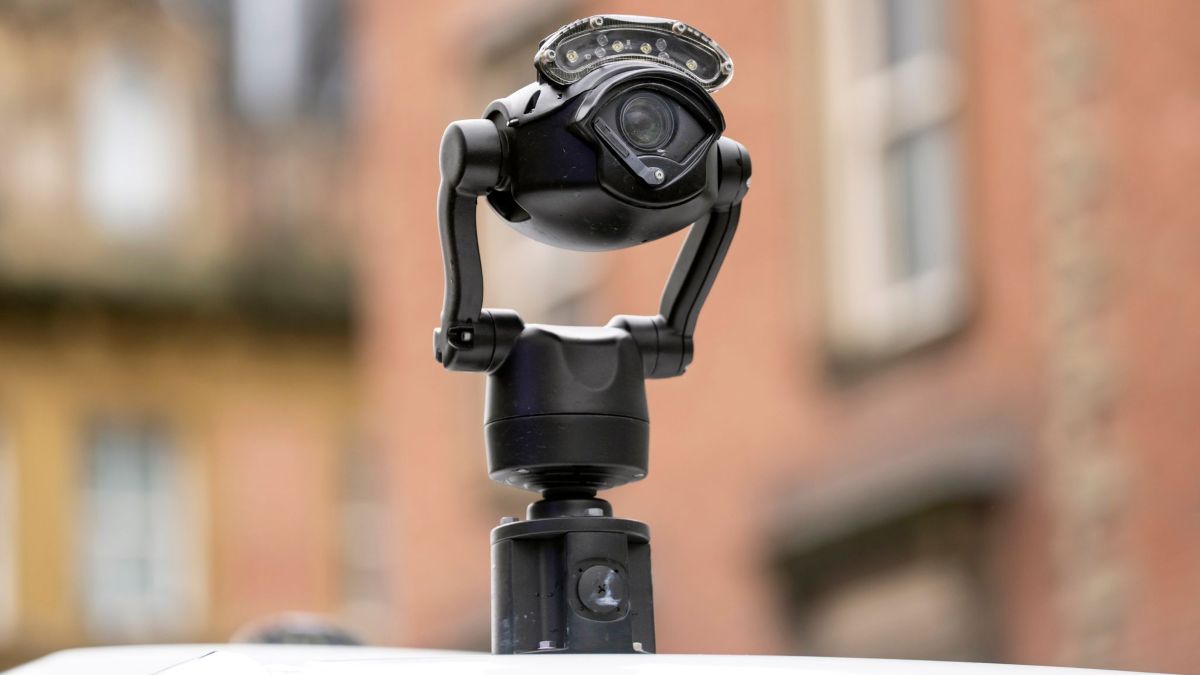
The use of AI in policing is often framed as a futuristic tool for public safety, yet the reality on the ground in Essex has proven far more complicated. Between late 2024 and early 2025, Essex Police embarked on an ambitious program involving live facial recognition cameras. These vans, equipped with Corsight Apollo 4 software, were deployed to high-traffic areas to scan crowds and match faces against watchlists of wanted individuals.
By the numbers, the effort was vast. In just six months, the system analyzed 1.3 million faces. This resulted in 123 police interventions, but only 48 arrests. While law enforcement initially touted the technology as a success, academic researchers began to look closer at the data.
A University of Cambridge study eventually found that the facial recognition bias within the system was statistically significant. Specifically, the software was more likely to correctly identify Black participants than those from other ethnic groups. While high accuracy sounds positive, in the context of policing, it means certain demographics are effectively subject to more rigorous and successful surveillance than others. This finding prompted the force to prioritize public trust over immediate operational goals, especially given the £115m national investment in such technologies by the Home Office. Community monitoring of police facial recognition programs became a central demand from civil liberties groups, forcing a strategic retreat.
The Methodology Gap: Lab Standards vs. Real-World Realities
One of the most confusing aspects of the Essex case is how a system can pass rigorous testing but still fail a social fairness test. This is known as the Methodology Gap. Before deployment, the National Physical Laboratory (NPL) evaluated the algorithm under ISO-standardized conditions. The NPL recorded a True Positive Identification Rate of 89 percent and a remarkably low False Positive Identification Rate of 0.017 percent.
However, laboratory testing uses controlled lighting and high-resolution images. Real-world field testing involves moving crowds, varied weather, and different camera angles. Understanding how to measure biometric algorithmic bias in AI requires looking at how these variables affect different skin tones and genders differently.
| Feature | NPL Laboratory Results | Cambridge Field Study |
|---|---|---|
| Environment | Controlled ISO Standards | Uncontrolled Public Spaces |
| False Positive Rate | 0.017% | Statistically higher for specific groups |
| Demographic Parity | High consistency | Significant racial & gender disparity |
| Accuracy Metric | Technical benchmark | Social impact & bias finding |
When facial recognition accuracy standards for law enforcement are only met in the lab, the transition to the street creates what experts call the Bias Paradox. If an algorithm is trained on data sets that aren't perfectly representative, it might become "too accurate" at spotting one group while failing another, or conversely, produce more false alarms for minority groups. This is why facial recognition accuracy standards for law enforcement must evolve to include demographic parity as a primary metric, not just overall speed or raw match rates.
Proportionality and Ethics: The 1:27,000 Scan Ratio
At the heart of the Essex debate is the concept of proportionality. Critics of the program often point to the efficiency of the system—or lack thereof.
The 1:27,000 Reality For every 27,000 faces scanned by Essex Police cameras, only one arrest was made. This ratio raises serious questions about whether the mass surveillance of innocent citizens is a proportional response to the crime-fighting benefits achieved.
This level of monitoring often brings up the metaphor of the Panopticon, a type of institutional building designed to allow all inmates to be observed by a single watchman without the inmates being able to tell whether they are being watched. In a modern city, AI surveillance deployment protocols can create a digital version of this, where the sense of being watched impacts civil liberties and public behavior.
Furthermore, the Public Sector Equality Duty requires public authorities to eliminate systemic discrimination. If an AI tool is found to have inherent facial recognition bias, its continued use could be seen as a violation of legal duties. Policing is built on public trust; if a community feels that technology is unfairly targeting them due to algorithmic fairness issues, that trust erodes, making traditional policing much harder.
Future Proofing: Mitigating Bias in AI Surveillance
The pause in Essex is not necessarily the end of facial recognition in the UK, but it is a demand for a reset. Moving forward, the focus is on steps to mitigate racial bias in facial recognition software through more rigorous independent auditing of live facial recognition systems.
Effective AI surveillance deployment protocols must include:
- Routine Demographic Testing: Algorithms should be tested against diverse data sets specifically mimicking the local population's makeup.
- Data Protection Impact Assessments (DPIA): Agencies must conduct thorough reviews before any new deployment to identify risks to privacy and equality.
- Transparency and Audits: Using independent bodies like the Information Commissioner’s Office to verify claims made by software providers.
- Policy Revisions: Shifting from "identification" (scanning everyone to find a few) toward "verification" (checking a specific individual's identity with consent) where possible.
By adopting best practices for AI surveillance deployment protocols, law enforcement can ensure that technology serves as a tool for justice rather than a source of division. Mitigating facial recognition bias is not just a technical challenge; it is a necessity for maintaining a fair and democratic society.
FAQ
What causes bias in facial recognition?
Bias often stems from the data used to train the machine learning models. If the training data contains more images of one demographic than another, the system becomes more adept at recognizing—or misidentifying—members of that group. Additionally, the mathematical weights within the algorithm can inadvertently prioritize features that are more prominent in certain ethnicities or genders.
How is bias in facial recognition software measured?
Experts measure bias by comparing the true positive identification and false positive rates across different demographic groups, such as ethnicity, age, and gender. If there is a statistically significant difference in how the software performs for one group compared to another, the system is considered to have algorithmic bias.
Why is facial recognition less accurate for certain skin tones?
Technical factors like lighting and contrast play a role. Darker skin tones may provide less "visual contrast" for some sensors, making it harder for older or poorly optimized algorithms to map facial landmarks accurately. However, the primary reason is usually a lack of diverse representation in the initial research and development phases of the software.
What are the risks of using biased facial recognition in law enforcement?
The most immediate risk is the wrongful detention or questioning of innocent individuals due to false matches. Long-term, it can lead to systemic discrimination, where specific communities are over-policed or monitored more intensely than others, leading to a breakdown in public trust and a potential breach of the Public Sector Equality Duty.
How can developers reduce bias in AI vision systems?
Developers can reduce bias by using more diverse and representative datasets during the training phase. They should also implement regular algorithmic updates and subject their software to third-party audits. Setting a high threshold for statistical significance in accuracy across all demographics is also a critical step in ensuring fairness.