Quick Facts
- Accuracy Range: Scientific testing shows Fitbit sleep accuracy typically lands between 62% and 78% sensitivity across different sleep stages.
- The Gold Standard: Data is measured against clinical polysomnography (PSG), which uses EEG, EOG, and EMG sensors for medical-grade results.
- Human Limit: Even professional sleep experts only agree on PSG stage classifications about 80% to 83% of the time, highlighting the inherent complexity of sleep analysis.
- Normal Benchmarks: Most healthy adults spend 50-60% of their night in Light sleep, 10-15% in Deep sleep, and 20-25% in REM.
- Core Sensors: Devices rely on Photoplethysmography (PPG) to track pulse and 3-axis accelerometers to monitor body movement.
- The Missing Data Fix: If your stage data is missing, it is usually because the device lost a consistent heart rate reading due to fit or sensor debris.
Fitbit sleep accuracy ranges from 62% to 78% compared to clinical PSG. While not medical-grade, it is a leading consumer tool for tracking sleep architecture. Fitbit sleep accuracy typically provides a reliable estimate of light, deep, and REM sleep for most healthy adults, but these wearables are not a substitute for medical-grade sleep studies and can be affected by physical placement and sensor quality.
The Science: How Fitbit Measures Your Night
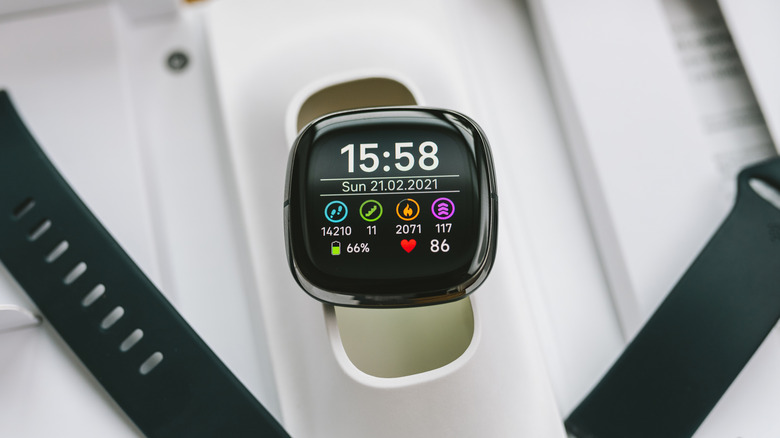
When you drift off, your body does more than just stop moving. Your heart rate slows, your breathing becomes rhythmic, and your heart rate variability (HRV) shifts in predictable patterns. To capture this, your tracker uses a combination of actigraphy—measuring movement via accelerometers—and Photoplethysmography (PPG). PPG is the technology behind those flickering green lights on the underside of your watch; it detects blood flow to calculate your heart rate and HRV.
Fitbit heart rate sleep tracking is the cornerstone of stage detection. Without it, the device can only tell if you are "Asleep," "Restless," or "Awake." By analyzing the subtle changes in the intervals between heartbeats, known as heart rate variability (HRV), the Sleep score algorithm can estimate which stage of the hypnogram you are currently in. For instance, REM sleep is often accompanied by a more irregular heart rate and a near-total lack of physical movement (muscle atonia).
The scientific community has put these consumer devices to the test. A 2024 validation study found that the Fitbit Sense 2 demonstrated sensitivities of 78.0% for light sleep, 61.7% for deep sleep, and 67.3% for REM sleep when compared to gold-standard polysomnography. This data shows that while the device is quite good at identifying when you are in a lighter sleep state, it can struggle slightly more with slow-wave sleep (Deep sleep) and REM detection.
Why Your Data Might Be Off: The 3 Main Culprits
If you have ever woken up feeling like a zombie only to have your Fitbit tell you that you had a "Fair" night of sleep, you are not alone. There are three primary areas where fitbit sleep accuracy can falter: physical factors, settings, and software limitations.
1. Physical Interference and Placement
The most common reason for troubleshooting fitbit sleep stages missing data is poor sensor contact. If the wristband is too loose, the PPG sensor cannot maintain a consistent read on your pulse. Conversely, wearing it too tight can restrict blood flow and distort the HRV data. The sweet spot is about a finger-width above your wrist bone. Furthermore, external factors like dirty sensors—buildup of sweat, lotions, or dead skin—can block the light path, leading to gaps in your data.
2. Environmental and Biological Noise
Research indicates that Fitbit devices frequently overestimate light sleep duration by an average of 18 minutes while underestimating deep sleep by approximately 15 minutes. This often happens because the device interprets a lack of movement as deeper sleep than it actually is. Furthermore, while Fitbit trackers show a high sensitivity for detecting sleep periods of up to 99%, their specificity for correctly identifying wake periods is significantly lower, ranging from 10% to 52% across multiple studies. If you lie perfectly still while awake, your Fitbit might incorrectly log that time as Light sleep.
3. Settings and Software
Sometimes the issue is in the digital brain of the device. If your Fitbit is set to "Sensitive" mode, it might record every minor twitch as a restless moment, drastically lowering your sleep score. Additionally, specific software bugs, such as a lag in the SpO2 clock face or outdated firmware, can interrupt the background processing required to calculate complex sleep architecture. Troubleshooting fitbit sleep stages often starts with checking if heart rate tracking is enabled, as PPG data is mandatory for stage analysis.
| Sleep Stage | Fitbit Sensitivity (Approx.) | Clinical PSG Sensitivity |
|---|---|---|
| Light Sleep | 78% | 80-85% |
| Deep Sleep (Slow Wave) | 62% | 85-90% |
| REM Sleep | 67% | 85-90% |
| Overall Sleep Detection | 95-99% | 100% |
Pro Fixes: Optimizing for Precision
Improving Fitbit sleep accuracy does not require a degree in somnology; it just requires a bit of maintenance and a few menu adjustments. If you feel your tracker is being overly pessimistic about your rest, start with this fitbit sleep tracking sensitivity settings guide.
First, check your sensitivity level. In the Fitbit app, navigate to Account > Advanced Settings > Sleep Sensitivity. Most users should keep this on "Normal." The "Sensitive" setting is intended for those with sleep disorders who need to track every micro-movement, but for the average person, it often leads to data that looks much worse than reality.
To ensure improving fitbit heart rate sleep tracking accuracy, follow these steps:
- The "Two-Finger" Rule: Wear the band snug but comfortable. For sleep tracking, it should not slide around, but it should not leave deep indentations in your skin.
- Clean the Sensors: Use a soft cloth and a tiny bit of rubbing alcohol to wipe down the back of the device every few days to remove oil and salt buildup.
- Firmware Refresh: If you notice a sudden drop in accuracy, check for updates. Fitbit frequently tweaks its Sleep score algorithm to improve detection.
- The Deep Reset: For persistent "missing data" issues, try a forced restart of the device while it is connected to its charger. This can clear sensor lag or software hang-ups.
When considering fitbit vs apple watch sleep accuracy 2026, both brands are racing toward better machine learning models to interpret wrist-based data. However, how to wear fitbit for accurate sleep stages remains the most critical factor that a user can control. No amount of AI can fix a sensor that is not touching the skin.
Interpreting Your Results Without Stress
It is easy to fall into the trap of "orthosomnia"—an unhealthy obsession with achieving the perfect sleep data. It is important to remember that Fitbit is a lifestyle tool, not a diagnostic medical device. While it provides a fantastic window into your sleep architecture, its real value lies in long-term trends rather than a single night's score.
If you see a sudden drop in Deep sleep, don't panic. Look at your week as a whole. Did you have a late meal? Was the room too warm? Did you exercise late in the evening? These factors influence HRV and movement, which Fitbit correctly identifies as a change in sleep quality. Use the data as a prompt for curiosity rather than a source of anxiety.
Remember the "7-hour rule" for REM. Most REM sleep occurs in the second half of the night. If you consistently cut your sleep short to six hours, your Fitbit will show a significant lack of REM, not because the sensor is broken, but because you are physically cutting off those cycles. By understanding the fitbit vs polysomnography sleep stage validation, you can trust that your tracker is getting the "big picture" right, even if it misses the exact minute you shifted from Light to Deep sleep.
FAQ
How accurate is Fitbit sleep tracking compared to a clinical sleep study?
Fitbit sleep tracking is considered highly accurate for a consumer wearable, with sensitivity levels between 62% and 78% depending on the specific sleep stage. While it cannot match the 100% accuracy of a clinical polysomnography (PSG) study—which uses brain wave monitoring—it provides a statistically significant estimate that correlates well with medical-grade data for healthy adults.
Does Fitbit accurately distinguish between deep sleep and REM?
Fitbit distinguishes between deep and REM sleep by analyzing heart rate variability (HRV) and movement patterns. Validation studies show it is about 61.7% accurate at identifying deep sleep and 67.3% accurate for REM. It is more likely to underestimate deep sleep and overestimate light sleep compared to clinical equipment.
Why is my Fitbit sleep data sometimes inaccurate?
Inaccuracies are usually caused by physical or environmental factors. If the sensor cannot maintain a steady heart rate reading due to a loose wristband, dirty sensors, or poor placement, the device will fail to calculate stages. Additionally, lying very still while awake can cause the device to misidentify wakefulness as light sleep.
Does Fitbit overestimate the total amount of sleep time?
Yes, Fitbit often overestimates total sleep time because its specificity for identifying "awake" periods is relatively low (10-52%). Because the device relies heavily on movement, if you are resting quietly in bed but not actually asleep, the accelerometer may not detect enough movement to trigger an "awake" log.
How can I make my Fitbit sleep data more precise?
To improve precision, ensure the device is worn snugly about one finger-width above the wrist bone. Regularly clean the PPG sensors on the back of the device. Ensure your sleep sensitivity is set to "Normal" in the app settings, and keep your device's firmware updated to ensure you are using the most recent sleep algorithms.
If you have found that cleaning your sensors or adjusting your wristband improved your nightly data, we would love to hear about it. Small changes in how we wear our tech can lead to much better insights into our health. Stay consistent, watch the trends, and rest easy knowing you have the tools to understand your night better.