Quick Facts
- Average Market Price: ~$25,000 across all 1979–1993 models.
- Entry Level Project: $3,000 – $7,000 for high-mileage 2.3L or early four-eye versions.
- Driver Quality: $12,000 – $22,000 for reliable 5.0L GT and LX models.
- Collector Grade: $35,000+ for low-mileage survivors and special editions.
- Top Appreciation Model: 1993 SVT Cobra and the ultra-rare Cobra R.
- Market Trend: Fox Body values have nearly tripled over a five-year period, signaling a firm shift into collector status.
Yes, a Fox Body Mustang is still affordable compared to many classic muscle cars, but the definition of affordability has shifted significantly. The average Fox Body price for the 1979–1993 generation currently hovers around $25,000, though entry-level project cars can still be found for under $5,000 for those willing to put in the work.
The 2026 Fox Body Market: An Overview
Walking through a local car meet in 2026, it is impossible to ignore the maturing status of the third-generation Mustang. What was once the quintessential "cheap speed" for high schoolers and weekend drag racers has officially transitioned into a legitimate blue-chip collectible. The Fox platform architecture, celebrated for its lightweight unibody and the legendary 5.0L Windsor V8, is no longer the bargain it was a decade ago.
The market value for Fox Body Mustangs has risen from roughly 28% of their original inflation-adjusted price to 58% over the last four years. This represents a massive shift in market sentiment. We are seeing a 15% increase recorded in a single year for driver-quality examples. This appreciation is partly driven by Gen X and Millennial nostalgia, but also by the sheer versatility of the car. Whether you want a period-correct restoration or a modern restomod potential beast, the Fox Body remains the most adaptable canvas in the Ford catalog.
Looking at the current fox body mustang value trends for 2026, the market has segmented into very distinct tiers. While the ceiling for the rarest models has reached six figures, the floor for a running, driving V8 car has stabilized well above the $10,000 mark.
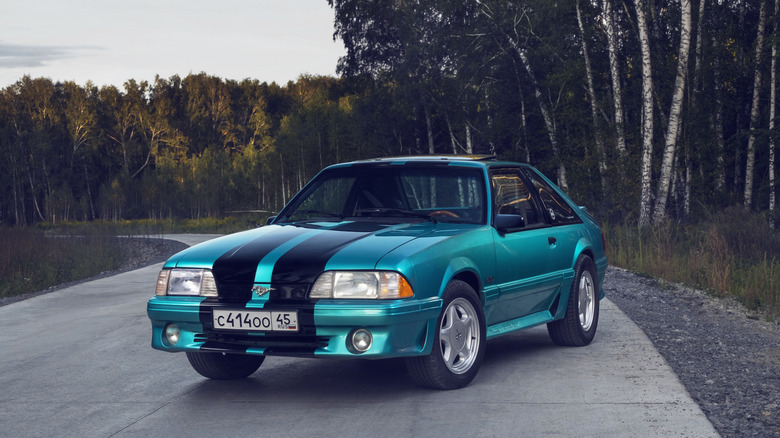
Tier 1: Affordable Fox Body Project Cars ($3,000 – $7,000)
If you are hunting for the absolute cheapest fox body mustang years to buy, your search will likely lead you to the 1979-1982 four-eye era or the later 2.3L four-cylinder LX models. These cars represent the entry point into the hobby, but they come with a caveat: sweat equity is mandatory.
At this price point, you are typically looking at cars with significant cosmetic needs or mechanical hurdles. A high-mileage 2.3L hatchback might cost you $4,000, but if your goal is a V8 swap, the cost of restoring a cheap fox body project car quickly balloons. You must factor in the price of a donor engine, transmission, and the often-overlooked interior trim pieces which are becoming increasingly difficult to find in good condition.
Key Considerations for Budget Buyers
- The Four-Eye Appeal: The 1979-1986 models often sell for less than the later aero-nose styling versions, unless they are the rare SVO or Pace Car editions.
- Engine Swaps: Buying a four-cylinder car as a shell is common, but ensure the chassis integrity hasn't been compromised by rust or previous poor modifications.
- Interior Availability: While mechanical parts are plentiful, finding a mint-condition dashboard or door panels for an early Fox can be a scavenger hunt that costs more than the car itself.
Tier 2: Driver Quality & Restomod Candidates ($12,000 – $25,000)
This is the sweet spot where most enthusiasts live. In this bracket, you are looking at 1987-1993 models that are turn-key ready. These are the cars you can drive to work on Friday and take to the autocross on Saturday. When analyzing the average price for fox body mustang gt vs lx, the LX 5.0 often commands a slight premium among enthusiasts due to its lighter weight and "sleeper" aesthetic, while the GT remains the icon of 80s excess with its distinctive ground effects.
The 5.0L Windsor V8 in these years is fuel-injected (EFI), making them much more reliable and easier to tune than the earlier carbureted models. Most cars in this range will have between 80,000 and 130,000 miles. They might have some minor paint imperfections or typical wear on the seat bolsters, but they are structurally sound and mechanically healthy.
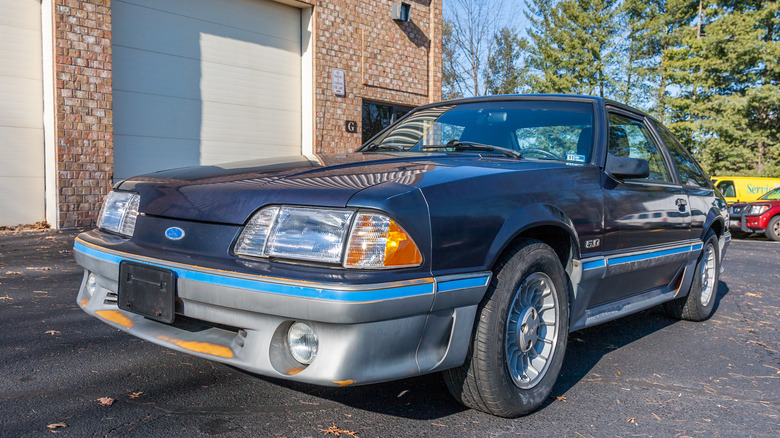
Comparing the Body Styles
| Body Style | Market Premium | Why? |
|---|---|---|
| Notchback (Coupé) | High | Preferred for drag racing and "SSP" (police) clones due to chassis stiffness. |
| Hatchback | Moderate | The most common and iconic silhouette; offers great utility and glass area. |
| Convertible | Low to Moderate | Often found in better condition but less desirable for performance builds. |
For many, the 1987-1993 Mustang market trends suggest that the LX 5.0 Notchback is the one to watch. Its clean lines and lighter curb weight have made it the darling of the restomod community, often pushing prices toward the $25,000 ceiling of this tier.
Tier 3: Investment Grade & Special Editions ($35,000+)
At the top of the 1979-1993 mustang price by condition guide are the collector-grade survivors. We are talking about cars with under 20,000 miles, original paint, and that "new car smell" still faintly lingering in the cloth upholstery.
The fox body mustang cobra price premium analysis shows just how much the SVT badge adds to the bottom line. While a standard 1993 GT might sell for $22,000, a 1993 SVT Cobra in similar condition will easily clear $45,000. If you find a 1993 Cobra R—one of only 107 produced—you are entering the stratosphere. According to the Hagerty Price Guide, a 1993 SVT Cobra R has sold for as much as $211,000 at auction.
This tier also includes the Mustang SVO, a turbocharged four-cylinder marvel of the mid-80s that was ahead of its time. SVO values have climbed as collectors appreciate their unique handling characteristics and sophisticated (for the time) suspension.
Buyer’s Checklist: Avoiding Costly Red Flags
Before you hand over your hard-earned cash, you need to look past the shiny paint. The Fox platform is robust, but it has specific "achilles heels" that can turn a bargain into a money pit. Use this checklist when inspecting your potential purchase:
- Torque Boxes: This is the most critical structural area where the rear control arms attach to the unibody. Look for cracks or signs of "oil canning." If the car has been launched hard at the drag strip without reinforcements, these will be damaged.
- Strut Tower Rust: Check the engine bay where the struts meet the body. Rust here is a sign of a car that has lived in the salt belt and can be expensive to repair correctly.
- A-Pillar Cracks: Especially common on cars with the T-top roof option or high-horsepower builds without subframe connectors. Small cracks near the top of the windshield indicate chassis flex.
- Electrical Gremlins: The 1980s Ford wiring can be brittle. Check that the power windows, door locks, and the "salt and pepper" shakers (the 10-pin connectors behind the intake manifold) are in good shape.
- Ashtray Door: It sounds minor, but the spring-loaded ashtray door is almost always broken. It’s a classic Fox Body rite of passage, but a working one is a sign of a very well-cared-for interior.
FAQ
How much does a Fox Body Mustang cost?
The Fox Body price varies significantly by condition. In 2026, you can expect to pay between $5,000 for a rough project car and $25,000 for a high-quality driver. Exceptional collector examples and rare trims like the 1993 Cobra often exceed $40,000, with rare auction results reaching over $100,000.
Why are Fox Body prices increasing?
The rise in Fox Body Mustang value is driven by a combination of generational nostalgia and the dwindling supply of clean, unmodified examples. As more cars were modified or crashed over the last 30 years, the remaining "survivor" cars have gained significant collector status, moving from cheap used cars to recognized classics.
What is the most desirable Fox Body year?
While desirability is subjective, the 1993 model year is often cited as the most sought-after due to it being the final production year and featuring the SVT Cobra. For performance enthusiasts, the 1987-1993 aero-nose cars with the mass-air EFI system (introduced in 1988/1989) are highly prized for their tuning potential.
Are Fox Body Mustangs good project cars?
Yes, they are among the best project cars ever made. The Fox platform architecture is incredibly well-supported by the aftermarket. You can rebuild an entire car using a catalog, and the simplicity of the 5.0L engine makes it an excellent choice for those learning mechanical skills or building a dedicated track car.
Is a Fox Body Mustang a good investment?
With values having nearly tripled over a five-year period, the Fox Body has proven to be a strong investment recently. While the rapid 15% annual jumps may stabilize, the limited supply of clean Notchbacks and Cobras suggests that well-maintained examples will continue to outpace inflation in the collector car market.
Final Thoughts
The days of the $1,500 running GT are firmly in the rearview mirror. However, the Fox Body Mustang remains one of the most accessible ways to own a piece of American muscle history. While the average Fox Body price has climbed to $25,000, the joy of rowing through the gears of a T-5 transmission behind a pushrod V8 is a feeling that few modern cars can replicate. If you have been waiting for the market to "bottom out," that ship has sailed—2026 is the time to find your Fox before they move entirely out of reach for the average enthusiast.