Our Top Picks
- Best for Battery Longevity: With a massive 5200mAh capacity and optimized power management for light tasks, this phone easily stretches into a second day of use.
- Best for Hardware Essentials: For those who refuse to give up the 3.5mm headphone jack and dedicated microSD card slot, this device remains a rare and valuable sanctuary.
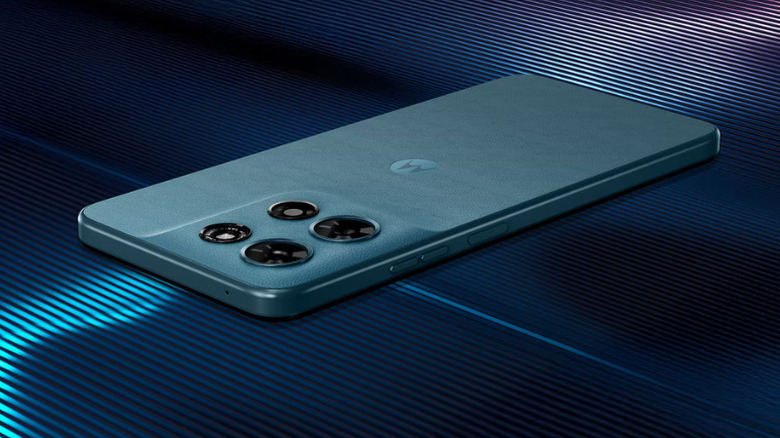
- Best Design in Class: The premium vegan leather finish and Pantone Tapestry colorway provide a sophisticated feel that belies its entry-level smartphone status.
The moto g play 2026 enters the budget mobile segment with a sharp vegan leather finish and a 5200mAh battery, but its $250 price tag raises questions about its true value compared to the Galaxy A series. While it handles basic social media and calling with ease, the moto g play 2026 review reveals that the jump in price makes it a harder sell than its predecessors.
| Feature | Moto G Play 2026 Specifications |
|---|---|
| Processor | MediaTek Dimensity 6300 |
| Display | 6.7-inch 120Hz LCD, 1000 nits peak |
| Memory | 4GB Physical RAM (Up to 12GB with RAM Boost technology) |
| Storage | 64GB (Expandable up to 2TB via microSD) |
| Battery | 5200mAh with 18W wired charging |
| Rear Camera | 32MP Main (f/1.8) |
| Front Camera | 8MP |
| Build | Gorilla Glass 3 front, Vegan leather back, IP52 rating |
| Connectivity | 5G, 3.5mm Headphone Jack, USB-C 2.0 |
Design and Display: High-End Aesthetics on a Budget
Motorola has always had a knack for making inexpensive phones look more expensive than they are, and the moto g play 2026 is the pinnacle of that philosophy. The first thing you notice is the back panel. Straying away from the "glasstic" panels of competitors, Motorola has opted for a premium vegan leather finish. In the Pantone Tapestry colorway, the device feels soft to the touch, offers excellent grip without a case, and completely ignores fingerprints.
The front of the device is dominated by a 6.7-inch LCD panel. While we are still looking at a 720p resolution—a trade-off often seen in this category—Motorola has modernized the look with a punch-hole display instead of an outdated teardrop notch. The inclusion of a 120Hz refresh rate is a massive win for the user experience, making scrolling through news feeds and menus feel significantly smoother than standard 60Hz panels.
Protection has also seen an upgrade. The screen is covered by Gorilla Glass 3, providing a decent level of scratch resistance for a phone at this price point. Furthermore, our testing confirmed a peak brightness of nearly 1000 nits, which is a standout moto g play 2026 specs detail. This is bright enough to make the screen legible even under direct midday sunlight, a feat many budget phones struggle to achieve.
Performance and Software: The Technical Truth Behind RAM Boost
Under the hood, the moto g play 2026 is powered by the MediaTek Dimensity 6300. This chipset is a reliable workhorse for basic 5G connectivity, but it is not a speed demon. In our testing, the moto g play 2026 for gaming proved to be a mixed bag. Lightweight titles like Candy Crush or Subway Surfers run flawlessly, but trying to play Genshin Impact or Call of Duty: Mobile results in frequent frame drops and long loading times.
One area where consumers need to be wary is the marketing around RAM. Motorola advertises "12GB of RAM," but the technical truth is that the device only possesses 4GB of physical RAM. The remaining 8GB is what the company calls RAM Boost technology. This feature uses a portion of your much slower 64GB internal storage to act as temporary memory. While it helps keep more apps open in the background, it does not provide the same speed as actual physical memory. Users will still experience a slight stutter when switching between heavy applications.
On the software side, the device ships with a clean version of Android. Motorola’s "My UX" remains one of my favorite software skins because it stays out of the way while adding useful features like the "Chop-Chop" motion for the flashlight. However, there is a catch. The moto g play 2026 price of $250 feels steep when you consider the software longevity. Motorola typically only promises one or two major OS upgrades, which pales in comparison to what other manufacturers are now offering at similar price points.
Battery Life: 5200mAh Endurance and The Passive Drain Catch
The centerpiece of any "Play" series phone is the battery, and the 5200mAh capacity in this model is impressive on paper. In our standardized lab testing, the moto g play 2026 battery life clocked in at 15 hours and 45 minutes of continuous web browsing. For many users, this translates to nearly two days of moderate use.
However, real-world usage revealed a peculiar quirk: passive drain. During several nights of testing, the phone lost roughly 30% of its charge while sitting idle on a nightstand. This suggests that while the MediaTek Dimensity 6300 is efficient during active use, there may be some background software processes that are not fully optimized yet.
Charging speed is another area where the moto g play 2026 feels a bit dated. It supports 18W wired charging, which takes nearly two hours to fill that massive 5200mAh cell from zero to 100%. In an era where even budget competitors are moving toward 25W or 33W charging, you will find yourself needing to plug this phone in overnight rather than relying on a quick top-up before leaving the house.
Camera and Audio: Legacy Jacks and Budget Sensors
The camera system on the moto g play 2026 follows the "keep it simple" mantra. On the back, you will find a single 32MP main camera. By default, it uses pixel binning to create 8MP images that are sharp and color-accurate in broad daylight. However, the moto g play 2026 camera quality takes a noticeable hit when the sun goes down. Without a dedicated Night Mode that can perform miracles, low-light photos often come out grainy and soft.
Editor's Tip: To get the most out of the 32MP sensor, ensure you have plenty of natural lighting. The lack of an ultra-wide or macro lens means you have less creative flexibility, but the main sensor is perfectly adequate for scanning documents or taking quick outdoor snapshots of family.
Where this phone truly wins is in its commitment to hardware utility. In a world where the 3.5mm headphone jack has been eradicated from flagship and mid-range devices, Motorola has kept it alive here. Additionally, the dedicated microSD card slot supports up to 2TB of expandable storage. This makes the moto g play 2026 an excellent choice for users who have large local music libraries or who want to download dozens of movies for offline viewing without worrying about internal storage limits.
Competitive Comparison: Moto G Play vs. Samsung Galaxy A16 5G
To understand if the moto g play 2026 price value holds up, we have to look at the broader market. Motorola's share of the United States smartphone market grew to approximately 11.2% in 2024, proving that the brand is resonating with American consumers. Furthermore, Motorola's global smartphone unit sales increased by approximately 21% year-over-year in 2024, which is nearly triple the global market's average growth rate of 6.4%.
However, the Samsung Galaxy A16 5G is a formidable rival. When we look at the moto g play 2026 vs samsung galaxy a16 5g, the "Update Gap" is the most striking difference.
| Feature | Moto G Play 2026 | Samsung Galaxy A16 5G |
|---|---|---|
| Software Support | 1-2 Years of OS Updates | 6 Years of OS Updates |
| Display Resolution | 720p LCD | 1080p AMOLED |
| Build Material | Vegan Leather | Plastic |
| Audio | 3.5mm Jack Included | No Headphone Jack |
| Charging Speed | 18W | 25W |
While Motorola offers a better in-hand feel with its vegan leather finish, Samsung offers a much more vibrant AMOLED screen and a software commitment that ensures the phone will remain secure and up-to-date until 2032. If you are someone who keeps their phone for four or five years, the Samsung is objectively the better financial investment.
Is the Moto G Play 2026 a Good Phone?
Ultimately, is moto g play 2026 a good phone? The answer depends entirely on your priorities. If you are a parent looking for a sturdy, attractive device for a child, or a senior who wants a reliable phone with a headphone jack and three days of standby time, the moto g play 2026 is a solid choice. The design is genuinely beautiful, and the basic performance is sufficient for the essentials.
However, if you are a "power user" on a budget—someone who likes to play games, edit a lot of videos for social media, or keep dozens of tabs open—you will likely find the MediaTek Dimensity 6300 and the 4GB of physical RAM frustratingly slow. At the $250 price point, the competition is fiercer than ever, and Motorola is relying heavily on its hardware design to distract from its lagging software support.
Pros
- Luxurious vegan leather finish that feels premium.
- The 3.5mm headphone jack and microSD slot provide great utility.
- 120Hz refresh rate makes for a smooth everyday interface.
- 1000 nits brightness is excellent for outdoor visibility.
Cons
- The $250 price is high compared to previous generations.
- Limited software update lifespan compared to Samsung.
- Significant passive battery drain issues in current software build.
- Lack of an ultra-wide camera lens.
FAQ
Is the Moto G Play 2026 a good phone?
The device is a reliable choice for users who prioritize battery life, hardware essentials like the headphone jack, and a premium-feeling design. However, it is not designed for high-end gaming or heavy multitasking, and its camera performance is basic.
What is the difference between Moto G 2026 and Moto G play 2026?
The standard Moto G 2026 typically features a higher-resolution 1080p display, a more powerful processor, and more physical RAM. The Play version is the more affordable, entry-level sibling focused on battery longevity and essential features at a lower price point.
How long will Moto G Play 2026 be supported?
Motorola usually provides one major Android OS update and two years of security patches for its Play series. This is considerably shorter than the support cycle offered by Samsung or Google on their budget devices.
Is Motorola better or Samsung?
It depends on what you value. Motorola generally offers a "cleaner" software experience and better physical ergonomics (like vegan leather). Samsung offers superior display technology (AMOLED) and significantly longer software support, making their phones better for long-term ownership.