Quick Facts
- Best Pure Longevity: Fitbit Inspire 3 (10 days)
- Best Premium Battery: Google Pixel Watch 5 45mm (up to 72 hours)
- Fastest Recovery: Pixel Watch 4 (50% in 15 mins)
- Best GPS Performance: Pixel Watch 4 (8-10 hours active tracking)
- Maintenance: Pixel series features user-replaceable batteries for 2026
- Best Mid-range Alternative: OnePlus Watch 3 (5 days)
In 2026, the best smartwatch battery life depends heavily on your specific ecosystem: Fitbit remains the champion for long-term power providing a full week of usage (7-10 days) for passive fitness tracking, while the Google Pixel Watch 4 maximizes its utility through deep hardware optimization and rapid charging to offer a flexible 40-72 hour window.
Finding the best smartwatch battery life is no longer just about the biggest milliamp-hour rating. As we look at the landscape in 2026, the divide between high-info Wear OS devices and lightweight fitness trackers has widened, yet the charging habits of users are shifting. For many, a watch that lasts 10 days is a dream, but for others, a watch that charges from zero to hero during a morning shower is the real winner.
The Google Pixel Watch 4 and the Fitbit 2026 lineup represent two different philosophies of endurance. Google is betting on the idea that users will trade daily recharging cycles for deep AI integration and a vibrant, always-on display. Meanwhile, the Fitbit brand, now fully integrated into the Google ecosystem but running on more efficient software, remains the go-to for shoppers looking for watches with longest battery life without the need for a nightstand charger every other evening.
The Architecture Gap: Wear OS vs. Fitbit RTOS
Understanding why a Fitbit lasts six times longer than a Pixel Watch requires a look under the hood at their hardware optimization strategies. The Pixel Watch 4 utilizes a sophisticated dual-engine architecture, pairing a Snapdragon W5 Gen 2 main processor with a highly efficient Cortex-M55 co-processor. This setup is designed for Wear OS efficiency, allowing the watch to handle background tasks, heart rate monitoring, and notification listening without waking the primary, power-hungry chip.
However, even with this hardware optimization, the AMOLED display power draw is significant. The Pixel Watch series frequently hits 3000-nit peak brightness to ensure outdoor readability, a feature that creates a high energy cost. Contrast this with the Fitbit Air or the Sense 2, which run on a lightweight Real-Time Operating System (RTOS). This OS doesn't support the full suite of third-party apps found on the Play Store, but it consumes a fraction of the power.
For those searching for the best cheap smartwatch with long battery life, this architectural difference is the primary factor. RTOS-based devices lack the high-level multitasking of Wear OS, but they are built from the ground up to sip power rather than gulp it. This allows Fitbit to maintain a slim profile while still offering the best android smartwatch battery life for users who prioritize health data over wrist-based productivity.
Pixel Watch Performance: The 40-72 Hour Window
The Google Pixel Watch 4 has made significant strides in addressing the battery anxiety common in earlier generations. While the smaller 41mm model still leans toward a 24-hour cycle, the larger Pixel Watch 5 45mm is reported to offer up to 40 hours of battery life with the Always-On Display enabled, which can be extended to 72 hours in Battery Saver mode.
This shift in strategy is what we call 'Charging as an Offset.' Instead of trying to last a week, Google has focused on fast charging capabilities. The newest Pixel models can reach a 50% charge in just 15 minutes, perfectly fitting into a morning routine. This rapid recovery reduces the friction of daily recharging cycles, making the 40-hour limit feel much less restrictive during actual real-world usage.
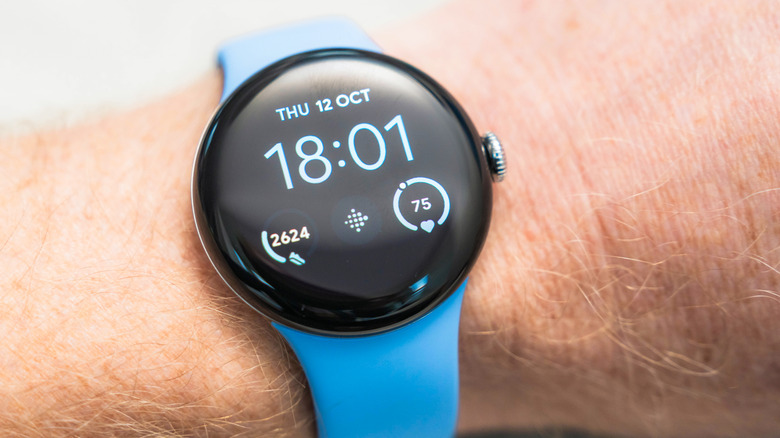
Another major win for the Pixel lineup in 2026 is its iFixit repairability score. Unlike many competitors that are essentially disposable once the lithium-ion cell degrades, Google has leaned into repairable smartwatches with good battery life by making the internal battery user-replaceable. This move technically extends the hardware's total lifespan, ensuring that the best smartwatch battery life you experience on day one can be restored even three or four years down the line.
Fitbit 2026 Dominance: 7 to 10 Days of Tracking
If you head to any best smartwatch battery life reddit thread, you will see a consistent winner: Fitbit. For years, the brand has been synonymous with longevity, and the 2026 lineup doubles down on this reputation. While the Google Pixel Watch 4 provides approximately 40 hours of total use, Fitbit devices such as the Charge 6 and Sense 2 maintain a significantly higher battery limit of 6 to 7 days per charge.
The Fitbit Inspire 3 remains the brand's champion for pure endurance. By utilizing a smaller, more efficient display and simplified health sensors, it pushes the boundaries to 10 days of tracking. This is the ultimate best budget smartwatch long battery life option for those who want to track sleep, steps, and heart rate without ever thinking about a charger during a week-long vacation.
We are also seeing the introduction of the Fitbit Air, a screenless wearable that relies entirely on the Gemini Health Coach AI via your smartphone. By removing the display entirely—the biggest battery drain on any wearable—Fitbit has managed to create a device that could theoretically last weeks. However, the energy-efficient sensors still work overtime to sync data, keeping the practical limit around 7 to 10 days to ensure sleep tracking accuracy and wearable ecosystem integration remain seamless.
Activity Tracking: GPS and Sensor Battery Drain
Direct comparison testing shows a fascinating flip in statistics when it comes to active exercise. While Fitbit wins the marathon of daily wear, the Pixel Watch 4 wins the sprint of active tracking. Comparative testing indicates that the Google Pixel Watch 4 can handle 8 to 10 hours of continuous GPS tracking, exceeding the roughly 5-hour GPS capacity of the Fitbit Sense 2 and Charge 6.
This is due to the dual-band GPS accuracy built into the Pixel hardware. While it consumes more power per hour, it provides a more stable and accurate map of your run. Fitbit trackers often use "tethered GPS" in their budget models to save power, relying on your phone's chip. If you use the onboard GPS on a Fitbit, the battery life drops precipitously, often falling below the endurance of a Wear OS watch in the same scenario.
For the smartwatch with longest battery life for fitness tracking, you have to decide your priority. If you do one-hour runs daily, the Fitbit will still last you 5 days. If you are an ultramarathoner or a long-distance hiker needing continuous active monitoring, the Pixel's robust GPS architecture and fast charging might actually serve you better.
Technical Comparison Table (2026 Models)
| Specification | Google Pixel Watch 5 (45mm) | Fitbit Sense 2 | Fitbit Inspire 3 | OnePlus Watch 3 |
|---|---|---|---|---|
| Typical Battery Life | 40-72 Hours | 6-7 Days | 10 Days | 5 Days |
| Charge Time (0-100%) | 45-60 Minutes | 2 Hours | 2 Hours | 60 Minutes |
| Active GPS Tracking | 8-10 Hours | 5 Hours | N/A (Tethered) | 12 Hours |
| Always-On Display | Yes (High Impact) | Yes (Medium Impact) | Limited | Yes (Low Impact) |
| Repairability Score | 8/10 (iFixit) | 2/10 (iFixit) | 1/10 (iFixit) | 4/10 (iFixit) |
FAQ
What smartwatch has the best battery life in 2026?
The Amazfit Balance 2 holds the crown for the longest-lasting full-featured smartwatch, reaching between 14 and 21 days depending on usage. If you are looking strictly at fitness trackers, the Fitbit Inspire 3 remains a top contender at 10 days.
Which smartwatch has the highest battery life?
In terms of raw days between charges, the Garmin Enduro series typically offers the highest battery life, often exceeding 30 days with solar assistance. In the consumer Android ecosystem, the Fitbit Inspire 3 and Amazfit series are the leaders.
Which smartwatch has the longest battery life?
For a dedicated fitness tracker, the Fitbit Inspire 3 offers 10 days. For a proper "smartwatch" with an app store and LTE capabilities, the OnePlus Watch 3 offers a balanced 5-day lifespan, which is the longest for a high-feature Wear OS-adjacent device.
Which smartwatch will have the best battery life in 2026?
The Fitbit Air is expected to be the best for long-term endurance due to its lack of a screen, potentially pushing past the 10-day mark. However, the Pixel Watch 5 (45mm) will likely be the best battery life smartwatch 2026 for power users who need advanced Google AI features.
What is the best smartwatch for battery?
The best smartwatch for battery depends on your lifestyle. Choose the Fitbit Charge 6 if you want a week of power in a slim form factor, or the Google Pixel Watch 4/5 if you prefer a high-performance device that you don't mind charging for 15 minutes each morning.
Which One to Buy? (Decision Matrix)
When choosing between the Google Pixel Watch 4 vs fitbit battery comparison, the decision comes down to how you interact with your technology.
Choose the Google Pixel Watch 4 or 5 if:
- You want the full Wear OS experience with Google Home, Maps, and deep Gemini AI integration.
- You are comfortable with daily recharging cycles as long as they are fast (15-30 minutes).
- You value hardware longevity and want a repairable battery that can be serviced by a professional.
- You need dual-band GPS accuracy for high-intensity training sessions.
Choose the Fitbit Lineup if:
- Longevity is your number one priority and you want a 'set it and forget it' experience for 7 to 10 days.
- You primarily need a device for passive health tracking and sleep monitoring.
- You prefer a lighter, more compact tracker like the Fitbit Air or Inspire 3.
- You want the best budget smartwatch long battery life without paying the premium for a high-end processor.
In 2026, the gap is no longer about which watch is "better," but which one fits your routine. The Pixel Watch has turned battery life into a manageable daily task through speed, while Fitbit has kept it as a weekly thought. Both ecosystems have matured to the point where the best smartwatch battery life is finally within reach for every type of user.