Quick Facts
- Market Share: Still holding a dominant 4.47% usage share among gamers as of late 2025.
- VRAM Advantage: Features a 12GB VRAM buffer, which is 50% more than many of its successors in the 60-class.
- Target Resolution: Primarily a king of 1080p high settings, though capable of entry-level 1440p with DLSS scaling.
- Current Pricing: Found on the secondary market between $220 and $300 depending on the specific model and condition.
- Key Architecture: Based on Ampere architecture, supporting ray tracing and DLSS 2.0 but lacking DLSS 3 Frame Generation.
- Longevity: Strong driver updates and broad PC build compatibility keep it relevant for 2026 builds.
In 2026, the RTX 3060 value remains exceptionally high for budget gamers because its 12GB VRAM buffer offers better texture handling in modern titles than newer 8GB cards, making it a reliable choice for 1080p high settings.
The Steam Legend: Why 4.7% of Gamers Still Choose the 3060
Every generation has its icon. For a long time, it was the GTX 1060. Now, as we move through 2026, that mantle has firmly passed to the RTX 3060. According to the Steam Hardware Survey, the Nvidia GeForce RTX 3060 holds a usage share of approximately 4.47%, making it the single most popular graphics card in the world. This isn't just a fluke of timing; it's a testament to the card's balanced design and the specific needs of the average PC builder.
When you look at budget graphics card recommendations 2026, the 3060 keeps appearing because it solves the biggest problem in entry-level gaming: memory bottlenecks. Most modern games now demand more than 8GB of video memory for high-quality textures. By including 12GB on a mid-range card, Nvidia accidentally created a product with more staying power than their subsequent 8GB releases. For anyone looking at the best graphics card upgrades for 1080p gaming 2026, the stability of the RTX 3060 gaming longevity is hard to ignore. It fits into almost any mid-tower case, has reasonable power requirements, and benefits from years of refined driver updates that have squeezed every ounce of performance out of the silicon.
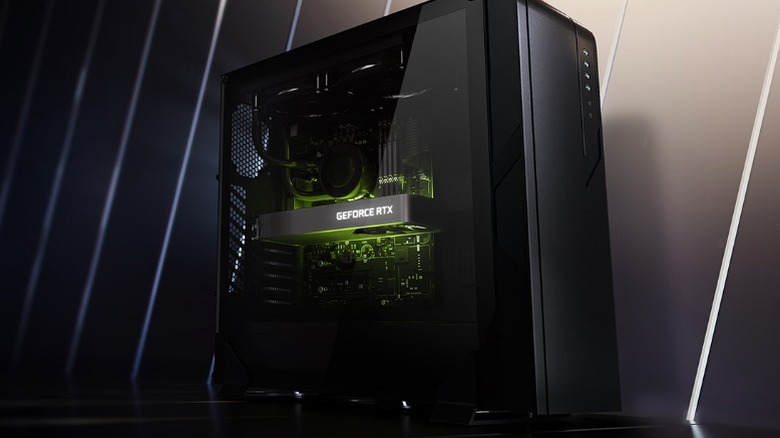
VRAM vs. AI: RTX 3060 12GB vs RTX 5060
The debate in 2026 often centers on whether you should buy the older 12GB card or the newer RTX 5060. While the Blackwell-based RTX 5060 offers superior power efficiency and access to the latest DLSS 4.5 features, it often comes with a frustrating 8GB VRAM limit on the base models. This creates a weird scenario where the RTX 3060 12GB vs RTX 5060 comparison isn't a clear win for the newer tech.
The RTX 3060 12GB model offers 50% more video memory than the standard 40-series equivalent, and this trend has continued to haunt the budget market. In VRAM-intensive titles released in 2025 and 2026, such as massive open-world RPGs or high-fidelity shooters, that extra 4GB of buffer prevents the stuttering and texture pop-in that can plague 8GB cards. Here is how they stack up:
| Feature | RTX 3060 12GB | RTX 5060 (Base) |
|---|---|---|
| Architecture | Ampere | Blackwell |
| VRAM Buffer | 12GB GDDR6 | 8GB GDDR7 |
| Memory Bus | 192-bit | 128-bit |
| DLSS Support | DLSS 2 (Super Res) | DLSS 4 (Full Suite) |
| Power Efficiency | Moderate | Excellent |
| Best Resolution | 1080p Ultra | 1080p / 1440p Entry |
For budget gamers, the choice usually comes down to whether you value raw architectural speed or memory headroom. If you are doing entry-level content creation like video editing or local AI workloads, the RTX 3060 12GB vs RTX 5060 for budget gamers often tilts toward the 3060 simply because of the 192-bit bus and larger memory pool.
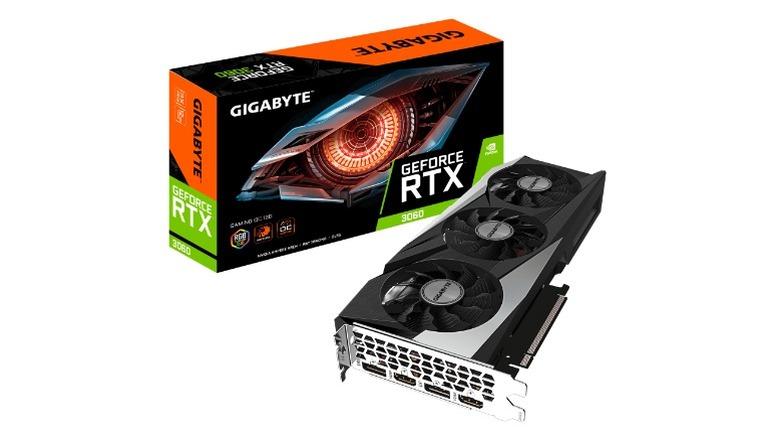
2026 Performance: 1080p Benchmarks in Modern Titles
To understand the RTX 3060 value today, we have to look at how it handles the latest software. While it is no longer a 1440p powerhouse, it remains incredibly competent at 1080p high settings. In testing across 2025 titles, the card maintains a steady 60+ FPS in most AAA games when using DLSS scaling.
The RTX 3060 12GB performance in 2025 titles shows that DLSS is the ultimate lifeline. Without upscaling, the aging Ampere architecture starts to show its years in heavy ray-traced scenes. However, with DLSS set to 'Quality' mode, the image remains sharp while the frame rate stays fluid. Is the RTX 3060 still good for 1080p high settings? Absolutely. In optimized titles like the latest esports shooters or indie hits, you can easily push 144Hz to match a high-refresh monitor.
The performance gap between generations is also worth noting. The RTX 4060 provides a 15% to 20% performance advantage over the RTX 3060 at 1080p, and the 5060 pushes that further. But when the 3060 is available for $100 less on the used market, that 20% speed boost becomes a luxury rather than a necessity for a budget-conscious builder.
Buying Guide: Used Market Reality and Alternative Choices
If you are looking for the absolute best price-to-performance ratio, you have to look at the secondary market. Currently, secondary market pricing for a clean, used 3060 sits between $220 and $250, while refurbished units from major retailers might hit $280. This makes it a tough competitor for the AMD Radeon RX 6600 XT.
When comparing the RTX 3060 vs RX 6600 XT price to performance 2026, the AMD card often wins in pure rasterization (traditional rendering). However, Nvidia still holds the lead in feature sets. The RTX 3060 value is bolstered by its superior ray tracing performance and the ubiquity of DLSS support in modern games.
Buying a used RTX 3060 in 2026 risks and rewards are fairly straightforward. The rewards are a massive 12GB VRAM buffer and great driver support. The risks include buying a card that might have been used for mining in its early life or facing a shorter remaining lifespan compared to a brand-new 50-series card. To mitigate this, look for models with three fans for better cooling longevity and try to verify the card's history before purchasing.
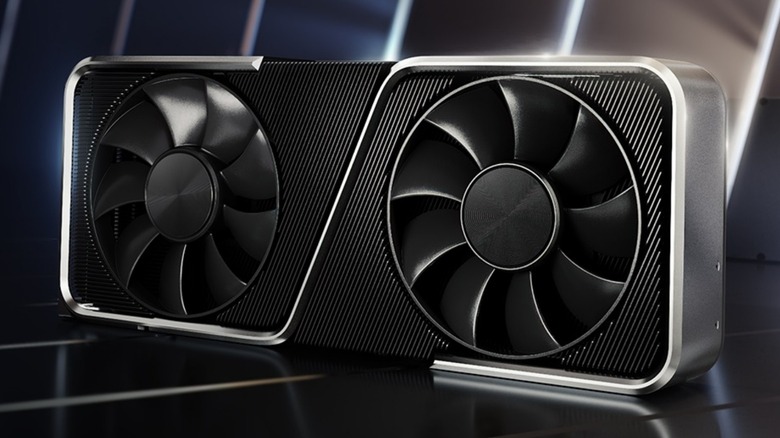
Used Price Watch 2026:
- RTX 3060 12GB (Used): $220 - $250 (The Sweet Spot)
- RTX 3060 8GB (Avoid): $180 - $200 (Poor value due to crippled memory bus)
- RTX 3060 Ti (Used): $270 - $310 (Great performance, but only 8GB VRAM)
FAQ
Is 12GB of VRAM on the RTX 3060 enough for gaming?
Yes, 12GB of VRAM is more than enough for 1080p and entry-level 1440p gaming in 2026. In fact, it is often more than what is offered on newer mid-range cards, allowing the 3060 to handle high-resolution texture packs and modern open-world games without the stuttering common on 8GB cards.
Is the RTX 3060 8GB or 12GB version better value?
The 12GB version is significantly better value. The 8GB version of the RTX 3060 uses a narrower memory bus, which leads to a noticeable drop in performance beyond just having less memory. Always opt for the 12GB model to ensure long-term usability.
How long will an RTX 3060 last for modern gaming?
The RTX 3060 is expected to remain a viable 1080p gaming card through at least 2027 or 2028. While you may need to lower settings from Ultra to High or Medium in the latest AAA titles as time goes on, DLSS support will keep it functional and playable for several more years.
Is the RTX 3060 better value than the RTX 4060?
In the 2026 market, the 3060 is often seen as the better budget value, especially when purchased used. While the RTX 4060 is 15-20% faster and more power-efficient, the 3060's larger 12GB VRAM buffer gives it a unique advantage in specific games that are heavy on memory usage.
Can the RTX 3060 handle ray tracing?
The RTX 3060 can handle ray tracing at 1080p, but it is an entry-level experience. For the best results, you should always pair ray tracing with DLSS to maintain a playable frame rate. It is best suited for titles with lighter ray-tracing implementations rather than "path-traced" games.