Quick Facts
- Feature: iOS 27 introduces automated tab organization, site monitoring via Notify Me, and prompt-based custom extensions.
- Metric: Safari has reached an estimated 1 billion users worldwide as of early 2025, maintaining its role as a mobile powerhouse.
- Setup: Users access new safari ai tools through the three-line icon menu near the URL bar or within the tab management interface.
- Innovation: New custom extensions leverage generative AI and prompt engineering, allowing users to build browser tools using natural language text prompts.
- Privacy: High-performance webpage summarization and tab sorting are powered by on-device foundation models within the latest Apple Intelligence framework.
- Market Share: Safari continues to lead mobile browsing with an 87.6% market share on iOS as of 2026.
iOS 27 marks a revolutionary shift for Safari, transforming it from a standard browser into a proactive AI agent. These new safari ai features leverage the power of Apple Intelligence to automate organization, monitor web changes, and even build custom tools via text prompts. Whether you are managing hundreds of tabs or tracking price drops, these hidden ios 27 safari features ensure the iPhone remains the ultimate productivity tool. Setting up these tools is integrated into the native interface, specifically through the Tab Menu > 3-line icon > Organize Tabs path for organization, or via the Describe Extension option for custom tool creation.
Automated Tab Taming: The New Standard for Mobile Organization
For years, the biggest friction point in mobile browsing has been the endless pile of open tabs. We all do it—open a recipe, a news article, a product review, and then never close them. In the past, managing these required manual dragging and dropping. With the new safari ai integration in iOS 27, Apple has introduced a system that finally understands the context of your browsing session. This isn't just a basic sorting algorithm; it uses Apple Intelligence to analyze the content of every open page and group them into logical, searchable categories.
If you are wondering how to use ai tab organization in safari ios 27, the process has been reduced from dozens of manual taps to a single automated workflow. The browser recognizes when you have clusters of related content—say, five different travel blogs and three airline sites—and offers to bundle them into a unified Travel category. This transition from manual double-tap sorting to agentic browser optimization significantly reduces the cognitive load of navigating a busy workday. The system maintains contextual awareness, meaning if you start searching for a new topic, Safari adapts your organization in real-time.
To activate this, simply navigate to your tab overview. Look for the three-line icon and select the Organize Tabs option. Within seconds, your digital clutter is replaced by a streamlined sidebar of categories. The on-device high-performance webpage summarization ensures that the browser knows exactly what each page is about without sending your history to a cloud server, maintaining the privacy standards Apple users expect.
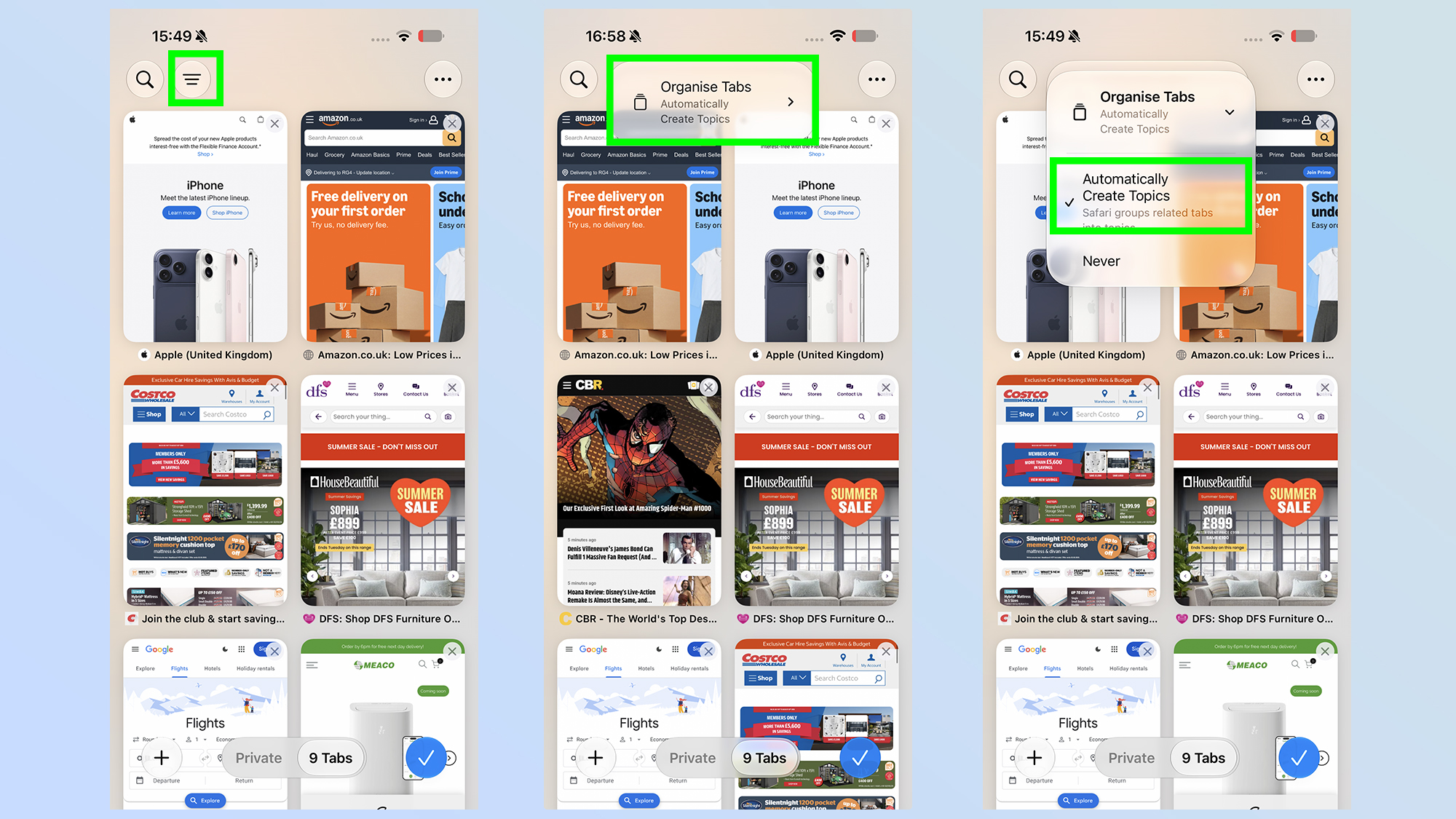
Sarah’s Tip: If the AI groups something incorrectly, you can long-press a category to rename it or drag a tab out to "teach" the model your preferences. The on-device foundation models learn your specific browsing habits over time.
Who It’s For: Power users who habitually keep over 50 tabs open and need a way to reclaim their browser speed without manually closing important pages.
The Notify Me Feature: Turning Safari into a Proactive Agent
One of the most exciting ios 27 safari features is the shift toward proactive browsing. Typically, the web is a pull medium—you have to go to a site to see if something has changed. The Notify Me feature changes that dynamic by turning Safari into a background agent that monitors specific site parameters for you. Whether you are waiting for a specific gadget to come back in stock or watching for a price drop on a flight, safari ai search capabilities now include persistent site monitoring.
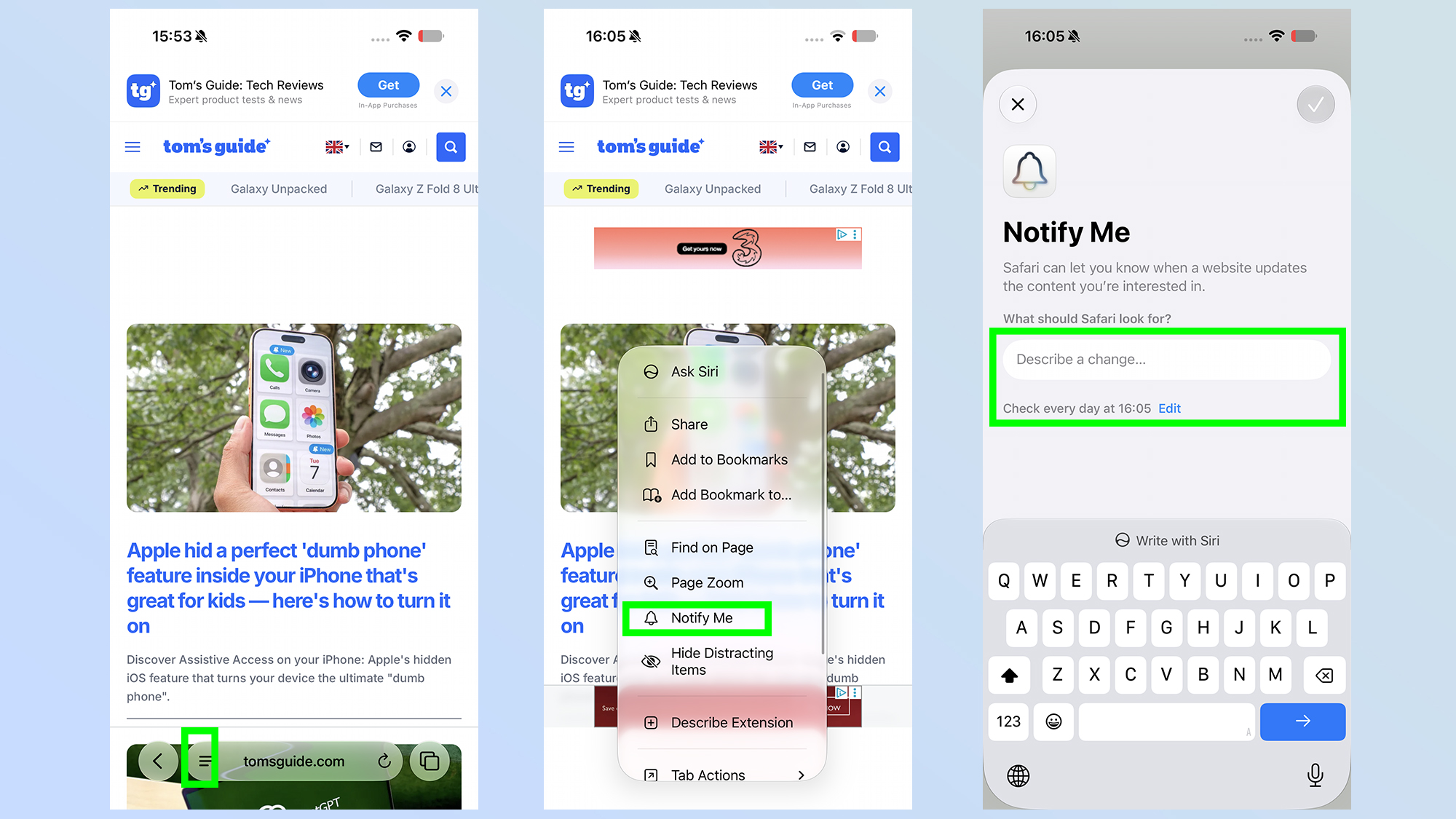
When you are on a webpage, you can tap the three-line icon near the URL bar and select Notify Me. You can then define what you are looking for. For instance, if you are on a retail site, you can set an alert for any change in the price element of the page. You can choose the monitoring frequency, such as Hourly or Daily, depending on how urgent the update is. This feature utilizes generative AI to understand the structure of the site, ensuring that if a developer moves the price tag to a different part of the screen, Safari still knows where to look.
This is a game-changer for those who use safari ai search tips for ios 27 to find deals. Instead of refreshing a page ten times a day, your iPhone does the heavy lifting in the background. The Notify Me feature is a prime example of Apple's goal to reduce friction in the mobile experience. It effectively automates the mundane task of digital surveillance, freeing up your time for more meaningful work.
Safari Notify Me Setup Guide
- Open the desired webpage in Safari.
- Tap the Aa or three-line icon in the address bar.
- Select Notify Me from the dropdown menu.
- Choose the specific change you want to track (Price, Content, or Availability).
- Set your preferred alert frequency and tap Done.
Who It’s For: Shoppers, news junkies, and professionals who need to act immediately when specific web data changes.
Prompt Engineering for Everyone: Custom Safari AI Extensions
Perhaps the most disruptive update is how Apple has handled extensibility. In previous versions, you were limited to whatever developers built and uploaded to the App Store. Now, safari ai extensions can be generated by the users themselves. By leveraging simple prompt engineering, you can describe a tool you want, and Safari will attempt to build a script using WebKit parameters to execute that task.
For example, if you frequently browse technical forums but find the layout distracting, you can input a prompt like "summarize reddit threads and hide all user icons." The system then crafts a lightweight extension tailored to that specific need. While there are security limitations—you won't be able to create complex ad-blockers or scripts that interfere with encrypted data from scratch—the flexibility for productivity automation is unparalleled. This feature brings the power of a developer beta to the average consumer.
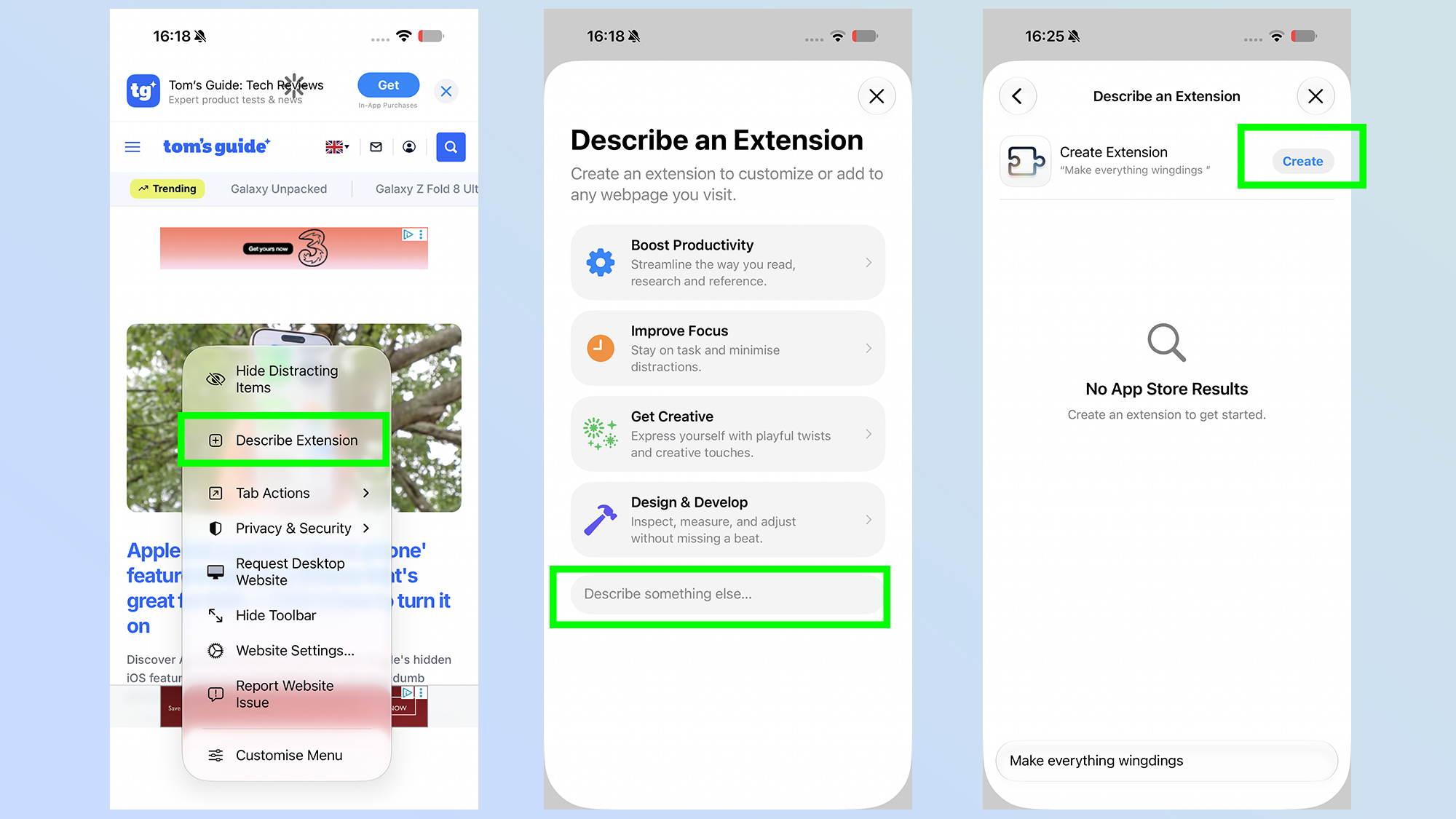
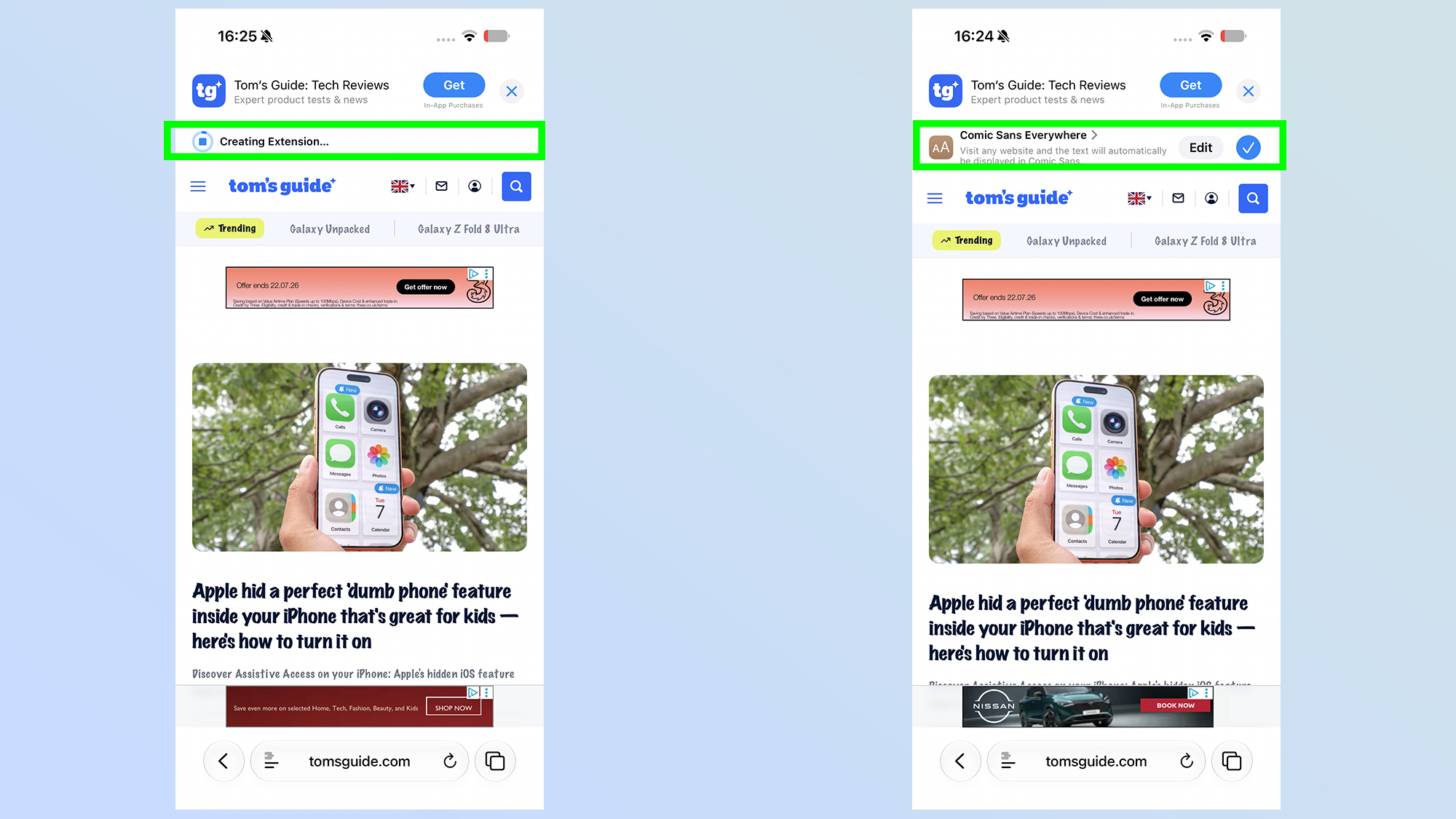
To access this, you select Describe Extension from the browser menu. A text box appears where you can enter natural language descriptions of the functionality you desire. This is a massive leap forward in browser optimization. It moves the user from a consumer of tools to a creator of tools, all through the power of Apple Intelligence. The ability to create custom safari ai extensions using prompts means the browser is no longer a static window, but a malleable tool that evolves with your projects.
Note on Limitations: Don't expect to build a full video editor via prompts just yet. The system is designed for site-specific UI changes, data extraction, and content summarization.
Who It’s For: Productivity enthusiasts who want to tailor their favorite websites to their specific workflow without waiting for a third-party developer.
Competitive Comparison: Safari AI vs. Chrome and Third-Party Browsers
With every major release, the question of Safari vs. Chrome arises. In the era of iOS 27, the gap is widening in terms of system integration. While Chrome offers deep integration with the Google Workspace, the next generation of Apple Intelligence introduced for iOS 27 gives Safari a home-field advantage. Because Safari runs on WebKit and is built into the silicon level of the iPhone, the energy efficiency of these AI features remains superior.
When we look at safari ai vs chrome for ios 27 users, the comparison usually comes down to privacy versus cloud-based features. Google’s AI often relies on server-side processing, which can be faster for massive datasets but raises privacy concerns. Safari’s on-device foundation models handle tab management and site monitoring locally, ensuring your browsing habits don't leave your phone.
| Feature | Safari (iOS 27) | Chrome (Mobile) |
|---|---|---|
| Tab Organization | AI-driven, automatic categories | Manual groups, limited AI |
| Site Monitoring | Native Notify Me alerts | Third-party extensions required |
| Custom Tools | Prompt-based extension builder | Chrome Web Store only |
| Speed/Performance | Optimized for WebKit/A-series chips | High RAM usage / Google sync |
| Privacy | On-device Apple Intelligence | Server-side Gemini processing |
The performance delta is particularly noticeable on the iPhone 17 Pro Max. The tight loop between hardware and software allows for agentic browsing features that don't drain the battery, a common complaint for AI-heavy applications. By keeping the processing local, Safari avoids the latency of the cloud, making features like real-time site monitoring feel instantaneous.
FAQ
What are the new AI features in Safari?
The primary upgrades include automated tab organization, the Notify Me site monitoring tool, and a prompt-based custom extension builder. These features are all powered by Apple Intelligence, focused on reducing manual navigation and increasing productivity through on-device data processing.
How do I use AI to summarize web pages in Safari?
Summarization is now a native part of the Reader View. When you open a compatible article, you can tap the Aa icon and select Summarize. The on-device foundation models will generate a concise bulleted list of the key points without you ever having to leave the app.
Which devices support the latest Safari AI updates?
The most advanced safari ai features require the neural engine found in the A17 Pro chip and newer. This includes the iPhone 15 Pro series, the entire iPhone 16 lineup, and the new iPhone 17 models. Older devices may receive limited versions of these features but will lack the high-performance local processing needed for custom extensions.
How does Safari's AI compare to other browser assistants?
Unlike cloud-based assistants like Gemini in Chrome or Copilot in Edge, Safari’s approach is decentralized and private. It focuses on agentic browsing—performing tasks within the browser environment—rather than just answering general queries. It is faster for UI-based tasks but may have stricter limitations on broad generative tasks compared to cloud-based competitors.
Is the AI functionality in Safari private and secure?
Yes, Apple has built these features on a foundation of Private Cloud Compute and on-device processing. Your browsing metadata, tab names, and monitored site data are processed locally. When the system requires more power, it uses end-to-end encrypted cloud nodes where data is never stored or accessible by Apple.
Conclusion & The Future of iOS 27
Safari in iOS 27 is no longer just a portal to the web; it is an active participant in your mobile workflow. By integrating safari ai into the core of the WebKit engine, Apple has solved the traditional pain points of mobile browsing—clutter, repetitive checking, and restricted customization. The shift to agentic browsing marks the beginning of an era where your phone anticipates your needs before you even realize you have them.
If you are eager to get started, the Developer Beta is currently available for those who want an early look at these features before the public release in the Fall of 2026. For the rest of us, these upgrades represent a significant reason to consider the iPhone 17 Pro Max as the ultimate mobile device for the next several years. The future of mobile browsing is here, and it is smarter, faster, and more private than ever before.