Quick Facts
- Average Payback: 4-10 years (2026 national average)
- Primary Incentive: 30% Federal ITC
- ROI Benchmark: 18-35% annual yield
- Efficiency Gains: 15-20% from N-type modules
- Maintenance Impact: 10-15% output recovery through cleaning
- Key Deadline: Current ITC rates projected through 2026
The average solar payback period for residential systems in 2026 typically ranges from 4 to 10 years. This timeline is determined by dividing the total net cost of the installation after incentives by the annual electricity savings generated. Homeowners can actively shorten this window by maximizing their solar return on investment through strategic load shifting and by leveraging the 30% federal tax credit, which often reduces the break-even time by approximately four years.
The Math of Solar ROI: Calculating Your Break-Even Point
Understanding the financial trajectory of a solar investment requires looking past the sticker price. As we head into 2026, the standard formula for calculating your solar payback period remains the most reliable metric: (Gross System Cost - Incentives) / Annual Energy Savings. While the initial investment might seem high, the integration of 2026 solar tax incentives for residential payback drastically changes the equation.
The most significant lever in this calculation is the 30% federal Investment Tax Credit (ITC), which allows you to deduct nearly a third of your system costs from your federal taxes. When combined with local rebates and state-specific incentives, the net cost often drops to a level where the system pays for itself long before the 25-year warranty on the panels expires.
Furthermore, we must account for Utility Rate Inflation. With national grid electricity prices rising at an average of 4% annually, every kilowatt-hour your Photovoltaic (PV) system produces becomes more valuable over time. This inflationary hedge is why comparing residential solar ROI vs traditional investments often yields surprising results. While the stock market or real estate might offer 7-10% annual returns, a well-optimized solar installation can provide an internal rate of return between 18% and 35%.
| Asset Class | Typical Annual ROI | Risk Level |
|---|---|---|
| Residential Solar | 18-35% | Low (Utility guaranteed) |
| S&P 500 Index | 7-10% | Moderate/High |
| Real Estate (Rental) | 6-12% | Moderate |
| High-Yield Savings | 3-5% | Very Low |
For business owners or those with home-based enterprises, the financial benefits are even steeper. Strategies such as MACRS Depreciation allow for accelerated asset write-offs, further compressing the time it takes to reach a cash-positive state.
Hardware Selection: Sizing and Efficiency for Maximum Returns
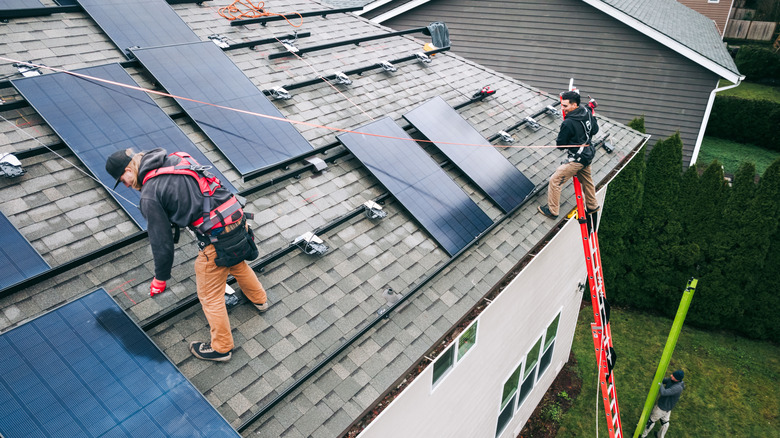
To achieve the fastest possible break-even point, hardware selection is paramount. In 2026, we are seeing a significant shift toward N-type solar cells, specifically TOPCon and HJT (Heterojunction Technology) modules. These panels offer superior solar panel efficiency ratings compared to older P-type technology, meaning they produce more power in the same footprint and maintain a lower Degradation Rate over their lifespan.
System sizing is the next critical factor. Over-sizing your system leads to wasted capital on capacity you may not use, while under-sizing leaves you dependent on expensive grid power. Finding the optimal solar system sizing for fastest break even involves analyzing your past 12 months of utility bills to find your "sweet spot."
| Home Size (sq ft) | Recommended System Size | Estimated Annual Production |
|---|---|---|
| 1,500 | 4-5 kW | 6,000 - 7,500 kWh |
| 2,000 | 6-8 kW | 9,000 - 12,000 kWh |
| 3,000+ | 10-12+ kW | 15,000+ kWh |
Innovation in panel design is also playing a role. We are seeing more residential installs utilizing the impact of bifacial solar panels on payback period, especially in regions with high Solar Irradiance or snowy winters where the back of the panel can catch reflected light. To handle complex roof lines or partial shading, the use of Microinverters is highly recommended. Unlike string inverters, they ensure that if one panel is in the shade, the rest of the system continues to produce at peak capacity, protecting your daily energy harvest.
The Accelerators and Delayers: Navigating Incentives and Hidden Costs
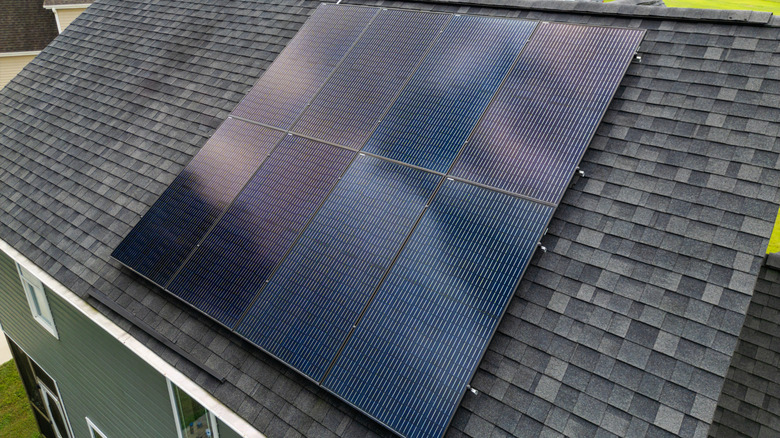
The path to a 4-year solar payback period is rarely a straight line. There are specific "accelerators" that can fast-track your returns and "delayers" that can quietly add years to your timeline.
The Accelerators
- Net Metering: If your utility offers 1:1 credits for excess energy sent back to the grid, your ROI accelerates. Maximizing solar savings with net metering policies is the single most effective way to offset night-time usage.
- Federal and State Grants: Beyond the ITC, programs like REAP grants can cover substantial costs for eligible rural properties or small businesses.
- SRECs (Solar Renewable Energy Certificates): In certain states, you can earn sellable certificates for every megawatt-hour your system produces, creating a secondary passive income stream.
The Delayers
- Battery Storage: While adding a battery provides energy independence, it typically extends the initial solar payback period by 2-3 years due to high hardware costs. However, in areas with aggressive Time-of-Use (TOU) rates, a battery can eventually pay for itself by avoiding peak-hour prices.
- Hidden Soft Costs: Permitting, inspection fees, and structural roof reinforcements can add $3,000 to $5,000 to an installation.
- High Financing Rates: If you are taking out a solar loan, the interest can erode your annual savings. Paying in cash or securing low-interest "green loans" is preferable for ROI.
Hidden Installation Costs Checklist
- [ ] Electrical panel upgrades (Main Lug or Busbar replacement)
- [ ] Roof repair or shingle replacement prior to mounting
- [ ] Permitting and AHJ (Authority Having Jurisdiction) fees
- [ ] Critter guards and snow brakes
- [ ] Monitoring software subscription fees (though many are now free)
Shortening the hidden installation costs extending solar payback window requires due diligence during the quoting phase. Always ask for an "all-in" price that includes the administrative friction of permitting.
Behavioral ROI: Shortening the Window After Installation
Once the panels are on the roof, your behavior as a consumer becomes the primary driver of your financial results. The concept of Energy Self-consumption is vital; the more of your own solar power you use—rather than selling it back to the grid at lower wholesale rates—the more you save.
This is achieved through Load Shifting. By programming high-energy appliances like dishwashers, dryers, and EV chargers to run during Peak Sun Hours (typically 10 AM to 3 PM), you use the "free" energy directly from your roof. Smart home automation systems can now do this automatically, ensuring your household energy profile matches your production curve.
Maintenance also plays a subtle but important role. Dust, pollen, and bird droppings can create "soiling" that reduces output by 10% or more. Implementing a regular solar panel cleaning schedule for maximum efficiency ensures you aren't leaving money on the table. Most homeowners find that a professional cleaning once or twice a year is enough to recover the 10-15% efficiency loss caused by environmental buildup.
By focusing on these operational habits, you are not just a solar owner; you are an active energy manager. Shortening solar break even with energy consumption shifting is the final, most sustainable way to ensure your 2026 investment pays off as quickly as possible.
FAQ
What is the average solar payback period?
In 2026, the average time to break even on a residential solar installation is between 4 and 10 years. This varies based on your local electricity rates, the amount of sunlight your roof receives, and the specific incentives available in your state.
How do you calculate a solar panel payback period?
To find your break-even point, take the total gross cost of the system and subtract any upfront rebates and the 30% federal tax credit. Divide this net cost by the amount you save on your annual electricity bill. For example, a $15,000 net system that saves $2,000 a year has a 7.5-year payback period.
What factors influence the length of a solar payback period?
The primary factors include the cost of the hardware, the efficiency of the panels, the local cost of grid electricity, and the amount of Solar Irradiance in your area. Additionally, the method of financing and the availability of net metering policies significantly impact the timeline.
How do tax credits and rebates affect solar payback?
Incentives act as a direct reduction of the principal investment. The federal tax credit alone usually shortens the payback window by about 30% or roughly 3-4 years. State-level rebates or performance-based incentives can further compress this timeframe.
How does net metering impact the solar payback period?
Net metering allows you to receive credit for excess energy you send to the grid. In regions with favorable net metering, you can use those credits to offset the cost of electricity you use at night, which maximizes your total annual savings and shortens the ROI window.
How do maintenance costs affect the solar payback period?
While solar systems are generally low-maintenance, occasional costs for cleaning or inverter replacement (usually after 10-15 years) can slightly extend the payback period. However, failing to clean panels can lead to a 10-15% drop in production, which delays your break-even point much more than the cost of a cleaning service.