Our Top Picks
The Verdict: Avoid buying the Sony SRS-XV900 at its original full price. Despite its flagship status, it suffers from significant audio fidelity issues that rivals have solved.
Best Alternative: Sony ULT Tower 10 is the clear successor, offering the massive, low-end punch and clarity that the XV900 lacked.
Value Alternative: JBL PartyBox Stage 320 provides a more balanced soundstage and better portability for a significantly lower investment.
The Sony SRS-XV900 was marketed as the ultimate flagship party speaker, but recent expert tests suggest otherwise. With a $900 price tag, many wonder: is the Sony SRS-XV900 worth 900 dollars? Unfortunately, testing reveals significant acoustic shortcomings. The Sony SRS-XV900 failed expert tests due to muffled midrange and tonal balance issues, leading many to recommend the Sony ULT Tower or JBL PartyBox alternatives.
Acoustic Analysis: Why the Sound Quality Disappointed
When a speaker carries a near-thousand-dollar price tag, the expectation is high-fidelity performance that can fill a large room without losing its composure. However, in professional lab environments, the Sony SRS-XV900 failed to live up to its flagship billing. Expert evaluations, including rigorous tests by Consumer Reports, resulted in a Fair rating—a surprising blow for a top-tier Sony product.
The primary culprit is a lack of tonal balance. While Sony heavily marketed the X-Balanced Speaker Unit as a way to provide deeper bass and clearer vocals, the real-world result was described by testers as a hazy midrange and a graininess that obscured fine details in acoustic tracks. Instead of a crisp, immersive soundstage, listeners were met with a muffled midrange that made vocals feel recessed, as if the singer were performing from behind a heavy curtain.
Furthermore, the frequency response exhibited a sizzly treble that lacked refined extension. When combined with a boomy bass that tended to bleed into other frequencies, the overall presentation felt disconnected. Comparative data highlights that the Sony SRS-XV900 was ranked ninth out of ten large party speakers for sound quality in expert comparative testing. A significant factor in this low ranking was how the unit handled volume; the speaker was noted for losing more bass at high volumes than its primary competitors, reaching a peak output of 102.4 dB but losing the "thump" that party-goers crave.
Audio Performance Pros & Cons
- Pros: Excellent vocal clarity specifically for karaoke; high maximum volume capability; effective TV Sound Booster for dialogue.
- Cons: Muffled midrange ruins complex musical arrangements; high-volume distortion is noticeable; bass lacks the "tightness" found in JBL competitors; tonal balance feels inconsistent across different genres.
For users who already own this unit, you might wonder how to improve Sony SRS-XV900 sound with EQ settings. Within the Sony Music Center app, we recommend a "V-shaped" EQ curve: slightly boosting the lower bass and the upper treble while pulling back on the mid-bass to reduce the "boxiness" of the sound. However, even with software tweaks, the physical limitations of the tweeter array and driver integration mean the XV900 will never sound as transparent as its rivals.
Design and Portability: The 60-Pound Reality
The Sony SRS-XV900 is a behemoth. Measuring nearly three feet tall and weighing 26.6 kilograms (58.6 lbs), it is not a speaker you simply toss into the back of a car. To accommodate this mass, Sony integrated a built-in handle and a set of rear wheels. While the Sony SRS-XV900 portability and wheel design review scores are generally positive for flat surfaces, the wheels are relatively small. This makes navigating over gravel, grass, or thick carpeting a genuine challenge, essentially tethering this flagship party speaker to paved or indoor environments.
One area where the unit does technically succeed is in its power management. Independent performance reviews confirmed that the Sony SRS-XV900 delivers 24.5 hours of continuous playback on a full charge, nearly meeting the manufacturer's advertised battery life of 25 hours. This battery endurance is impressive for a unit of this size, and the 90% Battery Care mode—accessible via the Sony Music Center app—is a thoughtful feature that prevents the internal cells from overcharging, potentially extending the lifespan of the device for several years.
Competitive Comparison: Sony vs. JBL and the ULT Series
The market for oversized Bluetooth speakers is crowded, and the reason the XV900 struggled is largely due to the "loudness gap" and price-to-performance ratio. When conducting a Sony ULT Tower 10 vs Sony SRS-XV900 comparison, it becomes clear why Sony chose to pivot. The newer ULT Tower 10 addresses the acoustic shortcomings of its predecessor by re-tuning the woofer for the "ULT Power Sound" profile, which offers a much more tactile and impactful low-end without the hazy midrange that plagued the XV900.
In the broader market, the JBL PartyBox vs Sony SRS-XV900 debate almost always favors JBL for raw performance. A side-by-side test between the XV900 and the JBL PartyBox Ultimate reveals an 8dB loudness gap in favor of JBL, along with a significantly wider soundstage.
| Feature | Sony SRS-XV900 | JBL PartyBox Stage 320 | Sony ULT Tower 10 |
|---|---|---|---|
| Acoustic Rating | Fair (Muffled) | Excellent (Balanced) | Good (Bass-Heavy) |
| Weight | 58.6 lbs | 41.7 lbs | 63.9 lbs |
| Max Volume | 102.4 dB | 104.8 dB | 110.2 dB |
| Key Weakness | Hazy Midrange | Limited Battery Life | Very Heavy |
| Status | Discontinued | Active | Flagship Successor |
For those looking for the best Sony party speaker alternatives to SRS-XV900, the Sony XV800 is actually a more logical choice for most people. It is lighter, cheaper, and maintains nearly the same battery life while offering a sound profile that is less prone to high-volume distortion.
Niche Strengths: TV Sound Booster and Karaoke
It isn't all bad news for the XV900. There is a specific type of user who might find this speaker appealing, particularly those who want a hybrid home entertainment and party device. The inclusion of an optical input allows for the TV Sound Booster feature. By placing the speaker near your television, the XV900 uses its six-tweeter array to bounce high-frequency sound off the walls, adding a sense of scale to movies and sports that standard TV speakers cannot match.
Furthermore, the XV900 is a karaoke powerhouse. The top touch panel is intuitive, and the speaker features two inputs for microphones or guitars. Because the sound quality problems of the XV900 are most apparent in music playback (where tonal balance is critical), they are less noticeable during karaoke sessions where vocal projection is the priority. The tweeter array does a commendable job of keeping voices clear and "on top" of the backing track, even if the backing track itself lacks audiophile depth.
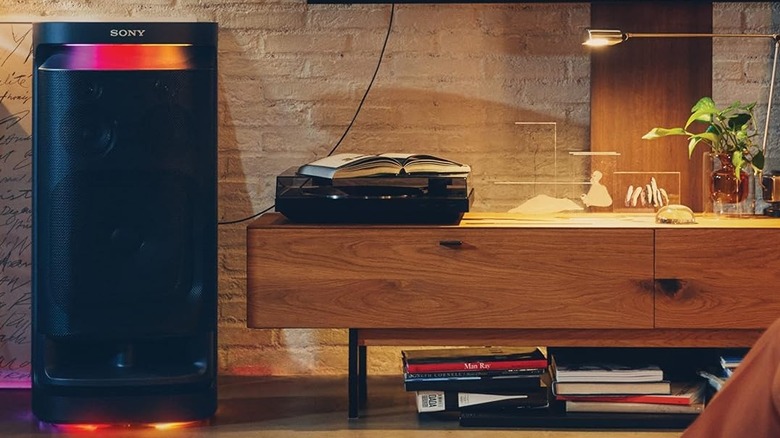
Ultimately, why Consumer Reports rated Sony SRS-XV900 as worst in its class comes down to the price-to-performance ratio. At $900, a speaker shouldn't just be "good for karaoke"—it should be an acoustic powerhouse.
FAQ
Is the Sony SRS-XV900 worth buying?
Generally, no. At its original price point, the XV900 offers a Fair sound quality rating that is outperformed by cheaper alternatives like the JBL PartyBox 310 or the newer Sony ULT Tower 10. You should only consider it if you find it at a steep discount on the used or refurbished market and specifically need its TV Sound Booster feature.
How loud is the Sony SRS-XV900?
The speaker is capable of reaching 102.4 dB, which is loud enough to fill a large backyard or a medium-sized hall. However, at these peak volumes, the speaker experiences high-volume distortion and a noticeable drop in bass response, making the sound feel thin and harsh compared to its competitors.
What is the difference between the Sony XV800 and XV900?
The XV900 is larger, features a larger 12.6-inch woofer, and includes a more complex 360-degree tweeter array compared to the XV800. While the XV900 is technically "bigger," many reviewers find the XV800 to be a better value because it is more portable and offers a more consistent tonal balance for a lower price.
Can you use the Sony SRS-XV900 for karaoke?
Yes, karaoke is one of its strongest use cases. It features a dedicated microphone/guitar input, an echo control, and a key control on the top panel. The six-tweeter configuration helps vocals cut through the mix, making it an excellent choice for vocal-centric entertainment.
Final Verdict
The Sony SRS-XV900 represents a rare misstep for a company that usually dominates the portable audio space. While its battery life and karaoke features are top-tier, the fundamental acoustic shortcomings are impossible to ignore at a premium price. If you are looking for a speaker that can truly handle high-fidelity music at party volumes, we recommend looking toward the JBL PartyBox lineup or Sony's own refreshed ULT Tower series.
If you stumble upon an XV900 at a clearance price, it serves as a decent "loud" speaker for casual use, but for the discerning listener, the search for the perfect sound continues elsewhere.