Quick Facts
- Sound Quality: Wired connections support uncompressed audio at 1,411 kbps or higher, while the best Bluetooth codecs currently peak at 990 kbps.
- Latency: Physical cables offer near-zero latency (under 10ms), compared to 40ms to 200ms in wireless models.
- Lifespan: A high-quality pair of wired headphones can last 20+ years, whereas wireless models are limited by the 2-3 year effective life of lithium-ion batteries.
- Maintenance: No charging, firmware updates, or complex pairing required; they are purely plug-and-play.
- Economic Value: Without the cost of batteries and Bluetooth chips, more of your money goes toward superior drivers and premium build materials.
- Verdict: For 2026, wired headphones remain the definitive choice for audiophiles, professional creators, and sustainability-minded listeners.
While the convenience of wireless is undeniable, a deep wired vs bluetooth headphones comparison reveals that the traditional cable still holds the crown for audio fidelity and long-term value. Wired headphones offer superior audio fidelity and zero latency because they utilize an uncompressed analog signal chain, remaining immune to the battery degradation and radio frequency interference that plague even the most expensive wireless alternatives.
| Feature | Wired Headphones | Bluetooth Headphones |
|---|---|---|
| Audio Bitrate | 1,411+ kbps (Lossless) | Max 990 kbps (Compressed) |
| Latency | < 10ms | 40ms - 200ms+ |
| Lifespan | 10 - 30 Years | 2 - 4 Years |
| Power Source | Device Powered (Passive) | Internal Lithium Battery |
| Reliability | Zero Interference | Subject to Signal Drops |
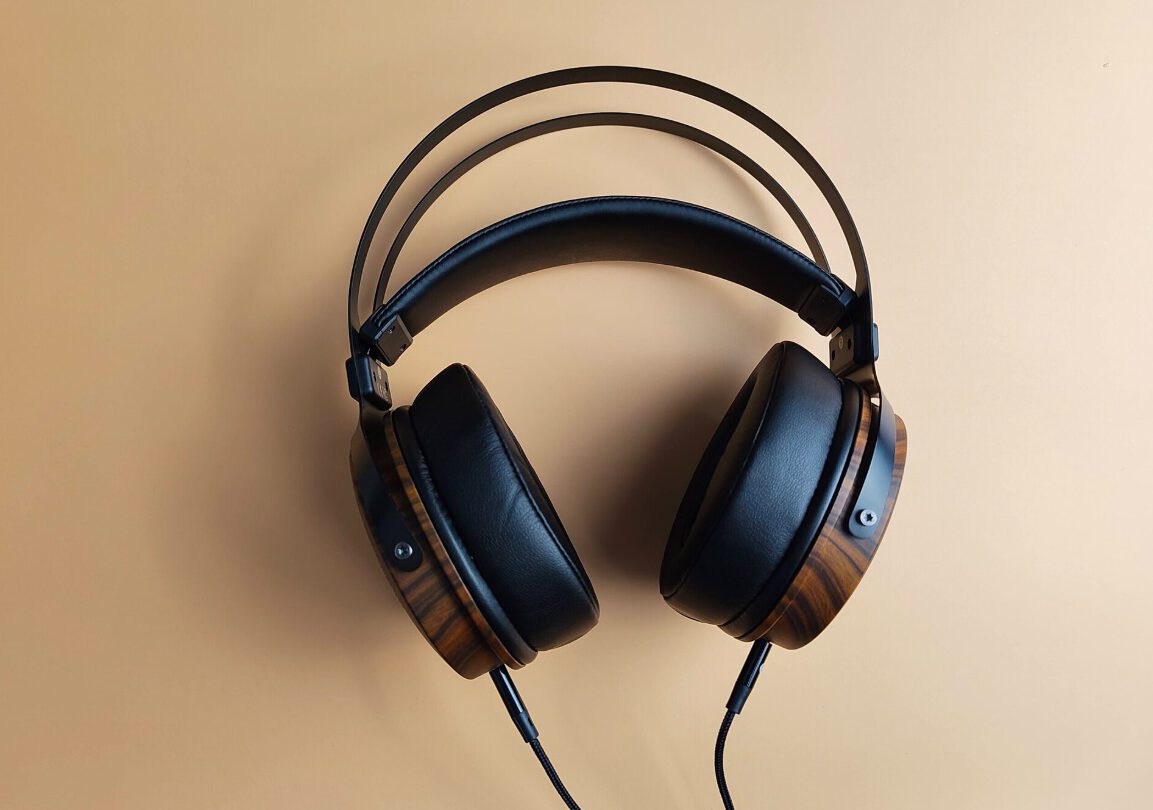
Unrivaled Audio Fidelity and Lossless Clarity
As an editor who spends eight hours a day analyzing soundstage and frequency response, I can tell you that the difference between a compressed digital stream and a pure analog signal is not just academic—it is emotional. When you use wired headphones, you are engaging with an analog signal fidelity that wireless technology simply cannot replicate without compromise.
The technical limitation comes down to the "pipe" through which the data travels. Standard CD-quality audio requires a bitrate of 1,411 kbps, a threshold that any basic copper cable can handle with ease. In contrast, even the industry-leading LDAC codec maxes out at 990 kbps, and that is only under ideal conditions with the device inches away from the receiver.
When audio is sent over Bluetooth, it must be encoded, compressed, transmitted, and then decoded. This process introduces audio compression artifacts—tiny "smears" in the high frequencies or a narrowing of the spatial soundstage. By staying wired, you bypass these digital bottlenecks. Furthermore, because high-end wired models often pair with a dedicated digital-to-analog converter (DAC), the precision of the sound reproduction is vastly improved. You get the benefits of lossless audio in wired headphones that allow you to hear the subtle breath of a vocalist or the trailing decay of a piano note that would otherwise be lost to compression algorithms.
Near-Zero Latency for Pro Gaming and Production
If you have ever tried to edit a video or play a competitive first-person shooter with Bluetooth buds, you have felt the "lag." That split-second delay between a muzzle flash and the sound of the shot is the result of the time it takes for a wireless chip to process data. While audio latency bluetooth vs wired has improved, the physical laws of signal processing remain in the cable's favor.
Wired connections provide a direct, physical signal chain with latency typically measured at less than 10ms—essentially instantaneous to the human ear. Bluetooth, even with "Low Latency" modes, usually hovers between 40ms and 150ms. For professional studio monitoring and high-stakes gaming, this is the difference between a perfect take and a missed cue.
Expert Tip: For those in music production and editing, the best headphone connection for music production and editing is always a balanced XLR or 3.5mm TRS cable. It eliminates the risk of radio frequency interference from your other studio gear, ensuring a clean, lag-free monitoring environment.
In competitive gaming, wired vs wireless headphones for gaming latency is a frequent debate, but the pros almost always land on the side of the wire. When every millisecond counts, you don't want your audio to be the bottleneck that costs you the match.
Breaking the 3-Year Upgrade Cycle
One of the most frustrating aspects of modern tech is planned obsolescence. Wireless headphones are, by design, disposable. They rely on internal lithium-ion batteries that possess a finite number of charge cycles. After two or three years of daily use, that 20-hour battery life inevitably shrinks to 10, then 5, until the unit becomes e-waste.
Wired headphones operate on a different philosophy of headphone longevity and durability. Because they are passive devices—meaning they draw power directly from the source—they have no internal batteries to degrade. I still have a pair of studio monitors from the 1990s that sound as vibrant today as they did when they left the factory. This passive component lifespan is the reason why wired headphones last longer than bluetooth models.
When you invest in a premium pair of wired cans, you aren't just buying a gadget; you are buying a tool that can be passed down. There are no firmware updates that will suddenly make them incompatible with your phone, and no software bugs that will render them useless. As long as the 3.5mm or USB-C jack exists, your headphones remain functional.
Zero Charging, Zero Pairing, Zero Hassle
We have all been there: you settle into a long flight, reach for your noise-canceling headphones, and realize they are at 1% battery. Or worse, you spend ten minutes toggling Bluetooth on and off because your phone refuses to "see" your earbuds. This "battery anxiety" and the friction of digital pairing are non-issues in the wired world.
The 3.5mm jack vs bluetooth connection stability debate is easily won by the physical plug. It is the ultimate plug-and-play experience. There is a specific peace of mind that comes with the practical advantages of wired earbuds for travel—you know they will work the moment you plug them in, regardless of how long they’ve been sitting in your bag.
- No charging bricks: One less cable to pack and one less device to monitor.
- Instant switching: Moving from your laptop to your tablet is as fast as moving a plug.
- Connection security: You will never experience a "stutter" or signal drop-out in a crowded subway station where 2.4GHz interference is rampant.
Better Hardware for Your Dollar
When you buy a $300 pair of Bluetooth headphones, a significant portion of that MSRP goes toward the Bluetooth 5.3 chips, the noise-cancelation processors, the internal amplifiers, and the batteries. When you buy a $300 pair of wired headphones, nearly every cent goes into the drivers, the magnets, and the acoustic chamber design.
This creates a massive gap in value. In any budget wired headphones vs cheap bluetooth sound quality test, the wired model will almost always provide better detail and a more accurate frequency response. Manufacturers of wired headphones can focus on high-quality materials like neodymium magnets and beryllium drivers without worrying about the power draw or weight of a battery.
Furthermore, the Total Cost of Ownership (TCO) is drastically lower. If a $200 wired pair lasts ten years, your cost is $20 a year. If a $300 wireless pair lasts three years, you are paying $100 a year to listen to music. From a financial perspective, the cable is a much smarter investment.
Consistent Microphone Quality for Professionals
One of the best-kept secrets in the audio world is that Bluetooth is terrible for microphones. Because the Bluetooth protocol has limited bandwidth, it has to compress your voice significantly when the microphone is active to maintain the audio stream. This is why you often sound like you’re talking through a walkie-talkie during a Zoom call on wireless buds.
Wired headphones, particularly those with an inline or boom mic, use a separate analog path for the microphone signal. This allows for full-bandwidth recording without the robotic "compressed" sound of wireless. In professional studio monitoring and corporate environments, the reliability of a wired mic is unmatched. You don't have to worry about radio frequency interference from the office Wi-Fi cutting your voice out mid-sentence.
The Sustainable Fashion Statement
Finally, there is the cultural and environmental shift. We are seeing an aesthetic retro-revival where the "wired look" has become a fashion statement on platforms like TikTok, popularized by icons like Bella Hadid. But beyond the trend, there is a serious ethical argument.
The environmental impact of wireless earbuds vs wired headphones is staggering. Because the batteries in wireless earbuds are often glued into the casing, they are nearly impossible to recycle. This leads to millions of units ending up in landfills every few years. Choosing wired is an act of e-waste minimization. By opting for a product that lasts a decade rather than a few seasons, you are making a conscious choice to reduce your digital footprint.
FAQ
Do wired headphones have better sound quality than wireless?
Yes, wired headphones generally offer superior sound quality because they transmit uncompressed analog signals. While high-end Bluetooth codecs like LDAC have improved, they still involve lossy compression that can strip away fine details and narrow the soundstage compared to the full 1,411 kbps or higher bitrate available through a cable.
Is there audio lag with Bluetooth headphones compared to wired?
Yes, there is always some degree of latency with Bluetooth due to the time required to encode and decode digital signals. While wired connections have near-zero latency (under 10ms), Bluetooth headphones typically range from 40ms to over 200ms, which can be distracting during gaming or video editing.
Do wired headphones last longer than Bluetooth ones?
Wired headphones have a significantly longer lifespan because they lack internal lithium-ion batteries that inevitably degrade over time. A well-built pair of wired headphones can remain functional for decades, whereas most Bluetooth models become unusable within three to five years once the battery fails.
Why do gamers prefer wired headphones over wireless?
Gamers prefer wired headphones primarily for the zero-latency connection and consistent signal stability. In competitive gaming, even a 50ms delay can affect reaction times. Additionally, wired headphones avoid the risk of battery death during long gaming sessions and are immune to interference from other wireless devices in the home.
Are wired headphones cheaper than Bluetooth headphones?
At equivalent performance levels, wired headphones are usually more cost-effective. Because manufacturers don't have to spend money on Bluetooth chips, batteries, and internal DACs, they can invest more in high-quality drivers. This means a $100 wired pair often sounds significantly better than a $100 wireless pair.
Is there a difference in microphone quality between wired and wireless?
Wired microphones almost always sound clearer because they aren't limited by the narrow bandwidth of the Bluetooth "Headset Profile." Wireless microphones must compress the voice data to fit within the Bluetooth transmission, often resulting in a muffled or "tinny" sound compared to the full-range analog signal of a wired mic.
Conclusion: The Hybrid Choice for 2026
The market may be pushing us toward a wireless future, but the technical and practical advantages of the wire remain grounded in reality. Whether it is the high fidelity audio benefits that satisfy the soul or the headphone longevity and durability that satisfies the wallet, the 3.5mm jack still serves a vital purpose.
If you are at the gym or commuting on a crowded train, the convenience of wireless makes sense. But for the moments that matter—when you are losing yourself in a favorite album, competing in a high-stakes match, or creating the next great podcast—nothing beats the reliability of a physical connection. In 2026, the real pro move isn't going wireless; it is knowing when to plug back in.