Our Top Picks
The tech industry is currently littered with the remains of the generative AI hype cycle, but two devices stand out as the definitive worst AI gadgets: the Humane AI Pin and the Rabbit R1. Both products were launched with revolutionary promises of replacing the smartphone but delivered nothing more than expensive, overheating paperweights with unfinished software and abysmal battery life.
The Humane AI Pin and Rabbit R1 failed primarily because they overpromised on functionality that smartphones already handle more effectively. Common user complaints included severe overheating, poor battery life lasting only four to five hours, and unfinished software at launch. While marketed as independent assistants, they suffered from high processing latency and failed to deliver on core features like the Large Action Model or legible laser displays.
Quick Facts
- Worst Performers: Humane AI Pin and Rabbit R1 represent the peak of failed AI hardware.
- Return Crisis: Humane experienced over $1 million in returns against only $9 million in total sales.
- Battery Failure: Most AI wearables currently struggle to exceed four hours of real-world use.
- The Subscription Trap: Mandatory fees of $24/month for hardware that lacks a clear purpose.
- Thermal Issues: Small form factors lead to aggressive thermal throttling and physical discomfort.
- Better Alternatives: Free or low-cost smartphone apps outperform $700 dedicated hardware.
The Brutal Reality of 2025: Sales vs. Returns
As a mobile devices editor, I’ve seen my share of "iPhone killers," but the collapse of the standalone AI wearable market has been uniquely spectacular. We are witnessing a classic case of product-market fit failure driven by the generative AI hype cycle. The numbers tell a story of a consumer base that was eager for innovation but felt burned by the early adopter tax.
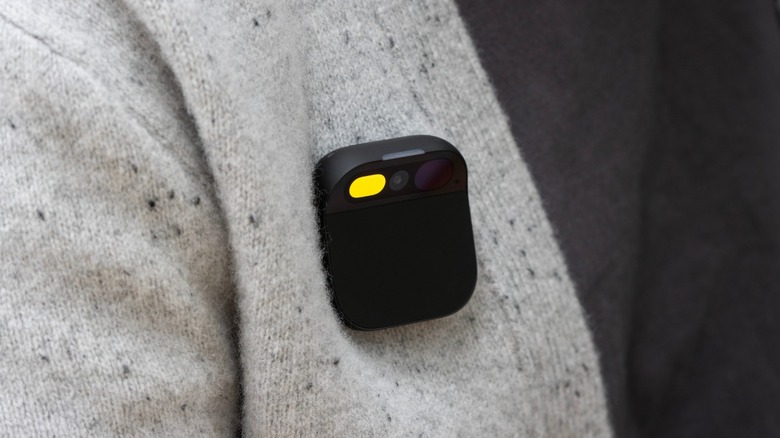
Between May and August 2024, the Humane AI Pin experienced more product returns than new sales, with total returns exceeding over $1 million against approximately $9 million in lifetime sales. For a company that once commanded an $850 million valuation, these figures are catastrophic. While Humane initially set a first-year sales target of 100,000 units, the company had shipped only about 10,000 units by mid-2024, with an estimated 3,000 of those already returned by dissatisfied customers.
This high return rate stems from a fundamental disconnect between marketing and reality. When you charge a retail price of $699 along with a mandatory $24 monthly subscription fee, the product needs to be flawless. Instead, users found themselves paying a premium for a device that struggled with basic tasks. The humane ai pin refund policy issues and user complaints flooded social media, highlighting how frustrating it is to deal with a hardware startup that is essentially building its Minimum Viable Product in public at the customer's expense.
Head-to-Head: Humane AI Pin vs Rabbit R1 Performance Comparison
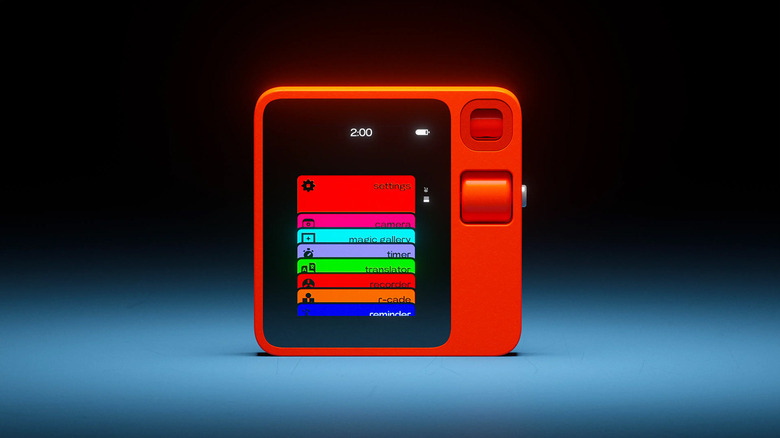
When comparing the two most notorious worst AI gadgets, it becomes clear that they failed for different reasons, though they shared the same core problem of redundancy. The Humane AI Pin was positioned as a high-end luxury wearable, while the Rabbit R1 was an "impulse buy" at $199. However, the price difference didn't save the Rabbit from being labeled as vaporware by critics.
| Feature | Humane AI Pin | Rabbit R1 |
|---|---|---|
| Price | $699 | $199 |
| Monthly Fee | $24 (Mandatory) | None (Optional cloud services) |
| Interaction | Voice + Laser Ink Display | Voice + Scroll Wheel + 2.85" LCD |
| Connectivity | T-Mobile (Required) | Wi-Fi / SIM slot |
| Core Promise | Screen-free living | Large Action Model (LAM) |
| Reality | Thermal throttling & low legibility | Scripts that barely work |
The Rabbit R1 promised a Large Action Model that could navigate apps for you, booking Ubers and ordering pizzas through a simplified interface. In reality, the rabbit r1 large action model failure reasons were evident as soon as the device reached reviewers. Much of the functionality was actually running on hidden web scripts rather than a revolutionary agentic AI. It lacked the sophistication to handle complex tasks, often failing to log into accounts or misinterpreting basic commands.
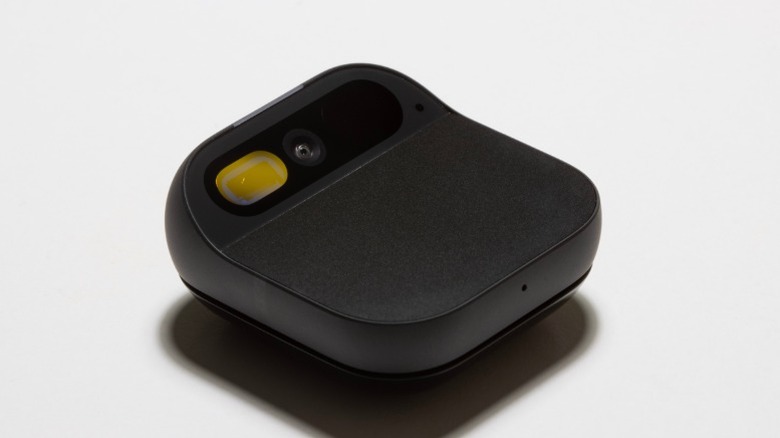
On the other hand, the Humane AI Pin vs Rabbit R1 performance comparison shows that while the Rabbit R1 was faster to respond, it was no more useful than the smartphone in your pocket. The Laser Ink display on the Humane Pin was a technological marvel that failed in practice; it was nearly impossible to read in direct sunlight and required awkward hand gestures to navigate. Both devices felt like hardware-as-a-service traps, where the hardware was just a placeholder for unfinished software.
Hardware Reality Check: Why Physics Won
Engineering small devices is a game of compromise, and these AI wearables ignored the laws of physics. One of the primary reasons AI hardware fails is the conflict between high-performance processing and the limited surface area available for cooling. Generative AI is computationally expensive; when you move that processing to a tiny wearable, you encounter severe thermal throttling.
The Humane AI Pin, for example, would frequently shut down after just a few minutes of intense use because it became uncomfortably hot against the user's chest. This wasn't just a software bug; it was a fundamental flaw in the thermal management of the form factor. When a device gets hot, the processor slows down to protect the components, leading to the high latency that users complained about. Waiting ten seconds for an AI to tell you the weather is unacceptable when your phone does it instantly.
Furthermore, why ai hardware battery life fails in small form factors is a matter of simple math. The Rabbit R1 featured a tiny 3.8 Wh battery. When you consider that constant microphone monitoring, LTE connectivity, and cloud processing are all power-hungry tasks, it’s no surprise that these devices rarely lasted more than four or five hours. Most users reported having to charge their gadgets multiple times a day, which defeats the purpose of a convenient "assistant." The AI wearable device limitations regarding battery and heat make them inferior to the 5,000 mAh batteries and sophisticated vapor chambers found in modern smartphones.
The Smartphone Replacement Fallacy
The "post-smartphone" era is a compelling narrative for venture capitalists, but it doesn't align with how we actually use technology. The creators of these worst AI gadgets assumed that people wanted to stop looking at screens. They missed a crucial point: screens are efficient. We can scan a list of search results in seconds, but listening to an AI read them aloud takes minutes.
Using smartphone apps as alternatives to ai wearable gadgets is not just a cost-saving measure; it is a superior user experience. Apps like ChatGPT, Perplexity, and Gemini offer the same voice and vision capabilities as the Humane or Rabbit hardware, but they benefit from the smartphone’s superior microphones, better cameras, and significantly faster processors. The real-time vision recognition on an iPhone 16 or a Pixel 9 Pro is lightyears ahead of what these standalone pins can achieve.
The push for Agentic AI—software that can take actions for you—is the next frontier, but we don't need new hardware to access it. When a startup tells you that you need a $700 pin to use a voice assistant, they are selling you a solution to a problem that doesn't exist. Subscription fatigue is real, and consumers are increasingly unwilling to pay a monthly fee for a device that offers less utility than the free apps already on their home screen.
How to Spot Worst AI Gadgets Before Buying
Before you get caught up in the next wave of AI hype, it’s important to know how to spot worst ai gadgets before buying. The tech world is currently obsessed with shipping products as fast as possible, often relying on the "fix it in software later" mentality. Here are the red flags I look for when evaluating new AI hardware:
- Vague Promises of Future Features: If the "killer feature" (like the Large Action Model) isn't available on day one, the device is essentially a paid beta test.
- Mandatory Subscriptions for Basic Hardware: If you have to pay a monthly fee just to keep the device from becoming a paperweight, the product-market fit is likely weak.
- Lack of Real-World Demos: Be wary of promotional videos that don't show the actual device interacting with the world in real-time. Pre-rendered UI is a major red flag.
- Thermal and Battery Hand-Waving: If a company cannot give clear answers about how long the battery lasts under heavy AI load, expect four hours or less.
- Redundancy: Ask yourself if the task can be done by a free app on your phone. If the answer is yes, you are paying an early adopter tax for zero added value.
The history of mobile tech is filled with failed experiments, but the current crop of AI wearables represents a unique low point. They are the result of engineering teams ignoring user ergonomics and the basic constraints of mobile hardware. For now, the best AI device you can buy is the one you already own.
FAQ
What are considered the worst AI gadgets ever released?
The Humane AI Pin and the Rabbit R1 are widely cited by critics and users as the worst AI gadgets due to their failure to meet basic performance standards. They are plagued by overheating, extremely short battery life, and high price points for features that are already available for free on smartphones.
Why do many standalone AI devices fail to meet expectations?
Many standalone devices fail because they suffer from technical AI wearable device limitations such as poor thermal management and inadequate battery capacity. Additionally, they often struggle with high latency and a lack of clear utility, attempting to replace a smartphone that already performs the same tasks faster and more reliably.
What makes an AI gadget a bad investment?
An AI gadget is a bad investment if it requires a mandatory monthly subscription to function, relies on features that are "coming soon," or tries to solve a problem that is already solved by existing software. High return rates and a lack of third-party repairability are also significant warning signs.
Are AI gadgets better than smartphone apps?
Currently, no. Smartphone apps like ChatGPT and Gemini provide the same generative AI capabilities as dedicated gadgets but leverage the superior hardware, better connectivity, and larger batteries of modern phones. Dedicated AI gadgets often act as a less efficient interface for the same cloud-based models.
What are the common technical issues with new AI hardware?
The most common issues include thermal throttling, where the device slows down or shuts off due to heat, and severe battery drain. Many devices also suffer from connectivity issues and high latency, as they must constantly communicate with the cloud to process simple voice commands.
Which AI wearable gadgets had the most negative reviews?
The Humane AI Pin received some of the most critical reviews in the history of consumer tech, with major publications labeling it "broken" and "not ready for primetime." The Rabbit R1 followed closely, with many users and reviewers discovering that its core "AI model" was not functioning as advertised at launch.